






Summary of this article
Although keeping the lending rate unchanged will help restore sentiment among buyers as it will prevent further escalation of home loan EMIs, industry experts feel that the rate pause is unlikely to resurrect the slowing down affordable housing sector.
With the latest announcement by RBI, lending rates for home loans are expected to remain consistent.
With this, consumers who are looking to buy a home with a loan can plan their purchases with ease, as they have clarity on EMIs not increasing in the coming future.
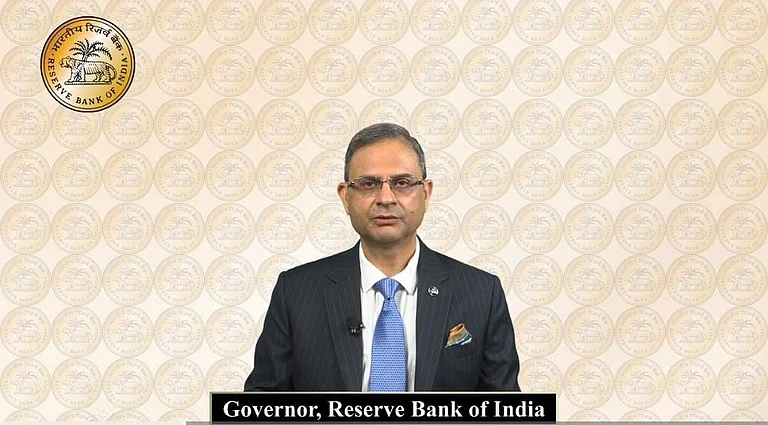
The Reserve Bank of India’s (RBI’s) decision to keep the repo rate unchanged at 5.25 per cent in its recent monetary policy committee (MPC) meeting is unlikely to resurrect the dipping demand in affordable homes. It will, however, restore sentiment among buyers, as it will prevent further escalation in home loan equated monthly instalments (EMIs), according to real estate industry experts.
They say that steady interest rates alone cannot bridge the widening gap between rising home prices and the shrinking supply of budget homes, even as demand for mid-income and premium housing remains resilient.
Says Anuj Puri, chairman, ANAROCK Group: “The unchanged policy rate is a welcome signal of stability amid the ongoing macroeconomic uncertainty, but it is not enough to reignite the mass-market housing cycle. ANAROCK’s Q2 2026 data shows that total sales in the top seven cities fell 6 per cent year-on-year to about 90,715 units, while affordable housing supply has fallen to just 6 per cent of total launches even as overall new supply increased 7 per cent year-on-year to about 1.06 lakh units.”
This mismatch is the main area of concern. Affordable housing demand remains very rate-sensitive, and with average residential prices still growing at 7 per cent annually across the top cities, rate steadiness alone will do little to improve affordability.
“The market is obviously moving to a more balanced position overall - but this balance comes from the high-end luxury housing segment, not from the part of the market that drives broad-based homeownership,” adds Puri.
Impact On Homebuyers
Industry experts say the RBI decision to keep the benchmark repo rate unchanged at 5.25 per cent was largely on expected lines. Given the prevailing inflation trajectory, the broader economic outlook, and continuing geopolitical uncertainties, the market was not anticipating any change in the policy rate.
“The repo rate, which was last reduced to 5.25 per cent in December 2025, has helped bring lending rates to very attractive levels for retail borrowers. As a result, home loan interest rates, which had crossed 9 per cent a couple of years ago, have now softened to around 7 per cemt, significantly improving housing affordability,” says Raoul Kapoor, Co-CEO, Andromeda Sales and Distribution.
Citing an example, he says a 2 percentage point reduction in home loan interest rates translates into substantial savings over the loan tenure. For a 20-year home loan, the EMI reduces by approximately Rs 125 per month for every Rs 1 lakh borrowed. This means the monthly EMI comes down by around Rs 6,250 on a Rs 50-lakh loan and about Rs 12,500 on a Rs 1-crore loan. Besides lower EMIs, borrowers also save several lakh rupees in total interest over the life of the loan.
“This is an opportune time for homebuyers to make their purchase decision. We expect interest rates to remain stable in the near term, and if inflation continues to remain under control, there may even be scope for further policy easing in the coming MPC meetings,” adds Kapoor.
Vikas Bhasin, managing director, Saya Group, says, “With the latest announcement by RBI, lending rates for home loans are expected to remain consistent. With this, consumers who are looking to buy a home with a loan can plan their purchases with ease, as they have clarity on EMIs not increasing in the coming future. Apart from stability, home loans are being offered at some of the lowest rates of interest as well. This, combined with festive offers by some developers in the form of attractive schemes, exclusive discounts and easy payment plans for homes that are ready-to-move-in or under construction, today may be the right time for buyers to make their home buying decision.”
Impact On Real Estate
Realty experts have also welcomed the decision, saying that despite higher crude prices and June retail inflation rising to an 18-month high, the RBI has prioritised stability. It reflects confidence in the resilience of the Indian economy, while remaining watchful of global risks.
Says Amit Goyal, managing director, India Sotheby’s International Realty: “For real estate, the timing is significant. This is the last policy review before the festive season, giving homebuyers and developers greater certainty to plan purchases and launches. Stable EMIs are particularly important as some overheated markets begin to see demand moderate. We expect this unchanged interest rates, together with easing crude prices, to support buyer sentiment and help sustain housing demand through the festive season.”
Predictable borrowing costs provide homebuyers the confidence to move ahead with long-deferred purchase decisions, while developers benefit from a stable financing environment that enables them to plan launches and investments with greater certainty.
“In that context, the RBI decision to hold the repo rate for a fourth straight time reflects a calibrated approach at a time when rising crude prices, food inflation and continued geopolitical uncertainty continue to demand prudence over policy activism. For real estate, rate stability is a positive signal heading into the festive season, which is typically the strongest period for housing demand in India. We expect this continuity to support healthy residential sales momentum through the second half of 2026, particularly in the mid and premium segments where affordability is closely tied to interest rate sentiment,” observes Anshuman Magazine, chairman & CEO – India, SE Asia, Middle East & Africa, CBRE.
India’s commercial real estate fundamentals remain strong. Office demand is robust, warehousing and data centres continue to attract capital, and residential markets in key cities have sustained their momentum.
“The MPC still has a balancing act ahead; it must protect growth while staying watchful of inflation, which it says is likely to peak in the October-December quarter. Yet India's underlying strengths - a strong investment pipeline and resilient domestic demand - give us reason for confidence heading into the second half of the year," adds Magazine.
Manik Malik, president & CEO, BPTP Limited, says, “The RBI decision to keep the repo rate unchanged provides continuity and reinforces stability at a time when the housing market continues to be driven by strong underlying fundamentals. Residential demand has remained resilient, supported by genuine end-user interest, improving infrastructure and growing confidence in the sector. While interest rates are one of the key factors that homebuyers take into consideration while making this investment decision, today’s market is being shaped by factors that promise long-term value creation instead of reacting to short-term policy changes. A stable monetary policy environment allows homebuyers as well as developers to plan with certainty and should help sustain the healthy momentum we have been seeing across key residential markets.”
Rationalising The Regulatory Framework On Interest Rates
The governor also announced to rationalise the regulatory framework on interest rates for all Regulated Entities (REs) to ensure uniformity and transparency in loan pricing by different REs and protect the borrowers. regarding this the draft directions will be issued soon for the feedback from the stakeholder consultation including the public.
Vivek Iyer, Partner and Financial Services Risk Advisory Leader, Grant Thornton Bharat, says, "Standardisation of interest rates across regulated entities helps ensure greater transparency in disclosure of interest rates, tenor and charges including penal charges and prepayment penalty if any."
Ananth Shroff- Co founder and CEO at DPDzero, adds, "The RBI's move to harmonise lending rate regulations is fundamentally about transparency, not uniformity. At present, banks and NBFCs operate under different regulatory frameworks for determining and disclosing loan interest rates, making it difficult for borrowers to compare loan products across institutions. Standardising the framework addresses that gap.


For borrowers, the immediate benefit is clarity - knowing how their rate is calculated, when it resets, and what the true cost of credit looks like across lenders. That comparability has been missing for too long, particularly for first-time borrowers navigating a fragmented market."





