





Summary of this article
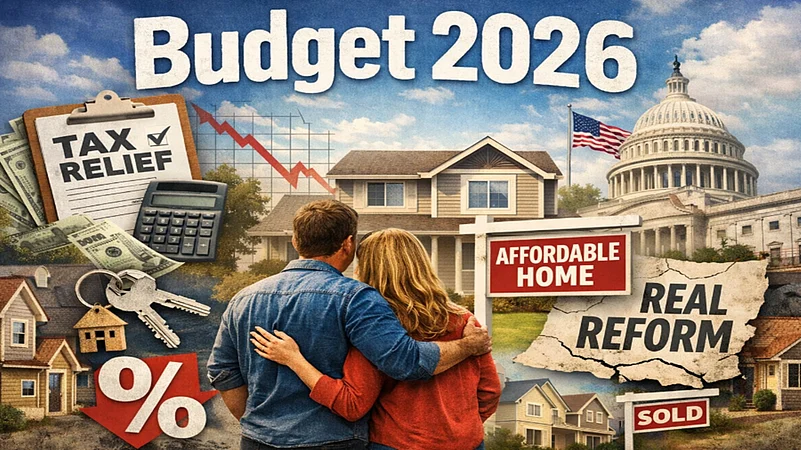
Homebuyers want the affordable housing definition updated to reflect current metro and Tier-II city prices.
Higher tax deductions on home loan interest and a return of first-time buyer incentives top the wishlist.
Rationalising GST on under-construction homes could significantly lower upfront purchase costs.
Faster approvals, easier credit access and infrastructure-led urban growth are seen as critical demand drivers.
With the Union Budget 2026 just days away, homebuyers across India have laid out a detailed list of expectations aimed at making housing more affordable, accessible, and financially sustainable. As India’s real estate market contends with rising costs, slowing demand in some segments and evolving buyer priorities, stakeholders believe that the Budget offers a crucial opportunity to address persistent challenges and reignite consumer confidence.
Here’s a broad just of the expectations of homebuyers from the Budget
1. Greater Housing Affordability and Revised Definitions
At the top of homebuyers’ priority list is enhanced affordability for residential properties.
Buyers and industry bodies argue that the official definition of “affordable housing” - currently capped at Rs 45 lakh - has long been outdated, failing to reflect surging land and construction costs. “The government needs to revise this threshold to between Rs 80 lakh and Rs 90 lakh, better aligning with price realities in both large metros and Tier-II cities. This overhaul could extend tax and subsidy benefits to a broader segment of buyers,” says Rajarshi Dasgupta, executive director - tax, AQUILAW, a full-service law firm.
2. Enhanced Tax Reliefs for Homebuyers
A strong and consistent demand from homebuyers is expanded tax relief linked to housing loans. These include:
Increase in interest deduction limits: The current Rs 2 lakh cap for home loan interest under Section 24(b) has not kept pace with rising loan sizes. Buyers want this raised - some suggest up to Rs 5 lakh annually - which would directly cut annual tax outgo for middle-income families.
Restoring special benefits for first-time buyers: Proposals similar to Section 80EEA, which offered additional deductions for first-time homeowners, are being floated as an effective tool to nudge fence-sitters into the market.
HRA and EMI synergy: “Salaried taxpayers want house rent allowance (HRA) benefits to be extended or made compatible with home loan EMI outflows, addressing the current disadvantage that rental taxpayers enjoy over homebuyers,” says Dasgupta.
3. GST Rationalisation to Ease Upfront Costs
Input tax credit and Goods and Services Tax (GST) rates remain a significant driver of final home prices. Industry leaders and buyer advocates want, among others:
Reduction of effective GST on under-construction properties, particularly for middle-income homes, which now attract 5 per cent GST without input tax credit. Lowering this rate and restoring input credits could shave off a meaningful portion of upfront costs.
A broader application of the 1 per cent GST bracket - currently limited to affordable housing - to include more mid-income homes, reducing buyer cost burdens substantially.
4. Easier Access to Credit and Interest Relief
Homebuyers are acutely sensitive to financing costs, particularly as equated monthly instalments (EMIs) form a large part of monthly household outflows. Among their key expectations are:
Interest rate support or incentives whether through direct subvention schemes or interest subsidies for select buyer segments, thereby easing borrowing costs could help spur demand.
Faster home loan processing, such as proposals for housing credit passports, which is a consent-based digital profile to streamline loan evaluations and are being floated by experts to cut paperwork and speed approvals, according to Dasgupta.
5. Support for Rental and Sustainable Housing
With urban mobility changing lifestyles, there’s also a growing push for rental housing incentives and green and sustainable building support and buyers and developers alike are seeking tax incentives or regulatory clarity on such housing projects.
6. Single-Window Clearances and Faster Project Approvals
Cumbersome approval processes are blamed for delays and cost overruns. Both homebuyers and developers want:
A single-window clearance mechanism to cut red tape and compress project timelines.
Clear timelines and accountability for regulatory approvals to ensure delivery commitments are met.
7. Infrastructure-Led Urban Boost
Finally, homebuyers increasingly view broader urban infrastructure - metros, expressways, sustainable transit and utilities - not as peripheral, but central to real estate value.
Adds Dasgupta: “Investments in last-mile connectivity and smart cities are expected to drive demand and justify premium valuations in emerging neighbourhoods.”
With Budget 2026 around the corner, buyers are looking beyond short-term stimuli, instead asking for structural fixes - tax reliefs that reflect modern financing realities, rationalised GST frameworks, financing reforms, and clearer regulatory processes. Whether the government rises to these expectations will significantly shape housing demand and the broader trajectory of India’s urban growth story.





