


Summary of this article
Status quo on repo rate means no immediate EMI shock for existing borrowers and better planning certainty for new homebuyers.
Past cumulative rate cuts of 125 bps are still filtering through, with scope for borrowers to negotiate lower rates or opt for balance transfers.
Affordable housing demand remains under pressure due to elevated prices and lack of targeted policy support.
Stable interest rate environment aids developer planning, liquidity visibility, and sustains momentum in mid and premium housing segments.
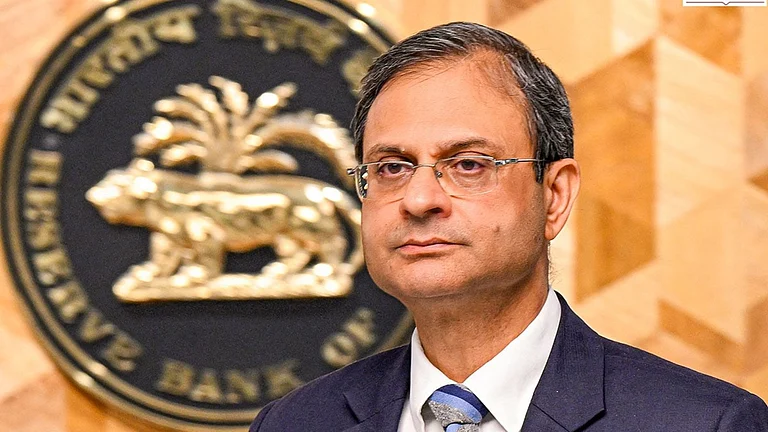
As widely expected, the Reserve Bank of India’s (RBI) Monetary Policy Committee (MPC) decided to maintain the repo rate unchanged at 5.25 per cent in its final meeting of the FY26 cycle, while keeping its stance neutral.
Real estate industry experts welcomed the move, saying that the RBI decision means that equated monthly instalments (EMIs) on home loans will not change either.
“This will keep buyers engaged. The upside is that current house loan borrowers will not experience any EMI shocks for now, and new borrowers can plan their housing purchases with the benefit of predictability. However, it does nothing to lift demand further and does nothing to make housing more affordable,” said Anuj Puri, Chairman, Anarock Group.
Demand for affordable and mid-segment homes remains strong, but continues to be challenged by escalated pricing, which affects affordability. A rate cut would have potentially brought at least some fence-sitters back to the market.
Overall trends show that affordable housing remained considerably subdued in 2025, in terms of both sales and new launches. According to Anarock Research, the overall sales share of affordable housing was just around 18 per cent of the total housing sales across cities in 2025. Back in 2024, out of the total sales of close to 460,000 units in the top seven cities, affordable housing share stood at 20 per cent. This share stood the highest in 2019 when out of around 261,000 units sold altogether, 38 per cent was within this segment.

“The Union Budget 2026-27 failed to deliver any notable relief to the affordable housing buyer segment, which is in dire need of proactive intervention by way of interest stimulants for both buyers and developers. The segment needs focused, high-impact measures like tax breaks - for developers - so that they shift their focus more on affordable housing from the current premium and luxury segments, and for buyers, to improve affordability,” added Puri.
Raoul Kapoor, Co-CEO, Andromeda Sales and Distribution said that the RBI decision to maintain a status quo on policy rates is largely in line with expectations, especially after the cumulative rate cut of 125 basis points in 2025. The transmission of these cuts is still playing out, with several banks yet to fully pass on the benefit to borrowers.
A cumulative reduction of 125 basis points over a 20-year loan tenure translates into an EMI reduction of approximately Rs 80 per lakh per month, significantly improving affordability and enhancing borrowing capacity for big-ticket purchases such as homes.
“For existing home loan borrowers currently servicing loans at interest rates above 8 per cent, this presents a timely opportunity to negotiate better terms with their lenders or explore balance transfer options, as many banks are now offering home loans at interest rates close to 7.5 per cent to new borrowers,” Kapoor said.
Developers said the RBI decision to maintain the repo rate provides much-needed stability to the real estate sector. This follows the cumulative 125 basis points rate reduction during 2025, which has already supported borrowing sentiment and improved affordability.
“A steady rate environment ensures predictability in home loan costs, encouraging buyer confidence and sustaining housing demand. For developers, stable funding conditions and improved liquidity visibility enable better planning of project launches and execution timelines. Overall, this decision reinforces a growth-oriented environment and strengthens confidence across key real estate markets,” said Rishabh Periwal, Senior Vice President, Pioneer Urban Land & Infrastructure Ltd.
Sudeep Bhatt, Director Strategy, Whiteland Corporation, said, "The RBI MPC has decided to keep the repo rate unchanged at 5.25 per cent. It comes after RBI’s December 2025 decision to slash repo rate, marking a cumulative cut of 125 basis points throughout 2025. The stance is significant for the real estate sector. It means stable home loans which directly boost housing demand, while improving liquidity for developers. The sector stands to benefit from the reestablished buyer sentiment and a growth in investment appetite with EMIs and borrowing cost stabilising."
The MPC decision to keep the repo rate unchanged provides stability for capital-intensive sectors like construction and infrastructure, supporting credit flow and long-term investment.
“This aligns strongly with Union Budget 2026, which has reinforced its focus on infrastructure through higher capex of Rs 12.2 lakh crore and an enhanced Construction and Infrastructure Equipment (CIE) scheme to promote domestic manufacturing of high-value, advanced equipment. Additionally, structural developments such as the India–EU FTA and the proposed US deal are significant positives for Indian manufacturing, improving competitiveness versus key markets like China and strengthening the China-plus-one opportunity,” said Vyom Agarwal, President, ACE - Action Construction Equipment Ltd.
The RBI decision also reinforces macro-economic stability and enhances confidence across financial markets.
“This policy continuity provides crucial predictability for both homebuyers and developers, helping sustain demand in the housing and commercial real estate sectors. With stable lending rates, buyers can plan around consistent EMIs, and developers can manage capital costs and project financing more efficiently. In an environment where affordability and financing clarity are key, this steady approach supports robust decision-making and long-term planning. We remain optimistic that the real estate sector will continue to experience sustained demand, steady growth, and long-term value creation,” observed Aman Trehan, Executive Director, Trehan Iris.



Aman Sharma, Managing Director & Founder, Aarize Group, said the MPC move brings much-needed stability and predictability to the housing market. “Today's homebuyers are highly sensitive towards the change in interest rates, as they tend to make decisions based on long-term financial comfort rather than short-term incentives. A stable rate environment reinforces end-user confidence, supports smoother transactions, and encourages buyers to move ahead with planned purchases. This continuity in policy will help to sustain momentum in the housing market and support the real estate sector’s growth.”
Yateesh Wahaal, Director Finance, M3M India, said, “A predictable interest rate environment supports mortgage affordability and enables developers to plan capital deployment with greater clarity. This monetary continuity complements the Union Budget 2026’s strong push for infrastructure-led growth, which is critical for strengthening urban ecosystems and improving liveability across emerging and established markets. Together, stable rates and sustained public capex will support long-term housing demand, faster project execution, and healthier sector fundamentals. We believe this will create an enabling environment to deliver high-quality, future-ready developments aligned with evolving consumer aspirations.”