





Summary of this article
Verify builder’s financial health and project credibility thoroughly.
Maintain financial buffer to handle delays and extra costs.
Check all Rera documents and legal approvals before investing.
Buying an under-construction home is a decision that needs a thorough understanding of the risks and complications. People typically choose to buy an under-construction property since the entry price is lower and the payment plans are staggered, typically construction-linked, and upon completion, the amenities provided are similar to that on a ready-to-move in house.
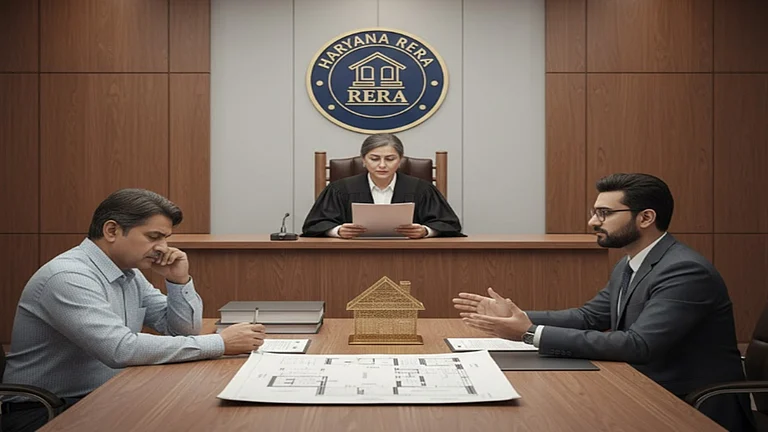
However, in the Indian real estate sector, under-construction homes often come with a significant pain point: delayed possession. No matter which city you are buying in, the risks tend to stay the same. The only way to safeguard yourself is to do your research about the builder, project, and the real estate regulatory authority (Rera) registrations before committing all your savings to an under-construction project.
The key areas to be examined before investing are the builder's financial health, project stability in funding, and your own financial plan for this to be executed healthily.

Assessing The Builder’s Financial Health
The reputation of the builder matters, but reputation alone is not enough evidence of solvency or efficiency. What you need instead is a real-time assessment of their financial standing and execution efficiency.
A simple way is to find out how many projects they have worked on in recent years and how long it took to complete them. A pattern of delays or timely delivery is a sign of the developer's credibility. Another thing to note is how many active projects they have going on; this is an indicator that the developer is spreading the cash flow across the projects.
Says Ashwinder R Singh, chair, CII Real Estate, vice chair, BCD Group, and advisor, NAR-India: “Don’t get impressed by glossy campaigns — look for financial stamina.A developer who can finish a project is not always the one who can start it.”
Financial disclosures are just as important for you; for big developers, you can find their annual reports, which are available publicly. You can tell if they are doing so if there's a lack of excessive borrowing, charges on assets, or refinancing.
According to Singh, one should ideally check for these parameters.
Track record — last 3–5 projects delivered on time,
Balance sheet strength — low leverage, high internal accruals
Escrow discipline — genuine RERA-compliant usage of funds
Construction pace vs. sales — strong sales, but weak construction is a red flag
Credible funding partners — banks, non-banking financial companies (NBFCs), or institutions with skin in the game, and.
Litigation history — one lawsuit can lock a project for years
A financially fit developer is one who builds from cash flows and credibility, not from future promises, he says.
How Much Financial Buffer Should You Keep
Even if the builder is reputable and has a clean project report, delays are a realistic possibility and can affect months of your savings if you are underprepared.
As such, you should ideally maintain a buffer equal to 12-18 months of rent and living costs to protect yourself. This can help you if the project is delayed, unforeseen charges are applied, or other miscellaneous expenses that can be incurred.
According to Singh, a 10–15 per cent buffer over your total home budget is realistic. This should cover delay in rent savings, delay in possession, shifting timelines, temporary accommodation, and inflation in interiors/furnishing.
Rera Compensation For Project Delay
Rera provides a structured compensation mechanism, which buyers usually misinterpret and demand unrealistic compensation.
In case the project is delayed beyond the date promised, then in accordance with the Rera (Act), the builder must pay you interest every month for the delay. The interest rate is based on SBI's standard lending rate.
Adds Singh: Realistically, you can expect interest on delayed period (typically SBI MCLR + spread), refund with interest if delay is extreme, and penalties for non-compliance by the developer.”
However, the compensation is not always immediate; most builders only release the payments after a formal Rera complaint is filed. While Rera rulings favour buyers, the enforcement still takes time to be executed.
Documents You Must Verify
Believing in verbal statements by agents and not cross-checking it on your end, is one mistake that can cost you all your savings.
Documents can reveal if the project and the developer is legally safe and sound and your money is safe as well. The most important authentication proof they can possess is the Rera registration certificate, if the project does not possess one it is a clear red flag to avoid.
Singh lists out a few documents that any homebuyers must look for in an under-construction project.
These include:
Rera registration certificate & quarterly updates
Title search report (at least 25–30 years)
Land ownership / Development Agreement
Sanctions & approvals — commencement certificate, environmental clearance, height NOC
Construction finance sanction letter — this tells you a bank/NBFC has already checked the viability
Escrow account details
Project cash-flow schedule
Says Singh: “Documentation is the only insurance in under-construction real estate. If a developer hesitates to give documents, the safest response is to walk away.”
Buying an under-construction property can be rewarding, but only if you approach the entire process with caution. The lower pricing can look attractive, but can possess many risks. The only protection a buyer has is diligence while considering such properties.





