








Summary of this article
Cashless hospitalisation has certain structural challenges which need to be bridged
Insurers can approve claims only within the boundaries of the policy contract
Cashless hospitalisation has long been positioned as the defining promise of health insurance — financial peace of mind at the most vulnerable moment. However, while progress has been made in this regard, there is a disconnect between promise and practice, including certain structural challenges that persist in India’s health insurance ecosystem, a presentation by Rashmi Nandargi, head claims– health, travel & PA, at Bajaj General Insurance, at IDFC FIRST Bank presents Outlook Money’s 40After40 Retirement Expo held in Mumbai, highlighted.
The scale of cashless adoption is significant, the presentation said. Nearly 66 per cent of health insurance claims are now settled through the cashless route. In FY25 alone, insurers paid Rs. 62,554 crore in cashless claims out of a total of Rs. 94,248 crore in health claims across general and standalone health insurers.
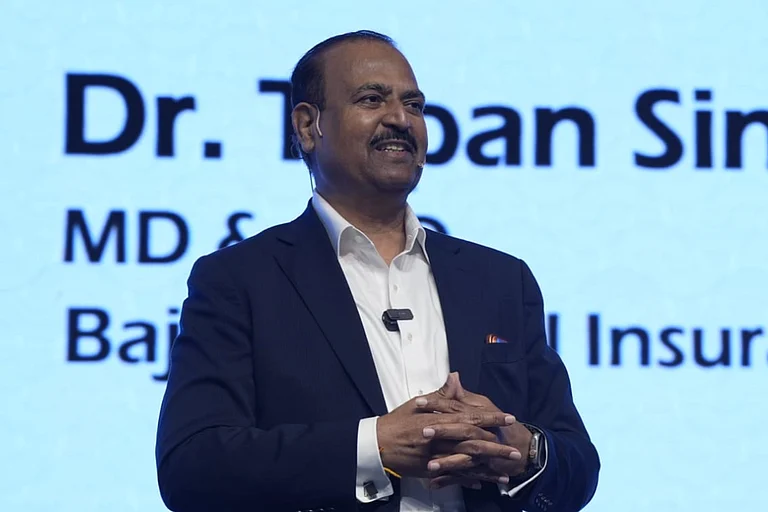
On paper, the system appears straightforward: a patient is admitted to a network hospital, the hospital sends a pre-authorisation request to the insurer or a third-party administrator, approval is granted within stipulated timelines, treatment is completed, and the insurer settles the bill directly with the hospital. However, the reality is more complex, the presentation noted. Insurers can approve claims only within the boundaries of the policy contract. Coverage is subject to room rent eligibility, sub-limits, co-pay clauses, waiting periods and exclusions. In addition to this, medical necessity needs to be established, billing components must align with policy terms, and the policy must be active. Any mismatch can lead to deductions or additional payments at discharge, the presentation said.
Hospitals, on their part, also face operational challenges. They deal with multiple insurer portals, varying documentation requirements and repeated queries or resubmissions. The administrative burden often requires dedicated insurance desks, diverting manpower from patient care. A lack of standardisation in hospital billing practices further complicates the process.
Insurers, meanwhile, must strike a balance between speed, accuracy and fraud prevention. “Cashless works within policy-defined boundaries,” Nandargi noted, adding that the system does not fail out of intent, but because healthcare billing and insurance terms are not yet fully standardised.
To address these systemic gaps, regulators and industry bodies have introduced reforms. The Insurance Regulatory and Development Authority of India (Irdai) has mandated a three-hour turnaround time for discharge authorisations and introduced the ‘Cashless Everywhere’ initiative. It has also made Customer Information Sheets compulsory, requiring insurers to explain exclusions and policy conditions in plain language.
A key technological intervention is the National Health Claims Exchange (NHCX), launched in June 2024 under the Ayushman Bharat Digital Mission, supported by the National Health Authority and the General Insurance Council. The platform aims to create a unified, standardised digital infrastructure for health insurance claims, the presentation said. By enabling interoperable, machine-readable claim formats and single-portal access for hospitals, NHCX is expected to reduce processing costs dramatically — from around Rs. 500 per claim to nearly Rs. 20 — while improving transparency and real-time tracking.

Intermediaries also play a critical role, the presentation said. TPAs handle roughly 72 per cent of all cashless claims in India, coordinating between hospitals, insurers and patients. According to the presentation, claims initiated through digital channels have shown approval rates as high as 97 per cent, and customer satisfaction tends to be higher when intermediaries assist in documentation and follow-ups.
The presentation highlighted that cashless hospitalisation is an evolving ecosystem. For it to become truly seamless, stakeholders must work toward standardised pricing frameworks, digital integration across platforms, outcome-based hospital contracting and clearer communication at the point of sale. Consumers, too, must understand room rent limits, choose an adequate sum insured and disclose medical history honestly.





