








Summary of this article
Rise in medical inflation, climate-related risks need to be mitigated
Universal healthcare, coordination with government needed to tackle risks
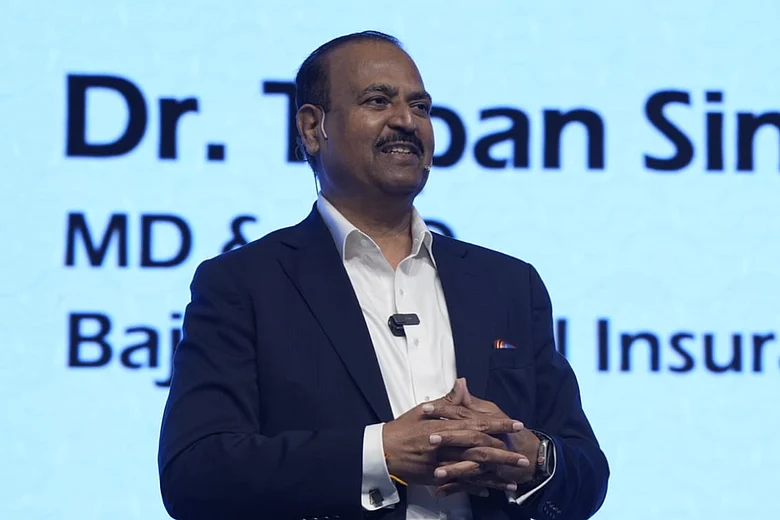
India faces several emerging risks, including job loss due to development in artificial intelligence (AI), rising medical inflation, and the pressures of a rapidly growing ageing population, which need to be addressed as India moves towards becoming a developed nation by 2047, Tapan Singhel, Managing Director and CEO, Bajaj General Insurance, said at Outlook Money 40After40 Retirement Expo in Mumbai on February 21, 2026. To this end, Singhel suggested that developing a comprehensive and systemic insurance framework which could help mitigate the risks are needed.
“By the time we reach 2047 as Viksit Bharat, no Indian (should) get poor because of an incident like a flood, factory shutdown or a health incident,” Singhel said.
Risks for the Population
Singhel said that with the rapid development in technology and AI, entry-level jobs for a country with a large youth population could vanish, with even white-collar jobs expected to be impacted.

Chances of civil unrest due to expected loss of jobs and unemployment among youth could also be on the cards. In addition to this, disruptions due to climate change are also a risk which is likely to impact more gig workers, farmers and others working in the unorganised sector, he said.
Singhel said that the rise in extreme climate disruptions, such as flood or heatwaves could lead to business wipe-outs for micro, small and medium enterprises (MSMEs), with about 25 per cent of affected units becoming bankrupt due to lack of insurance coverage, he said.
Medical Inflation on Rise
Singhel said that the cost of medical bills is also on the rise. Medical inflation is rising at 14-15 per cent, far above average inflation, making future healthcare unaffordable for many Indians.
“This is coupled with longer lifespans of individuals and a rapidly ageing population, which also creates strain in financial and healthcare systems. Additionally, societal support‑systems are also shrinking as joint‑family support structures are fast vanishing,” he added.
Coordination between Insurance Industry, Government to Mitigate Risks
He said this problem called for the insurance industry and the government to focus on providing more protection to citizens across socio-economic categories. Coordinated government–industry action is needed to mitigate rapidly intensifying risks, he added.

Singhel emphasised the need for universal health coverage and mandatory protection for MSMEs.
Ensuring that 100 per cent of the population is covered by some form of health insurance is essential to prevent health‑related poverty. For SMEs and MSMEs, mandatory insurance protection against climate-related risks floods, cyclones, and climate‑driven losses could also help in mitigating risks of bankruptcy. States should also be allowed to collect and manage pooled insurance funds for disasters and public‑good schemes, even if not routed through private insurers, he said.
Singhel also highlighted policy gaps and industry priorities that stakeholders need to evaluate. So far, there is no regulation to control medical inflation, he added. To this end, he suggested establishing a hospital regulator to look into standard protocols, pricing norms, and common empanelment.
Additionally, in order to support India’s ageing population and rising longevity, it is essential to build a network of ambulances, hospitals, wearables, and early‑warning systems, he said.
Singhel also suggested that medical insurance for all employees should be made mandatory. Similar to the model in the US where all employers insure their employees. “Impact to the gross domestic product (GDP) on India as a result of every Indian not being covered is close to 2 per cent. But it’s actually going at 11-12 per cent. We are a leaking bucket,” Singhel said.
In order to tackle AI-related job losses, Singhel suggested developing new insurance products such as surety bonds and AI‑related risk covers.





