








Summary of this article
Goal-based investing ensures disciplined wealth creation.
Long-term equity builds retirement corpus.
Asset allocation must match time horizon.
How should one plan investments in mutual funds?
Many people invest, but they invest sporadically. Rarely do they finalise financial goals, life goals, and then invest accordingly. Most investors follow a product-centric approach rather than a process-centric approach.
Modern investment theory clearly says investment should be process-centric. That is very important. Investments should be systematic, goal-based, and should be aligned with duration — how long you need to invest. Then comes asset allocation: whether to invest in debt funds, equity funds, or higher-risk equity schemes.

These three steps — goal clarity, investment duration, and asset allocation — are extremely important. And everything must align with life goals: children’s education, buying a house, retirement, and so on. For example, if someone plans to buy a house in Mumbai — say, a 1 BHK or 2 BHK — they must realistically assess the cost and align their investments accordingly.
Retirement planning is even more critical because after retiring at 60, we may still live another 25-30 or even 40 years. Data shows that only about 10.70 per cent of India’s gross domestic product (GDP) is invested in pension and retirement assets, whereas in the Organisation for Economic Co-operation and Development (OECD) countries, it is around 88 per cent. So, we are far behind. We still depend on children, real estate, or non-financial assets rather than financial retirement planning.
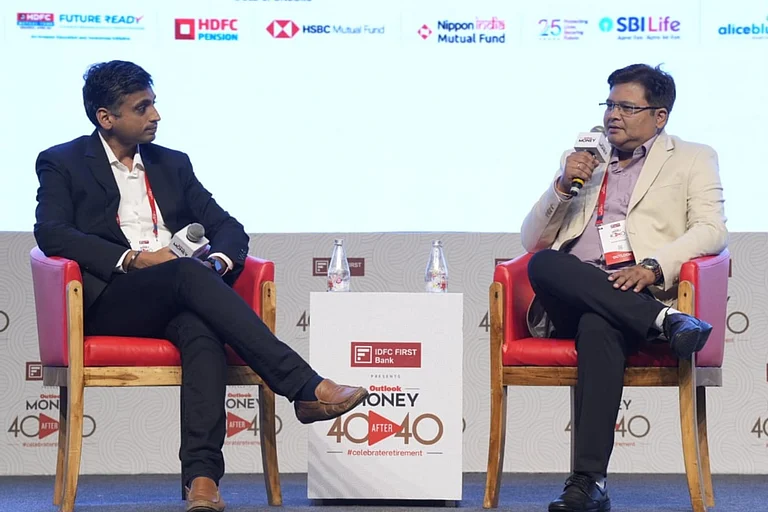
Individuals have multiple goals — buying a house, children’s education, retirement, and even vacations. How should they prioritise these goals while investing?
Prioritisation is very important and should be done systematically, preferably with the help of a financial advisor or distributor who has experience in financial planning.
Short-term goals — say within one to one-and-a-half years — require a different investment strategy. Medium-term goals, such as buying a house, typically over 5-10 years, can be addressed through hybrid funds. Many Indians aspire to own a home, and hybrid funds can be a good tool for such medium-term planning.
Mutual funds offer a wide range of equity products — large-, mid-, flexi-cap, and so on. How should investors select the right category for specific goals, especially retirement? If retirement is 25 years away, should one go for 100 per cent equity?
If someone has 25–30 years before retirement, equity exposure becomes extremely important.
I will give my own example — my son is 29. I advised him that since he has about 30 years before retirement, he should invest in equity funds, including mid-cap and small-cap funds, to create substantial wealth over time.
Long-term equity investing helps build a strong retirement corpus. But when retirement approaches — say at age 58–60 — instead of withdrawing everything at once, mutual funds offer a very useful concept called the systematic withdrawal plan (SWP).
Markets are volatile. We never know how markets will behave at a given time. SWP allows gradual withdrawal in a systematic, flexible way while the remaining corpus continues to grow.
Even if equity funds generate 6-10 per cent returns over time, you can withdraw monthly income while keeping the corpus invested. This gives financial stability for retirees, especially younger generations like millennials, who start early.
We have seen a rise in thematic funds over the last 2-3 years. What role should thematic funds play in one’s overall portfolio?
Yes, many mutual funds are launching thematic funds. LIC Mutual Fund also launched a consumption fund recently. Thematic funds invest around a particular theme or idea, but across a diversified basket of stocks.
These funds can generate good returns and sometimes higher returns for investors. While equity funds are considered high risk, thematic funds benefit from diversification within a theme, which helps in diffusing some risk.
However, investors must remain invested for the long term to benefit. My suggestion is to allocate around 20-25 per cent of the portfolio to thematic funds and maintain a longer investment horizon.
Entry and exit timing is very important in thematic funds, isn’t it?
Yes, absolutely. Entry and exit timings matter significantly in thematic investing. Investors should be mindful of market cycles and ideally take professional advice before investing.





