







Summary of this article
Discipline in investing more important than timing market
Align investments with goals while maintaining consistency
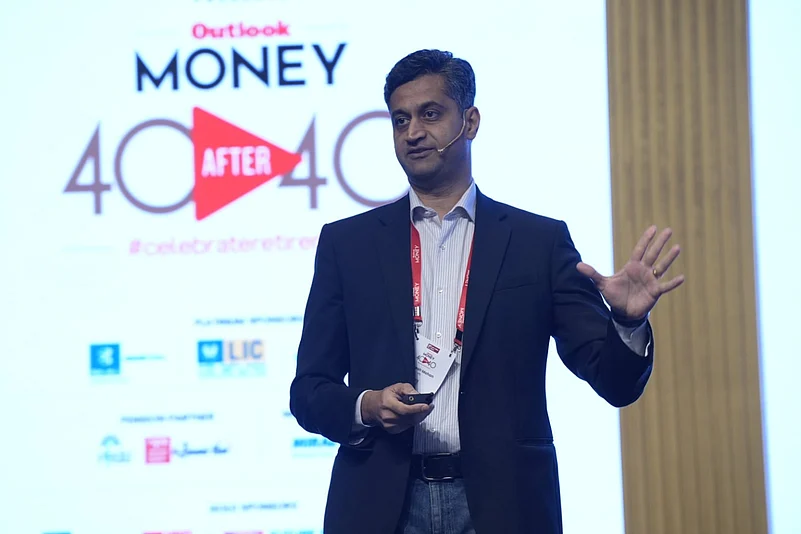
In the world of investing, brilliance is often celebrated, but discipline quietly builds wealth. That was the core message delivered in a presentation by Ganesh Mohan, chief executive officer at Bajaj Finserv Asset Management at IDFC FIRST Bank presents Outlook Money’s 40After40 Retirement Expo held in Mumbai, who argued that investors’ biggest challenge is not market volatility but their own behaviour.
The presentation highlighted how psychology consistently shapes investment outcomes. Whether it is choosing “5 per cent fat yoghurt” over “95 per cent fat-free yoghurt” because of framing, or feeling the sting of a Rs. 100 loss more deeply than the joy of a Rs. 100 gain, investors are often driven by cognitive biases rather than rational analysis.
The session underscored two broad schools of investing — one rooted in data and process, the other swayed by emotion and market noise. Social pressure and herd mentality are powerful forces influencing individual decisions, it said. In markets, this often translates into chasing trends and exiting during panic.
Overconfidence was flagged as another silent wealth destroyer. When investors overestimate their chances of success and increase bet sizes disproportionately, mistakes get compounded, the presentation noted. Equity, while an attractive long-term asset class, becomes risky when approached without structure or discipline, it said.
One of the stark insights shared was the gap between fund returns and investor returns. Data show that investors typically earn 2.5–5 percentage points less than the funds they invest in — a gap attributed to poor timing decisions driven by fear and greed. This gap is even wider in sectoral funds over three-year periods. This “behavioural gap” reflects the cost of emotional decision-making, it said.
To counter behavioural pitfalls, identifying individual biases and recognising crowd behaviour are the first steps. For this purpose, the presentation outlined practical tools. An investment checklist ensures structured decision-making before committing capital. A pre-mortem exercise — imagining why an investment might fail — helps identify hidden risks. Maintaining an investment journal builds self-awareness, while pre-commitment strategies reduce impulsive actions during market swings.
Yet the most powerful discipline tool, according to the presentation, is asset allocation. Mohan suggested that investors to divide their money into three buckets: immediate needs, medium-term goals, and long-term wealth creation. Funds required within a year can be parked in liquid or arbitrage funds rather than savings accounts, which often erode value due to low interest rates. For goals two to three years away, longer-duration debt funds or fixed deposits aligned with maturity timelines may be appropriate. Money not required for at least five years should be invested in equities to harness compounding, the presentation suggested.

The inefficiency of savings accounts was also highlighted in the presentation. With vast sums lying idle at modest rates, investors potentially lose meaningful daily interest income, it said. In contrast, instruments such as liquid and overnight mutual funds offer competitive returns with comparable liquidity features, including limited instant redemption options, it said.
The broader message was not about chasing higher returns but about aligning investments with goals and maintaining consistency. “In investing, being in the right place at the right time matters. But being disciplined at all times matters even more,” it said.





