








Summary of this article
AI tools simplify retirement, offering algorithmic, personalised financial planning solutions.
Small disciplined contributions over time can grow into substantial wealth.
Awareness, affordability, and consistency are pillars of long-term success.
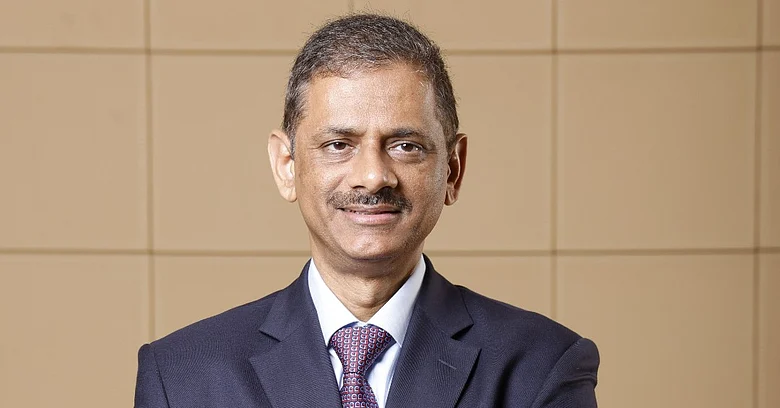
The 4th edition of IDFC FIRST Bank presents Outlook Money 40 After 40, India's first and only Financial and Retirement Planning Expo, started with a visionary inaugural speech by V Vaidyanathan, MD & CEO of IDFC First Bank. From the onset, he stressed the need to have a serious focus on retirement planning and stressed the need to use new generation tools, including AI, to help plan your retirement better. "I really believe that an individual can never do all this algorithmic work which an AI tool can do. The AI works on things which an individual just cannot do. So, providing these tools is what IDFC is bringing to the consumers. Because they don't know how much to invest to get what in life, this is an important question. It's got math, and people often miss it. So we, at IDFC First Bank, have put this thing for customers here."

"A person asks - how much would I invest to get Rs 5 crore in 30 years from now, and where should I invest it? We offer them a complete integrated solution and tools to get that answer. This is very important now. Then it makes their life easier," Vaidyanathan said.
Explaining the tool, he said, "What IDFC has done in the background is super important. It has gone to every single mutual fund of the country, identified what the companies are inside that fund and then done public research and found out what the one-year forward view of those underlying companies is. The bank will select the funds for the customer based on these things. If the customer says no, I want to be a conservative investor, then the system will run an algorithm, and the funds will change."
Here are some top highlights of V Vaidyanathan's inaugural speech:
1. Educational tools
Apart from the financial planning tools that we give on the app and the website, we have educational tools. We've developed many such videos for the consumption of the public at large. We call it IDFC First Academy for Financial Education.
2. Psychological Relativity and Triple Whammy
You sit in a dentist's chair and get your tooth issue resolved. It may be 10 10-minute affair, but it may feel like 30 minutes to you. It's the theory of relativity and has its place in psychology. This is how senior citizens feel, and to couple it with financial issues and then adding to it not having saved enough in life and not having enough investments, then it becomes a triple whammy for seniors.


3. On the Working Class Reality
India has roughly 520 million working-class people. The informal segment of employment is about 420 million. They have the hardest life while they are working, and they have hardly anything to save for themselves at the end of their period.
4. On the Power of Small Contributions
It may sound like magic, but it's more because the government is also contributing. Rs 80 a month, and they can get a pension of Rs 3000. This is a very powerful scheme, seniors. I agree Rs 3000 or 5000 is not a big amount. It’s not at all. But at least it just gives some dignity rather than really being stranded.
5. On Financial Discipline
Just 10,000 rupees per month discipline can help you earn a big return. If you contribute Rs 10,000 per month for 30 years, you could be sitting on Rs 3.4 crores.
6. On the Three Pillars of Success
There are three things here. One is awareness, one is attached to affordability, and the third is discipline. And then, of course, the discipline of being able to stay consistent with that over time. And that’s how things compound.
7. On AI and the Future Job Market
The younger generation... should really, really think about this because the coming world of AI, nobody can ever be sure how this world economy is going to change, how the job market is going to change. People are not going to keep jobs for 30 years or 40 years.
8. On Social Responsibility
Senior citizens have done a lot for us during that phase of our lives. So whatever we can do in our respective institutions to support that and pay back in our own way is something that we should do.





