







Summary of this article
Bengaluru hospital sees shocking rise in elderly patients abandoned by families.
Family returns for the body after death but denies relation during life.
Around 60 senior citizens were abandoned at Victoria Hospital this year alone. They have been shifted to old age homes after recovery.
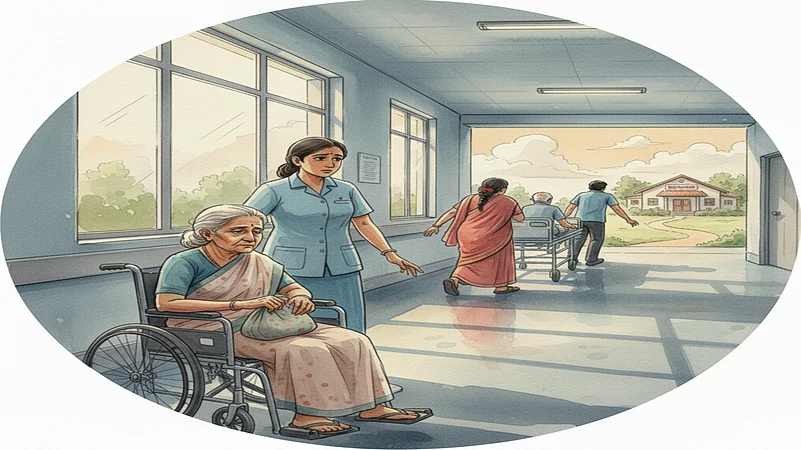
One shocking trend is emerging these days, reflecting a growing apathy towards elderly parents. The recent admission in the state-run trauma centre in the Victoria Hospital campus, in Bengaluru, shows this trend. The trauma centre has been noticing this trend for some time. People bring elderly and critically ill patients to the hospital, get them admitted, and when the patient recovers and is ready to go back, they deny any familial relations with the elderly. This practice not only leaves such elderly stranded but also puts an unclaimed burden on the public healthcare system.
Typically, the elderly are admitted to the hospitals and the attendants, people who brought them, claim to have found them abandoned on the streets. The hospital admits the patient, starts the treatment, but the challenge starts after their recovery, as the attendant denied any relation with them, and these elderly people have no place to go back to. Then they are shifted to the NGO-run old age homes and have to stay in the hospital premises for days before they are shifted, per a report by The Hindu.
According to the authorities in the Trauma and Emergency Care Centre (TECC) in the hospital, around 60 such seniors have been transferred to shelters and old-age homes this year since January. However, they caution that the number of abandoned seniors may be even higher. The disturbing trend reflects the trend where people are shifting their responsibility of caregiving to the elderly to the public healthcare system.


Reportedly, on November 25, a woman admitted an unconscious 61-year-old man to the hospital, claiming that she picked him up from an NGO. The hospital admitted the man, who suffered from pancytopenia, a medical condition where the count of all three blood cells (red blood cells, white blood cells, and platelets) becomes low. After the treatment, the man regained strength and could walk and communicate. Thus, the hospital staff tried to contact the woman who got him admitted, but she denied any relationship with the elderly. On the other hand, the elderly man claimed that she is a family member.
Dr. Asima Banu, special officer (in charge) of TECC, cites another such incident, where a family who initially claimed to have no connection with an elderly patient came back to take the body after the patient’s death. The son admitted that the patient is his relative only when he was told that the body would otherwise be sent to the mortuary.
Abandonment and denial in such cases show neglect towards seniors. It also brings notice for an urgent action to ensure a support system for vulnerable senior citizens.

What Could Be The Possible Reasons Behind Such Behaviour?
Himanshu Rath, founder, Agewell Foundation, a not-for-profit organisation, says, “This is one of the most painful realities we are witnessing in urban India today. The reasons are rarely just one, but a combination of deep-rooted emotional, social, and economic factors, caregiver burnout, and social stigma around old age homes.” He says that abandoning elderly parents in a hospital is somehow less visible and therefore less shameful in the eyes of the family.
Is Soaring Medical Cost A Reason Behind Abondonment?
Rath says, “Medical cost is a trigger, not the root cause. The deeper truth is convenience and emotional detachment. When the bond is strong, families move heaven and earth, sell property, take loans, crowdfund, and quit jobs to care for their elders. When the bond is broken, even Rs 5,000 a month for a decent old-age home feels too much.”
In case of Victoria hospital, Dr. Banu says that TECC gets referrals from the hospitals in Karnataka as well as outside, and takes the patients who have exhausted their insurance but still need treatment. Police also routinely send destitute persons daily, and there are a minimum of five such abandonment cases every day.
The state-run TECC has 120 beds with a 36-bed ICU – intensive care unit, nine operating theatres, a cath lab, and a CT scan facility, and handles around 90,000 patients annually.





