




Sponsored Content
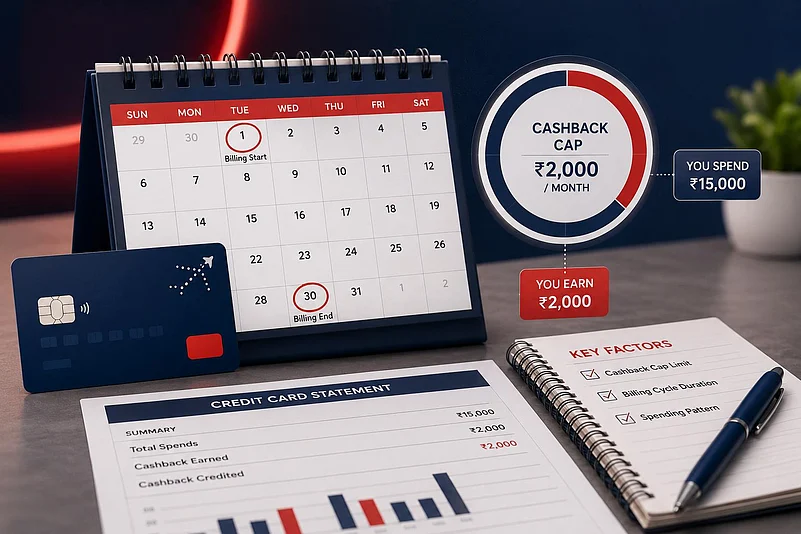
Credit card offers often look simple: spend and get cashback. The final value, however, depends on two less visible details. The first is the cashback cap. The second is the billing cycle.
A cap limits the maximum cashback you can earn in a period. A billing cycle decides when a purchase appears in the statement and when payment is due. Together, these two factors can change what benefit you receive and when you receive it. Let’s understand how.
Key Takeaways
Capping can limit a high cashback percentage.
Billing cycle timing affects due date, cash flow and when cashback is credited.
Final benefit should be calculated on actual credit received, not headline percentage.
What Is A Cashback Cap
A cashback cap is the maximum cashback allowed under an offer. For example, an offer may say 5% cashback up to ₹750. If you spend ₹10,000, 5% cashback is ₹500. If you spend ₹30,000, 5% would be ₹1,500, but the cap restricts it to ₹750.
This is why large purchases do not always produce large benefits. Once the cap is reached, extra spending may not earn additional cashback under that offer.
Caps may be daily, monthly, offer-period based or category based. A card may have one cap for groceries, another for online shopping and another for bill payments. Reading this detail matters before planning a purchase.
How Billing Cycles Affect Cashback
A billing cycle is the period for which card transactions are grouped into one statement. If the cycle runs from the 5th of one month to the 4th of the next, purchases made on the 4th and 5th can fall into different statements.



This matters during offers. A transaction near the cycle end may become payable sooner. A transaction just after the statement date may give a longer interest-free period. The cashback credit may also be linked to statement generation or payment completion.
If cashback is credited after 60 or 90 days, the buyer should not treat it as immediate cash. The full bill may still need to be paid first.
How Caps And Cycles Work Together
Assume an offer gives 5% cashback up to ₹1,000 per billing cycle. A person spends ₹20,000 on the last day of one cycle and ₹20,000 the next day in the new cycle. Depending on the terms, the person may access two separate caps. If both purchases fall in the same cycle, the total cashback may still be capped at ₹1,000.
This does not mean people should split purchases unnecessarily. It means they should know the cycle before assuming a benefit.
A Simple Calculation
Suppose your monthly online spending is ₹18,000. A card gives 5% cashback but caps the benefit at ₹500 per month. The theoretical cashback is ₹900, but the actual cashback is ₹500. The effective rate becomes about 2.8%, not 5%.
Now suppose the annual fee is ₹1,000. If the cardholder earns ₹500 cashback every month for 12 months, the annual cashback is ₹6,000 before considering fees and exclusions. After the fee, the net value is ₹5,000, provided the cashback categories were eligible.
What To Check Before Relying On Cashback
Is the cap monthly, quarterly or offer-period based?
Does cashback apply to all transactions or only selected categories?
Are rent, wallet, fuel, education, insurance or government payments excluded?
When is cashback credited?
Is there an annual fee or redemption fee?
Can cashback be reversed on returns or cancellations?
When Billing Date Planning Helps
A cardholder does not need to change every purchase around the billing cycle. But for planned large spends, knowing the statement date can help cash flow. A transaction made just after statement generation may get a longer interest-free period, while one made just before the statement date may become payable sooner.
This does not change the cost of the product. It only changes the time available to pay. That time is useful if the bill will be paid in full. If the balance is carried forward, the benefit of timing is lost to interest charges.
Conclusion
Cashback is useful when it is calculated correctly. The headline percentage is only the starting point. The cap decides the maximum value, and the billing cycle decides when the transaction and benefit are recognised. If you want to apply for credit card online, remember that a good cashback card is not just about a high rate. It is about a cap that fits your monthly spending and a repayment habit that protects the benefit from interest charges.
Disclaimer: This is a sponsored article. It is not part of Outlook Money's editorial content and was not created by Outlook Money journalists.





