

Summary of this article
Higher income tax exemption limits and simplified tax slabs are needed for senior and super senior citizens.
Enhanced deductions for health insurance premiums and treatment of critical illnesses amid rising medical inflation are also on their wishlist.
Senior citizens seek better returns and higher investment caps under government-backed senior citizen savings schemes.
Relaxation of TDS norms and strengthened pension and social security frameworks for the elderly are needed.
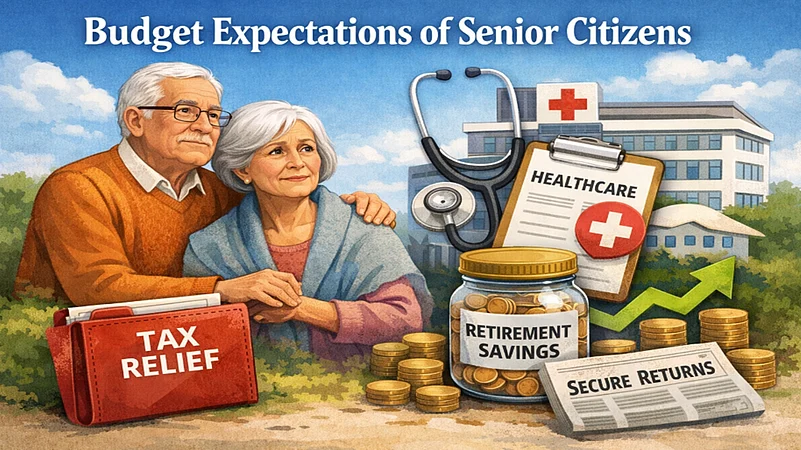
Senior citizens constitute a rapidly-growing segment of India’s population, and the Union Budget 2026 presents an important opportunity to address their evolving financial, healthcare and social security needs. With rising life expectancy, inflationary pressures and increased medical costs, senior citizens are looking for targeted fiscal measures that ensure income stability, dignity and financial independence in their post-retirement years.
Enhanced Income Tax Relief for Senior and Super Senior Citizens
A key expectation is a meaningful increase in the basic exemption limit for senior citizens, particularly those above 60 and 80 years of age. While certain relaxations already exist, rising costs of living have significantly eroded their real benefits.
“An upward revision of exemption thresholds, coupled with simplified slab structures, would provide the much-needed relief to pensioners and retirees dependent on fixed incomes. Additionally, clarity on the applicability of the old versus new tax regime for senior citizens would help in better financial planning,” says Vipin Upadhyay, Partner, King Stubb & Kasiva, Advocates and Attorneys.
Higher Deductions for Medical and Health Insurance Expenses
Healthcare remains the single largest expense for most senior citizens. There is a strong demand for increasing the deduction limits under Section 80D for health insurance premiums and preventive health check-ups. Further, enhancing deductions under Section 80DDB for treatment of critical and chronic illnesses would offer significant support, especially as medical inflation continues to outpace general inflation. Simplifying documentation requirements for claiming such deductions would also reduce compliance burdens for elderly taxpayers.
Improved Returns and Security on Senior Citizen Savings Schemes
With interest rates remaining volatile, senior citizens are keenly watching for better returns on government-backed savings instruments such as the Senior Citizen Savings Scheme (SCSS) and Post Office Monthly Income Scheme. Expectations include an increase in the maximum investment limit under SCSS and more attractive interest rates that keep pace with inflation, while preserving capital safety.
Rationalisation of TDS Provisions
Although certain TDS exemptions exist for senior citizens, many continue to face cash flow challenges due to tax deducted at source on interest income. “A higher threshold for TDS applicability, or complete exemption for low- and middle-income senior citizens, would ease liquidity concerns and reduce the need for refunds and additional compliance,” says Upadhyay.
Strengthening Pension and Social Security Frameworks
Senior citizens also expect enhanced support through pension schemes, particularly for those in the unorganised sector who lack employer-backed retirement benefits. Expanding coverage and increasing payouts under government pension schemes would help ensure a basic standard of living and reduce financial dependency in old age.
Simplification and Digital Inclusion
“As tax administration becomes increasingly digital, senior citizens seek simpler processes, assisted compliance mechanisms and continued availability of non-digital options. Dedicated grievance redressal and support channels for elderly taxpayers would go a long way in making compliance less intimidating,” says Upadhyay.
Conclusion
From a policy perspective, Budget 2026 has the potential to reinforce India’s commitment to inclusive growth by addressing the unique needs of senior citizens. Targeted tax relief, healthcare support, secure investment avenues and simplified compliance can collectively enhance financial security and quality of life for the elderly, while reflecting a compassionate and forward-looking fiscal approach.