

Summary of this article
Income tax notices can be authenticated through the official e-filing portal
Genuine ITD communications issued after October 2019 generally carry a DIN
Fraudulent tax messages may seek passwords, OTPs, or banking credentials
Verified income tax notices should be reviewed and answered within deadlines
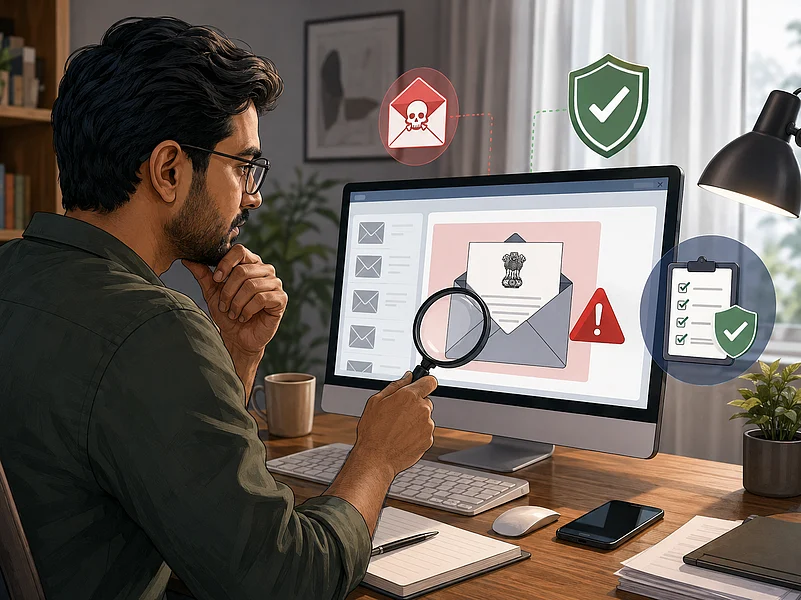
An unexpected income tax notice can be unsettling, especially when it arrives by email or message and warns of pending tax, a refund problem or possible action. But with fraudsters using official-looking communication, taxpayers should first establish whether the notice has actually come from the Income Tax Department (ITD).
The safest approach is not to react in haste. A genuine communication can be checked independently through the income tax e-filing portal before any response is submitted.
Check Whether The Notice Is Genuine
Taxpayers can use the “Authenticate Notice/Order issued by ITD” facility available on the e-filing portal. The service can be used even without logging into the account.

3 September 2026
Get the latest issue of Outlook Money

A notice may be authenticated using details such as PAN, document type, assessment year, date of issue and mobile number. It can also be checked using the Document Identification Number, or DIN, along with a mobile number, according to a recent report by Financial Express.
The ITD says communications issued on or after October 1, 2019 are generally required to carry a unique DIN. This computer-generated number helps taxpayers verify whether a notice, order, summons, letter or other communication was actually issued by the tax authorities.
Taxpayers should also log into their e-filing account separately, rather than through a link received in an email or text message, and check for notices or pending actions. If the communication does not appear there, further verification may be necessary.
Watch For Red Flags In Emails And Messages
Fraudulent messages often try to create urgency. A taxpayer may be told that a refund is blocked, a bank account will be frozen, a penalty must be paid immediately, or personal information needs to be updated through a link.
Such claims should be treated cautiously, particularly when the sender asks for passwords, card details, banking credentials, OTPs or other sensitive information. The ITD has cautioned taxpayers that it does not seek passwords, PINs or similar access information for bank or card accounts through email.
The sender’s address should also be checked carefully. Fraudsters may use names and logos that look official while altering a few characters in the email address or website.
Do Not Ignore A Verified Notice
While suspicious communication should not be acted upon blindly, a genuine tax notice should not be ignored. If the notice is genuine, go through it to understand why it was sent and how much time you have to reply. You may be asked to provide documents, explain a mismatch in your tax records, or deal with a pending demand. Where the issue is difficult to understand, a tax professional can help with the response.
Use the income tax portal to submit your reply. Do not click on unfamiliar links in emails or messages, especially if they ask for personal, banking, or login details.
FAQs
1. How can I check whether an income tax notice is genuine?
Use the “Authenticate Notice/Order issued by ITD” facility on the income tax e-filing portal. You can verify it using notice details or the DIN.
2. What are the warning signs of a fake income tax notice?
Be cautious if a message creates urgency, asks you to click unfamiliar links, or seeks passwords, OTPs, banking details, or other sensitive information.
3. What should I do after verifying a genuine tax notice?
Read the notice carefully, check the response deadline, and submit the required reply or documents through the official income tax portal.