

Summary of this article
Fake email claims Income Tax demand for AY 2025–26, PIB flags scam
Fraud message urges taxpayers to click link for fake “Assessment Order”
IT Department never asks for OTP, passwords, bank details via email
Verify notices only on official e-filing portal using DIN
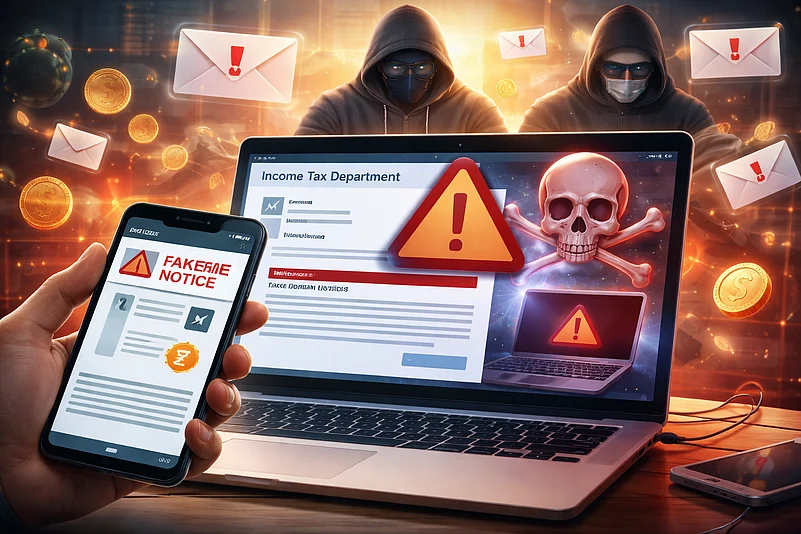
A fake email, purportedly sent by the Income Tax Department (ITD), is doing the rounds online. The message tells taxpayers that there is a tax demand for Assessment Year 2025–26 and asks them to click on a link to view an “Assessment Order.” Authorities have clarified that both the email and the order are fraudulent.
The Press Information Bureau (PIB) issued a fact check on the social media platform X, clarifying that the ITD has not sent any such notice. The department has advised taxpayers not to click on links or share personal and financial information in response to such messages.
Anatomy Of A Tax Phishing Scam
It is important to understand that links are designed to appear legitimate. Government logos and formal language are likely to be used to create urgency. Many emails claim there is an error in tax calculation, a pending refund, or a demand for payment. The intent is to trick recipients into giving away sensitive details.
The link in such emails can lead to a fake website made to resemble the official portal. If bank passwords, OTPs, or other confidential details are entered on it, fraudsters may use the information to access the account.
The ITD has repeatedly warned that it never asks for passwords, OTPs, or bank details through email, SMS, or phone calls. Any request for such information should be treated with suspicion.
How To Stay Vigilant
Taxpayers who receive suspicious emails should verify them directly through the official Income Tax e-Filing Portal. Legitimate notices appear only after logging into your account on the portal. If a notice isn’t there, it is almost certainly a scam.
One should utilize the ITD’s official e-filing portal, log in to their account to verify notices using the Document Identification Number (DIN), as all valid notices will be posted and available there. “In case notice is received via email, you must check the email id of the sender. You must never provide any personal/bank details, etc., anywhere, even if asked through any mail, messages, or even calls. The department only corresponds through each taxpayer's login portal on their website, not from any other mode,” says Ritika Nayyar, partner, Singhania & Co.
Another easy way to check is by looking at the sender’s email domain. Official emails come only from verified addresses ending with @incometax.gov.in. Emails from other domains or containing strange links should be ignored. Authorities also ask taxpayers to report phishing attempts to help prevent wider scams. Suspicious emails can be forwarded to webmanager@incometax.gov.in.
Crucially, no legitimate tax officer will ever demand immediate payment via a phone call, UPI, or a direct link. “The department follows a strict legal course of action, allowing taxpayers a fair window to respond through official channels. Staying vigilant and relying only on the secure portal is your best defense against these evolving scams,” says Ankit Jain, partner, Ved Jain and Associates.