





Summary of this article
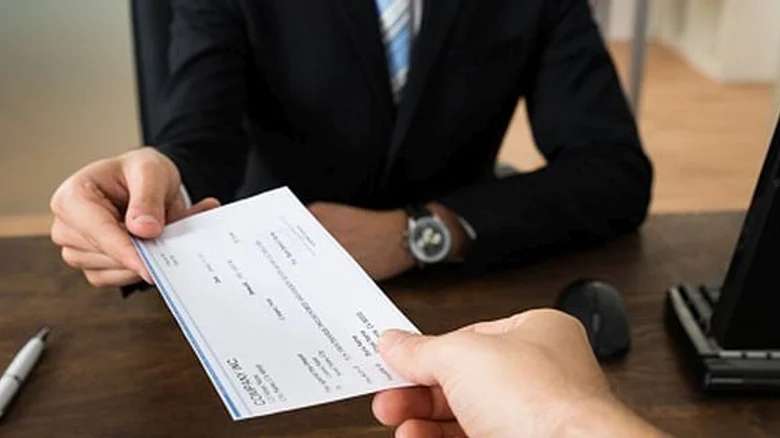
The Himachal Pradesh High Court ruled that an unverified cheque return memo solely is insufficient proof to prove cheque dishonour under Section 138 of the Negotiable Instruments Act.
As the matter is pending with trial court, it held that the authenticity of the memo and whether funds were insufficient must be by the trial court through full evidence.
A cheque dishonour is considered a serious offence in India and could even land a person in jail. However, the imprisonment can be awarded only in case of cheque dishonour due to insufficient funds or for other reasons, the latter being a matter of debate in a recent case filed in the Himachal Pradesh High Court. While there could be nearly a dozen reasons for a cheque return, under the Negotiable Instrument Act, 1881, legal repercussions are invoked only when the return reason is related to insufficient funds in the account.
However, in a recent case, the question put before the court was whether such a technicality is enough to quash a criminal complaint. Given that the cheque return memo was the primary evidence of a failed transaction, the court examined the procedural hurdles and criminal intent of cheque dishonour to safeguard both debtors and creditors.



Case Background
The dispute relates to a Rs 10 lakh cheque the petitioner issued to discharge his financial liability. However, the cheque was dishonoured and returned to the payee (party to receive the funds) on July 6, 2022, along with a return memo, bearing the remarks ‘account freezed’.
The return then led to the criminal case by the receiving party, which is currently pending in the court of the Additional Chief Judicial Magistrate at Theog, Shimla, Himachal Pradesh. Against this, the petitioner filed the case in the Himachal Pradesh High Court seeking to quash the complaint filed against him by the receiving party under Section 138 of the Negotiable Instruments Act, 1881.
Arguments
The petitioner’s counsel argued that there shouldn’t be a criminal case because the cheque was never dishonoured due to “Insufficient Funds”. The counsel contended that since the bank account was frozen, the cheque was essentially never presented for clearance in a manner that would have attracted penalties under Section 138 of the Act.
Conversely, the respondent’s counsel argued that the petition to quash the complaint was not maintainable because the return was due to a frozen status, not lack of funds, which is a factual question that needs to be decided by the trial court through evidence. The counsel said that a mere copy of the return memo was not enough and must be proved through legal procedures.

Court Observation
The court observed, “Case of the petitioner is that the cheque amounting to Rs 10 lakh issued towards discharge of lawful liability of the accused was never dishonoured on account of “insufficient funds”, rather the same was returned for the reason that bank account of the complainant in HDFC Bank stood freezed.”
It also noted that while the high court has the power under Section 528 of the Bharatiya Nagarik Suraksha Sanhita (BNSS) to prevent the abuse of the legal process, it cannot act as a trial court. The court noted that it may sift through the evidence to infer a prima facie case, but cannot weigh the genuineness of the evidence at this stage.
The court agreed that the complainant must prove that the cheque was returned due to insufficient funds, but since the trial court has taken cognisance and framed an accusation, the specific plea regarding the frozen account requires a full trial.
Court Judgment
The court dismissed the petition, ruling that the reason for the cheque’s return is a matter of trial. It held that the authenticity of the cheque return memo cannot be decided in quashing proceedings, but will require a ‘cogent and convincing evidence’ from the respective parties. The court dismissed the petition as being devoid of merit and left the matter to be decided by the trial court based on the evidence.





