





Summary of this article
In a recent judgment, the Supreme Court clarified that a dishonoured post-dated cheque cannot be presumed to indicate dishonest intent. The Court highlighted that criminal liability for cheating necessitates evidence of fraudulent intent at the start of the transaction, distinguishing civil disputes from criminal cases.
A dishonoured cheque due to insufficient funds can be a criminal liability, but not always. While delivering a judgment recently, the Supreme Court of India clarified that a mere dishonour of a post-dated cheque cannot be presumed to be a case of dishonest intention or cheating under the Indian Penal Code (IPC). The criminal liability for cheating requires proof of fraudulent intent at the inception of the transaction; the Court clarified, to restrain the misuse of the criminal law for civil disputes.
The case is related to a film project for which the appellant sought investment from the complainant. The appellant promised an initial 30 per cent return and a share in profit. However, the project failed to generate the expected profit. However, to return the principal amount, the appellant issued two post-dated cheques of Rs 24 lakh each. But when the claimant presented it for clearing in the bank, these were dishonoured due to insufficient funds. This led to the dispute and allegation of breach of contract and cheating.
While the Madras High Court had quashed the criminal charges of breach of trust under Section 406, it allowed the charge of cheating under Section 420 of the IPC. The appellant approached the Supreme Court.





Arguments
The Appellant argued before the Supreme Court that it was not a criminal conspiracy but a failed commercial venture that resulted in cheque dishonour, and thus, it is a civil dispute. The counsel of the appellant argued that a failure to keep a promise does not automatically mean cheating.
The prosecution (claimant), on the other hand, maintained that the inducement and misrepresentation by the appellant were established in this case. They argued that issuance of a cheque that could not be honoured is evidence of dishonest intention to deceive the complainant.
Court Observation
The bench comprising Justice Pamidighantam Sri Narasimha and Justice Manoj Misra emphasised that the post-dated cheques are issued typically to discharge an existing liability or, at times, as a security, with an expectation that the funds will be available by the due date.
It noted that “In order to constitute an offence of cheating, the intention to deceive should be in existence when the inducement was made. It is necessary to show that a person had a fraudulent or dishonest intention at the time of making the promise. Mere failure to keep the promise subsequently cannot be the sole basis to presume that dishonest intention existed from the very beginning.”

Further, the Court said, “From the allegations made in the complaint, it cannot be said that there was any dishonest intention of the appellant in making the promise which remained unfulfilled.”
The Supreme Court noted that “Movie making is a high-risk business. No one can be sure whether a movie will earn profits or will be a flop. If one agrees to share profits in lieu of his investment in a movie, he takes the risk of a possible zero return. Thus, the nature of the transaction between the parties was a crucial factor in determining whether the investor party should be allowed to bring a criminal action or pursue civil remedies.”
Since the film was already completed and released, the Court found no basis to say that the initial promise of return and a share in profit was false.
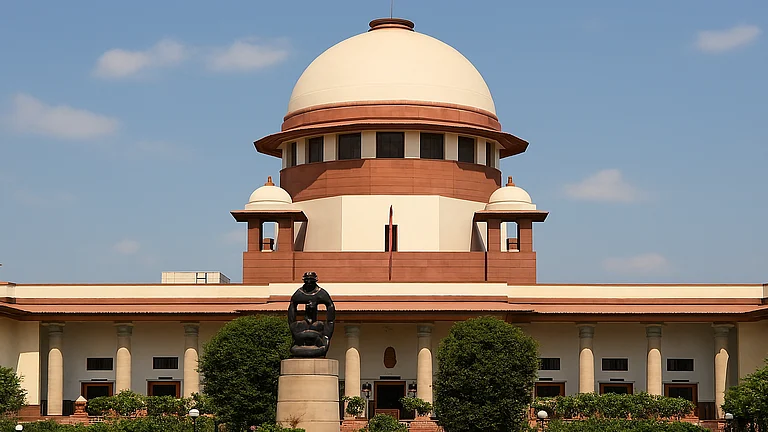
Court Judgment
The Supreme Court held, “in our view, the complaint and the supporting materials failed to indicate that the appellant harboured a dishonest intention from inception. In conclusion, the allegations only disclosed a civil cause of action, and the High Court fell into error in not quashing the criminal proceedings.”
The Court held that the dishonour of a cheque may give rise to proceedings under Section 138 of the Negotiable Instruments Act, 1981, but it does not automatically attract criminal liability for cheating. It quashed the criminal proceedings under Section 420 IPC and concluded that the matter was a civil dispute.





