


Summary of this article
Allahabad HC says daughter-in-law not liable for maintenance
Court distinguishes moral duty from enforceable legal obligation
Parents-in-law not covered under maintenance law provisions
The Allahabad High Court has ruled that a daughter-in-law is not legally obligated to maintain her parents-in-law under Section 125 of the CrPC – now Section 144 of the BNSS.
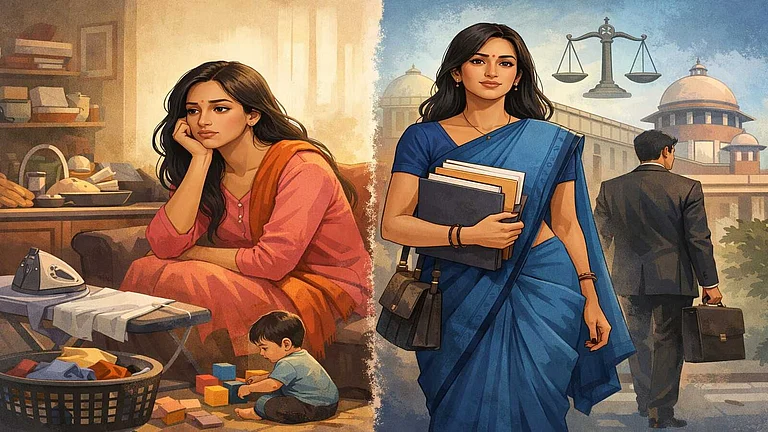
In a recent order, Justice Madan Pal Singh observed that the right to claim maintenance is a statutory right and is confined only to the categories of persons expressly mentioned in the section itself, and the parents-in-law do not fall within that ambit.
The court said that a moral obligation, however compelling it may appear, cannot be enforced as a legal obligation in the absence of a statutory mandate.
Dismissing a revision petition filed by an elderly couple against their daughter-in-law, the court said, “The legislature, in its wisdom, has not included parents-in-law within the ambit of the said provision. In other words, it is not the scheme of the legislature to fasten liability of maintenance upon a daughter-in-law towards her parents-in-law under the said provision.” The couple had moved the high court challenging an August 2025 order passed by a family court in Agra, which rejected their application seeking maintenance under Section 144 of the Bhartiya Nyaya Suraksha Sanhita (BNSS).
The couple submitted that they were old, illiterate, indigent and wholly dependent on their deceased son during his lifetime.
They contended that their daughter-in-law, a constable with Uttar Pradesh Police, had sufficient independent income besides receiving all service and retirement benefits of her deceased husband.
They also contended that the daughter-in-law's “moral obligation” to maintain her aged parents-in-law should be treated as a legal obligation.
The court, however, rejected this contention, noting that there was nothing on record to indicate that the daughter-in-law's police employment was secured on compassionate grounds.



The court also clarified that submissions regarding succession to the deceased son's property did not fall for consideration in such summary maintenance proceedings.