Indigo shares closed 9 per cent lower over last week
Here are the reasons what dragged down shares of the company
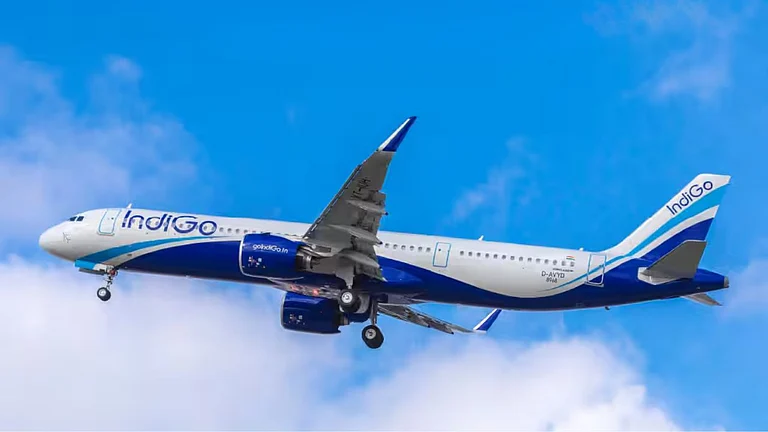
Shares of Indigo (InterGlobe Aviation Ltd) recovered slightly after the Directorate General of Civil Aviation (DGCA) granted the airline a one-time relaxation from pilot duty rules. Shares, however, remained down after India’s largest airlines saw a record number of flight cancellations, leaving thousands of passengers stranded.
Shares of Indigo ended at Rs. 5,367.50 per share, down over 9 per cent in the past week.
Indigo Airlines cancelled over 550 flights nationwide yesterday due to pilot-rostering issues. Today itself, as the disruption entered into its third day, the airlines cancelled over 400 flights.
What happened to Indigo?
The turmoil in Indigo began after the DGCA laid down stricter Flight Duty Time Limitations (FDTL) rules. These rules were brought to ensure adequate time to rest for pilots and flight attendants in order to prevent any accidents due to fatigue.
The DGCA mandated all airlines to follow these renewed FDTL norms. These rules include a requirement for all crew members to fly a maximum of eight hours per day, 35 hours a week, 125 hours a month and only 1,000 hours in a year. In addition to this, the new rules also stipulated that every crew member be given the opportunity to rest, which should be pro rata twice the flight time, with a minimum of 10 hours in any 24 hours.

Indigo said that the disruptions in flights were due to the underestimation of crew requirements in adhering to Phase 2 of the FDTL rules. It said that it had underestimated the number of pilots and crew required due to the tight limits in rostering. The rules also essentially reduced the window for night-time duty and slot availability for pilots and the cabin crew, the airline said. Additionally, the airline also attributed minor technology glitches, heavy airport congestion and adverse weather as contributing factors to the delay or cancellation of flights.
Due to fewer night duties allowed by Phase 2 of FDTL norms and longer rest periods mandated, Indigo failed to efficiently redesign its existing roster models and absorb the routine delays. Additionally, it did not manage to sufficiently plan ahead of the implementation of the new FDTL norms, ANI reported Federation of Indian Pilots (FIP) as saying.
The reason why Indigo was the most affected airline was due to its massive daily flight schedules with more than 2,000 flights daily, along with a roster design which heavily relied on night operations. So, when the cap on night duty timings kicked in, Indigo suffered the most.
The DGCA has now temporarily granted relief on night duty regulations for Indigo and withdrew the rule which restricted airlines from considering pilot leaves under the weekly rest period.
However, analysts say that the worst is not over for Indigo. The issue has dented the image of the airlines and might result in dampening their earnings outlook.
“This will have ripple effects, and the issue has dented consumer confidence in the airline. In the near term, we may see (profit) margins squeezed in Q3 (third quarter), as costs due to higher fuel costs will remain high, but the airlines might have to provide heavy discounts to lure passengers into opting for their flights,” an analyst, who did not want to be named, said.