






Summary of this article
Sebi plans to double India's investor count to 100 million.
Tuhin Kanta Pandey highlighted several measures which are set to increase investor participation.
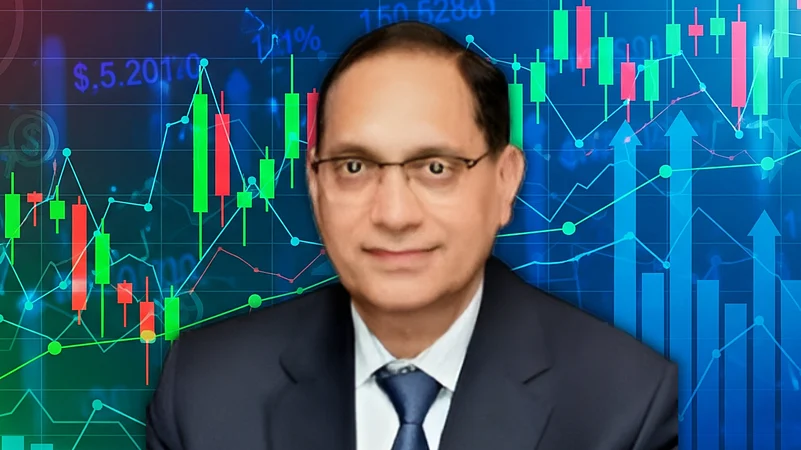
Sebi Chairman Tuhin Kanta Pandey: The Securities and Exchange Board of India (Sebi) wants to enhance investor participation in the Indian securities market, Sebi chairman Tuhin Kanta Pandey said at the recent CII Financing Summit.
“We are looking at double the number of investors. I think that is more than the population of several countries put together. If we can add another 100 million investors,” Pandey said.
Pandey’s statement also underscores the changing role of the securities market as a key driver of economic growth. Pandey highlighted in his speech that India’s market capitalisation to gross domestic product (GDP) ratio has grown from 69 per cent in FY16 to over 130 per cent in FY26.



“India’s market capitalisation-to-GDP ratio—a broad indicator of the role of capital markets in national wealth—has moved from around 69 per cent in FY16 to more than 130 per cent today. This is the story of an economy whose productive sectors are increasingly funded through transparent, fair and competitive market mechanisms,” Pandey said.
Awareness vs. Participation
Sebi’s initiative to increase investor participation follows the release of key data from the NSE which suggests that while 63 per cent of Indian households are aware of the securities market, only 9.50 per cent of Indian households are currently investing. However, the market regulator seeks to capitalise on another finding by the NSE which shows that 22 per cent of households are presently considering entering the market in the next 12 months.
Here are the key moves Sebi plans to take to bridge the gap between awareness and participation and achieve the goals of 100 million investors.
CKRCY 2.0
The Central KYC Registry (CKYC) works as a centralised database of the identification documents of each investor. The upgrade to the Central Know Your Customer Records Registry 2.0 (CKRCY 2.0) seeks to reduce duplication and repetition in the KYC process, ultimately reducing the time and effort required to register new investors.
“Going forward, the proposed CKRCY 2.0, with de-duplication and authentication and inter-operability with KRAs, will provide a seamless KYC for the entire financial sector,” Pandey said.
As part of the shift to CKRCY 2, if an investor completes their KYC process with any one financial institution, other institutions will be able to retrieve their verified details from the central registry. The move is expected to facilitate the opening of new demat accounts and ease mutual fund investment by decreasing the time required for multiple verifications.
Fairer Price Discovery In REITs and InvITs
Pandey spoke about expanding the scope of the Electronic Book Provider (EBP) provider platforms. The scope of EBPs has been expanded to include Real Estate Investment Trusts (REITs) and Infrastructure Investment Trusts (InvITs). Thus, the process of liquidating these securities has become standardised and electronic.
“Expanding the scope of EBP platforms to include REITs and InvITs has strengthened price discovery in these fast-growing market segments—which are now playing a central role in financing India’s infrastructure,” Pandey said.
The expansion of the scope of EBPs allows for better price discovery, as the platform connects buyers and sellers in a competitive bidding process. In turn, the bidding process helps in ensuring that retail investors get a fairer price for the initial offering of REITs and InvITs, making them less likely to overpay.
Revised Distributor Incentive Structures
The Sebi chief also talked about revised incentive structures for distributors. Distributors are key stakeholders in onboarding new investors. The move seeks to incentivise distributors to increase awareness and participation about the securities market in B-30 cities or cities beyond the top-30 cities in terms of investor participation. The revised structure also aims to incentivise the onboarding of women investors and greater investor protection vis-a-vis increased focus on transparency.
“Revised distributor incentive structures now encourage onboarding of first-time investors from B-30 cities and aim to increase women investors in the mutual fund industry. We have introduced reforms that are increasingly focused on transparency in disclosures, accountability and prompt identification and mitigation of risks,” Pandey said.
Greater Investor Protection In SME IPO Space
Pandey also spoke about Sebi’s measures to increase both participation and protection in the small and medium enterprise (SME) initial public offering (IPO) space. He added that stronger norms in the SME space are aimed at protecting investors while offering small and emerging enterprises a chance to grow by tapping the primary market for funds.
“Enhanced scrutiny and stronger governance norms for SME issuers are designed to ensure that the platform remains credible, protects investors, and fulfils its objective of nurturing growth enterprises,” Pandey said.

Rationalisation of IPO Offer Document
The market regulator also proposed to rationalise the summary written in the red herring prospectus (RHP) or offer document. The rationalisation of the summary is aimed at lowering the reliance of retail investors on unofficial and unverified social media or grey market tips.
“We are also proposing to rationalise the existing contents of the Offer Document Summary. This summary will also be made available separately to investors to reduce their reliance on unverified social media or grey market tips and encourage informed feedback from them,” Pandey said.
The regulatory agenda of the market regulator seems to be clear: to build markets that are deep, inclusive, and globally competitive, and most importantly, one that “protects the small investors”.





