







Summary of this article
Zerodha CEO Nithin Kamath criticized the unplanned trading holiday on January 15, 2026, for Mumbai’s local municipal elections.
He argued that halting exchanges with international linkages for regional polls shows poor planning and harms India's global credibility.
The late announcement forced derivative expiries to be advanced, increasing market volatility while benchmark indices remained volatile at 83,000 levels.
Maharashtra Municipal Elections: The first few days of the new calendar year have been tumultuous for the Indian stock market, as D-Street factored in US President Donald Trump’s tariff threats and escalating geopolitical conflict in Iran and Venezuela. However, trading activity on D-Street has been halted today, January 15 on account of the Maharashtra Municipal Corporation Elections.
Zerodha co-founder and CEO Nithin Kamath criticised the move to declare a trading holiday on January 15 in a post on social media platform LinkedIn. Kamath called the market holiday a result of “poor planning” and expressed concern over the efficiency of India’s financial infrastructure. He added that while individual regions may require time off for civic duties, the stock market should not be held hostage to local administrative schedules.

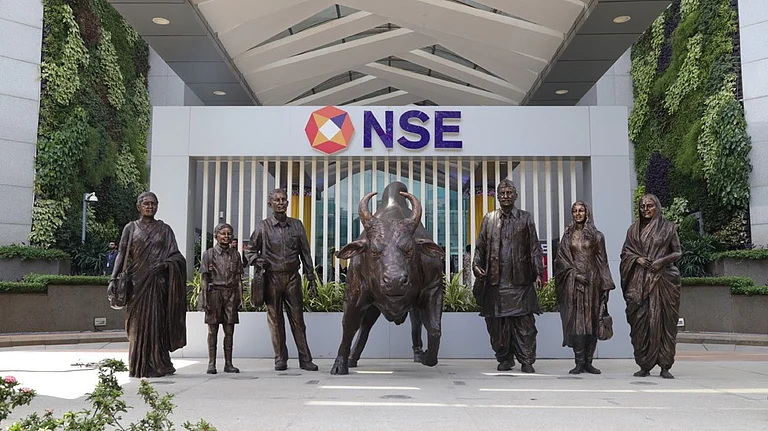



“Indian stock exchanges are closed today for Mumbai’s municipal elections. The fact that our exchanges, which have international linkages, are shut down for a local municipal election shows poor planning and a serious lack of appreciation for second-order effects,” Kamath wrote in his post.
Kamath quoted late veteran investor Charlie Munger and said that there is no opposition to the move and that halting trading activity for an election is a step backward for India’s global credibility.
“As Munger said: 'Show me the incentive, and I will show you the outcome.” The holiday exists because no one who matters has any incentive to oppose the market holiday. It also tells you how far we have to go before global investors take us seriously,” Kamath said.
Do Markets Remain Shut During Elections?
The trading holiday was declared to facilitate the polling process as millions of Mumbaikars geared up to cast their vote in the Brihanmumbai Municipal Corporation (BMC) elections. However, in major financial markets across the globe, local or national elections rarely result in a suspension of trading as financial markets remain accessible to provide liquidity and allow investors to react to news in real-time, even during significant civic events.
Typically, the NYSE & Nasdaq remain open on the Federal Election Day, the London Stock Exchange also remains open on the day of the London Mayoral or Council elections. The Tokyo Stock Exchange adheres to a pre-set national holiday calendar, and remains open on National Parliamentary Election.
Closer home in India, the stock market has had an “on-again, off-again” relationship with election-related closures. As the NSE and BSE are headquartered in Mumbai, they are subject to holiday declarations of the Maharashtra state government under the Negotiable Instruments Act, 1881.
Additionally, nearly all of India’s market infrastructure, including the exchanges (NSE, BSE) and the regulators (the Securities and Exchange Board of India or Sebi, Reserve Bank of India or RBI), the clearing corporations, and the headquarters of major banks are located in Mumbai. However, during the 2017 BMC Polls, the exchanges took a different approach wherein equity trading was allowed while a settlement holiday was declared. Thus, investors were able to buy and sell stocks, but the transfer of money and shares was pushed to the next day.

The holiday for January 15 was announced on January 12 and was not originally mentioned in the 2026 market holiday calendar. The announcement led to the derivative expiries being advanced with the Sensex weekly expiry shifting to January 14, leading to a surge in volatility. Despite the market holiday, commodity markets are expected to open for the evening session, even as the equity, debt, and currency segments remain closed.
On January 16, normal trading will resume across all major segments, as investors will factor in global cues and international price movements.





