







Summary of this article
Global investors are pouring funds into AI, chipmakers and advanced technology companies
India's IPO market remains dominated by capital goods and financial services firms
Government is backing semiconductor manufacturing, but listed AI companies are still scarce
Global investors are directing fresh capital towards artificial intelligence (AI), semiconductors and other technology-driven businesses. India's primary market, however, continues to be dominated by companies from traditional sectors such as capital goods and financial services.
Semiconductor companies emerged as the biggest fundraisers in global primary markets in May 2026, with five issuers raising a combined $6.69 billion, according to Sebi's latest bulletin. Electric sector companies followed with $2.18 billion, while biotechnology firms raised $1.13 billion.
The picture in India was very different. Thirteen companies raised a total of Rs 1,577 crore through IPOs during the month, with capital goods firms accounting for 36 per cent of the issuances. Financial services companies made up another 31 per cent, while the remaining deals came from FMCG, healthcare and construction.
The gap reflects a broader shift in global capital allocation. According to Crunchbase, AI-related companies attracted $211 billion, or about half of global venture funding, in 2025. Much of that capital has gone into chipmakers, data centre infrastructure and businesses building the hardware needed to support AI applications.
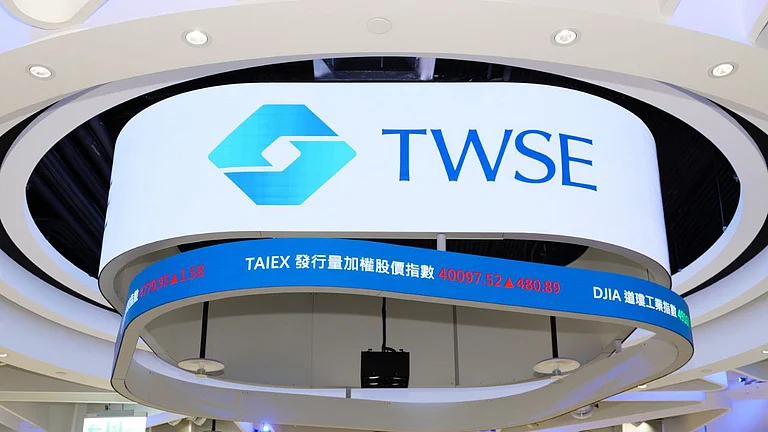
The impact is visible across Asian equity markets. According to Sebi, South Korea's KOSPI delivered a dollar-adjusted return of 26 per cent in May and 189 per cent over the previous year, supported by demand for advanced memory chips, Sebi said. Taiwan's TWSE gained 14.6 per cent during the month as technology stocks rallied.
India, however, continues to depend largely on conventional sectors for new listings.
Fundraising in the domestic debt market exceeded Rs 50,000 crore in May, largely through private placements. Total capital mobilisation across equity, debt and business trusts fell to Rs 72,075 crore from Rs 93,036 crore in April, as geopolitical tensions in West Asia weighed on investor sentiment. Equity issuance remained subdued, with only one mainboard IPO raising Rs 926 crore.
Institutional investors continued to dominate the mainboard IPO market, with Qualified Institutional Buyers accounting for 43 per cent of subscriptions during May.
The SME segment remained active despite the slowdown. The highest subscription reached 787 times, while the aggregate listing-day value stood at Rs 744 crore, 14 per cent higher than the total issue size. Retail investors accounted for 41 per cent of participation, followed by non-institutional investors at 36 per cent.
Despite strong investor demand, the sector mix remains concentrated in financials, manufacturing, infrastructure and industrial businesses. Even India's high-profile technology listings in recent years, including Swiggy, FirstCry and Ola Electric, have largely been consumer internet or electric mobility companies rather than businesses developing core AI or semiconductor technologies.
The difference is beginning to show in global market benchmarks.
India remained the world's sixth-largest equity market by market capitalisation at $4.9 trillion at the end of May, behind Taiwan and marginally ahead of South Korea, according to the Sebi Bulletin. A year earlier, India's market capitalisation was roughly three times that of South Korea and twice that of Taiwan.
India's weight in the MSCI Emerging Markets Index fell to 10.9 per cent in May, its lowest level since 2021. Sebi noted that none of India's listed companies featured among the index's 10 largest constituents. HDFC Bank and Reliance Industries ranked 11th and 12th, respectively.
Foreign portfolio investors also reduced their exposure to Indian markets during the month, with Rs 32,963 crore withdrawn from equities. In June, FPIs took out Rs 49,340 crore worth of equities, as shown by National Securities Depository (NDSL) data.
Sebi attributed part of the shift to the composition of India's listed market.
"India notably lacks a comparable structural AI play within its largest benchmark constituents," the bulletin said.
The observation highlights a challenge for India's capital markets. While global investors are allocating capital to companies building AI infrastructure and advanced chips, India's listed universe offers limited exposure to those themes.
The government is attempting to change that through policy support.
According to the Economic Survey 2025-26, 10 semiconductor manufacturing and packaging projects had been approved by August 2025, attracting investment of around Rs 1.60 lakh crore across six states under the India Semiconductor Mission.
The scheme provides fiscal support for semiconductor fabrication, packaging and testing facilities, alongside incentives for chip design companies. The Design Linked Incentive programme had supported 24 semiconductor design startups by January 2026, helping them attract nearly Rs 430 crore in venture capital, according to the government.
The second phase of the India Semiconductor Mission has also received an approved outlay of Rs 1.25 lakh crore.


These investments could eventually expand India's pipeline of listed technology companies. For now, however, the country's public markets are still dominated by traditional businesses, even as global investors increasingly channel capital towards AI and semiconductor companies.





