





Summary of this article
For years, buyers looking for high-end homes with good access to corporate hubs largely focused on Gurugram and select parts of Noida. That equation is beginning to change. Across the Hindon, Indirapuram is emerging as one of the areas benefiting from this shift.
Indirapuram is no longer simply benefiting from Ghaziabad’s overall price movement. Its established premium locations are increasingly behaving like a market of their own.
If demand for larger, lower-density luxury homes continues to rise alongside improving connectivity, Indirapuram may prove to be less of a suburban success story and more of an early indicator of how NCR’s housing map is being redrawn.
Delhi-NCR’s premium housing map is changing, and this time the shift is being driven as much by connectivity as by developers and new projects. For years, buyers looking for high-end homes with good access to corporate hubs largely focused on Gurugram and select parts of Noida. That equation is beginning to change.
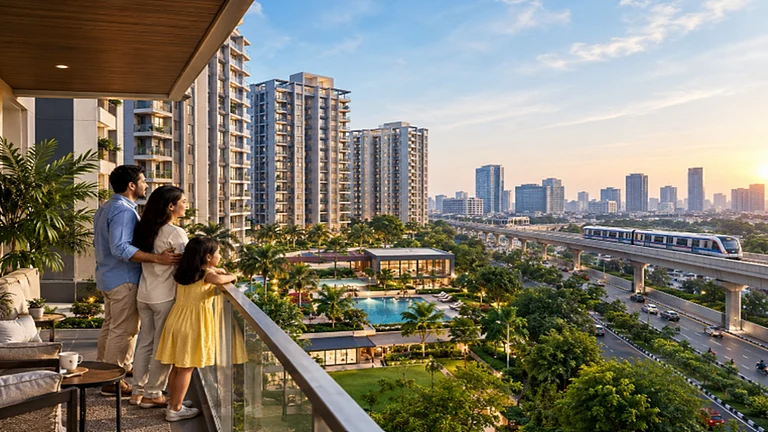
Across the Hindon, Indirapuram is emerging as one of the areas benefiting from this shift. Better road links and the arrival of the Namo Bharat RRTS have made the commute towards Delhi faster and more predictable, prompting buyers and developers to look at the area differently.
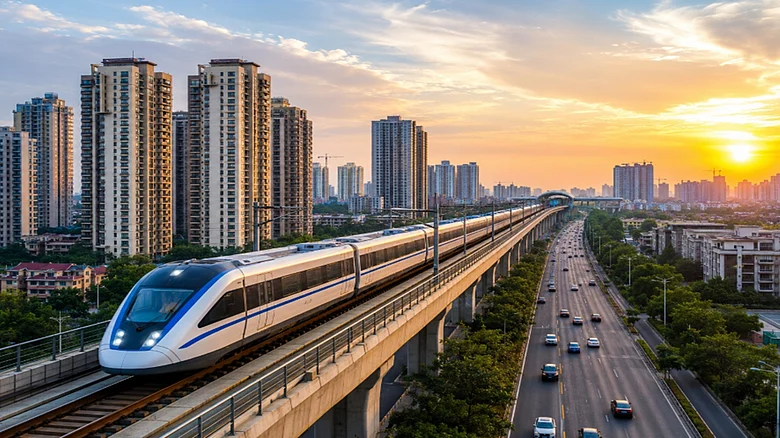
One major driver has been the Namo Bharat RRTS corridor. The Delhi-Ghaziabad-Meerut corridor became fully operational across its entire 82-km length in February 2026. Trains on this line can run at speeds of up to 160 kmph. According to ridership figures released by NCRTC, daily ridership breached the one-lakh mark on the first full day.
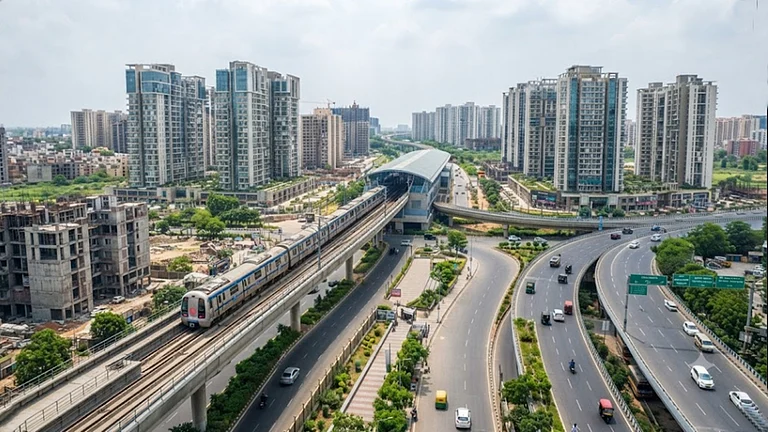
The RRTS is only one part of the connectivity story. The 10.3-km Hindon Elevated Road, built at a cost of about Rs 1,147 crore, has connected Raj Nagar Extension with the Delhi border since 2018. The NH-9 corridor adds another major road link. Together, these projects have significantly reduced the effective travel distance between the trans-Hindon areas and Delhi.
The remaining challenge is more local: getting on to and off the elevated road.
The Ghaziabad Development Authority (GDA) has proposed two new entry and exit ramps, one at Indirapuram and another at Vasundhara. The detailed project report submitted last year estimates the cost at around Rs 193 crore, with part of the funding proposed through the 16th Finance Commission. As of August 2026, the project is moving through the GDA’s approval and financing process.
For residents and developers, these ramps could be more important than they initially appear. The elevated road has already improved east-west connectivity; smoother access to it could remove one of the last significant bottlenecks for neighbourhoods such as Indirapuram.

The Market Is Already Showing Signs Of Change
There are early signs that the housing market is responding to the improving connectivity.
ANAROCK’s latest Residential Market Viewpoints for NCR found Ghaziabad to be the only major NCR micro-market to record quarter-on-quarter growth in housing sales in Q2 2026. Sales increased 4 per cent, even as Gurugram recorded a 17 per cent decline and the wider NCR market contracted.
Supply has also increased sharply. New launches in Ghaziabad rose 96 per cent during the quarter, taking the city’s share of NCR’s residential supply to 26 per cent, second only to Gurugram.
This is happening against a more cautious regional backdrop. ANAROCK estimates that NCR’s residential prices rose around 13 per cent year-on-year, the highest among the markets it tracks nationally. At the same time, sales volumes across the region declined about 6 per cent and new launches fell nearly 40 per cent.
The Reserve Bank of India’s House Price Index also points to a clear divergence within the region. In Q1 FY2025-26, Ghaziabad’s HPI rose 14.5 per cent year-on-year in its latest published reading, while Gautam Buddh Nagar, which includes Noida, recorded an 8.5 per cent decline over the same period.
Indirapuram Has Already Moved Beyond The City Average
Longer-term registration data provides another indication of how Indirapuram has evolved.
Square Yards’ analysis of Ghaziabad property registrations shows that Indirapuram recorded the highest number of residential transactions in the city between FY21 and FY25. Average residential prices in the locality rose by roughly 73 per cent during the period, ahead of neighbouring Vaishali, Raj Nagar Extension and Vasundhara.
By FY25, residential rates in Indirapuram had reached around Rs 13,000-15,000 per sq ft, roughly twice Ghaziabad’s citywide average at the time.
The premium has not disappeared even though the broader Ghaziabad market has softened. Square Yards’ live tracker puts the city’s average asking price at around Rs 7,650 per sq ft this August, down about 6 per cent from Rs 8,150 in September last year. In Abhay Khand 4, one of Indirapuram’s established premium pockets, current asking rates are close to Rs 18,650 per sq ft.
That tells an important story. Indirapuram is no longer simply benefiting from Ghaziabad’s overall price movement. Its established premium locations are increasingly behaving like a market of their own.
Luxury Buyers Are Still Willing To Pay For The Right Location
The divergence becomes even more visible at the upper end of the market.
While parts of Ghaziabad’s mass-market housing segment have come under pressure, premium locations continue to command a substantial price premium. That is the market in which new luxury projects are seeking buyers.
The wider NCR luxury market also remains relatively resilient. A CBRE-Assocham study found that sales of homes priced above Rs 6 crore in Delhi-NCR increased 209 per cent year-on-year in H1 2025. The region accounted for 57 per cent of luxury home sales above Rs 4 crore across India’s seven largest cities during the period.
The trend suggests that buyers at the top end are still prepared to spend, particularly where they see a combination of location, connectivity, established social infrastructure and limited high-quality supply.
Developers Are Betting On The Next Phase
“Indirapuram has appreciated nearly 73 per cent in four years, and that is not a coincidence - it is catch-up,” said HS Kandhari, Co-Founder & Executive Director, Harmony Infra Ventures.
According to Kandhari, improving connectivity has changed the way the locality is perceived by buyers. “The RRTS is running, the expressway is mature, and once these last-mile ramps are in, the one gap that has kept this corridor from trading like the rest of NCR’s premium belt becomes much smaller,” he said.
He also pointed to Ghaziabad’s recent sales performance as an indication that buyers are already responding to the changing connectivity landscape.
But the optimism around Indirapuram is not without a note of caution.


“What’s happening in Indirapuram is less about any single launch and more about a market catching up to itself,” said Neev Nagpal, Founding Director of The Propler, a Delhi-NCR-focused real estate advisory.
“For years, this corridor priced itself against Gurugram’s cost of entry rather than its own fundamentals. That made sense when commute time was the missing piece,” he said. “With the RRTS running and the GDA’s last-mile ramps being the key remaining connectivity link, that gap has narrowed.”
Nagpal, however, believes the next challenge will be managing supply. “The real question is not whether Indirapuram has caught up - the data suggests that it has. The question is whether the next wave of supply matches what the market can absorb, or whether developers overbuild, as happened in parts of Noida after infrastructure improvements,” he said.
Connectivity May Change The Hierarchy Of NCR Housing
That may ultimately be the bigger story for Indirapuram.
The locality is no longer competing simply on the basis of being a relatively affordable alternative to Gurugram or Noida. Its established infrastructure, proximity to Delhi and improving regional connectivity are giving it a stronger identity within NCR’s premium housing market.
The proposed GDA ramps could further strengthen that position by addressing the last-mile problem around the Hindon Elevated Road. But their execution will matter. Connectivity projects tend to create value only when the entire journey - from home to the main transport corridor and then to the final destination - becomes seamless.
For Indirapuram, much of that journey is already in place.
The RRTS has changed the region’s relationship with Delhi. The elevated road has improved road connectivity. NH-9 provides another major link. The next phase is about joining these pieces together.
If that happens, Indirapuram could move from being a well-established Ghaziabad residential market to becoming a more serious contender in NCR’s premium housing landscape.
The bigger question is whether this is the beginning of a broader shift across the trans-Hindon belt. If demand for larger, lower-density luxury homes continues to rise alongside improving connectivity, Indirapuram may prove to be less of a suburban success story and more of an early indicator of how NCR’s housing map is being redrawn.





