





Summary of this article
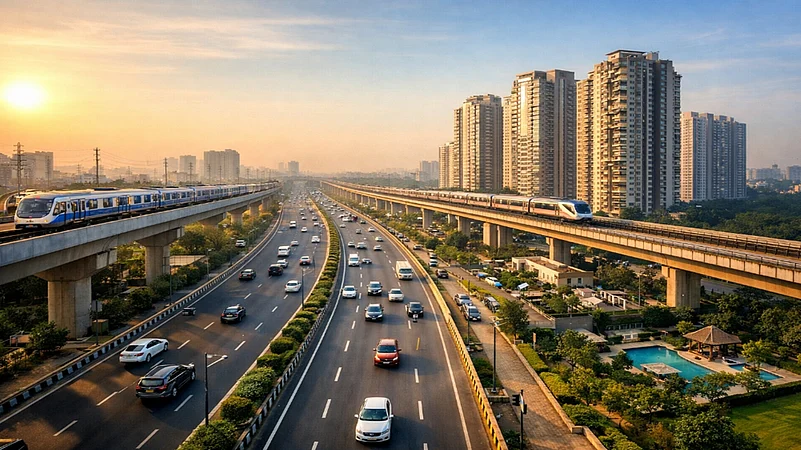
NH-24 is fast emerging as one of Ghaziabad’s sought-after residential corridors. The transformation is largely infrastructure-led.
NH-24’s transformation over the last decade featuring widened, improved service lanes, enhanced traffic management, and stronger linkage to Delhi and adjoining NCR networks has drastically improved how Ghaziabad is accessed and experienced.
As public capital expenditure continues to scale and transport corridors develop further, Ghaziabad and other such markets are likely to continue to benefit from the stable, infrastructure-driven growth story.
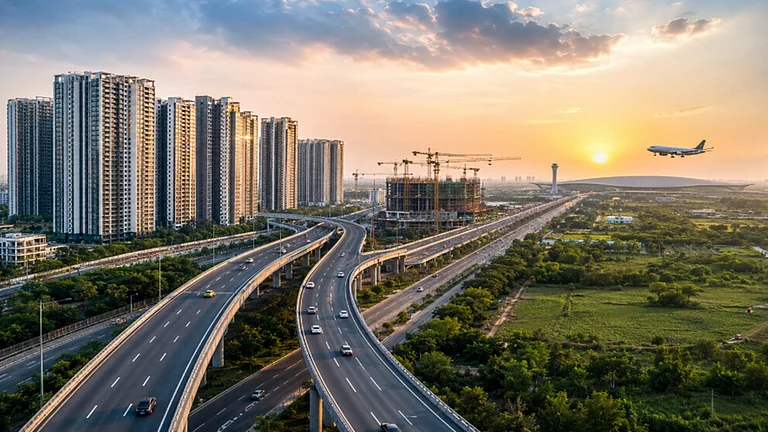
National Highway 24 (NH-24) has emerged as one of the most significant infrastructure corridors in northern India, facilitating crucial movement of people and logistics across the Delhi-National Capital Region (Delhi-NCR), linking Delhi to Noida, Greater Noida, and Ghaziabad.
Faster travel and reduced commute time on this critical corridor has strengthened regional integration and led to a boost in residential demand beyond the traditional city cores. Much of this has come from expanded road capacity and improved network integration across adjoining routes peripheral to NH-24.
The government’s decision in Budget 2026 to increase infrastructure allocation from Rs 11.20 lakh crore to Rs 12.20 lakh crore further reflects a clear acknowledgement of the importance of capital investment to support integrated development. NH-24 is a strong example of how capital deployment can translate into tangible residential outcomes providing dependable access in residential purchase by buyers.
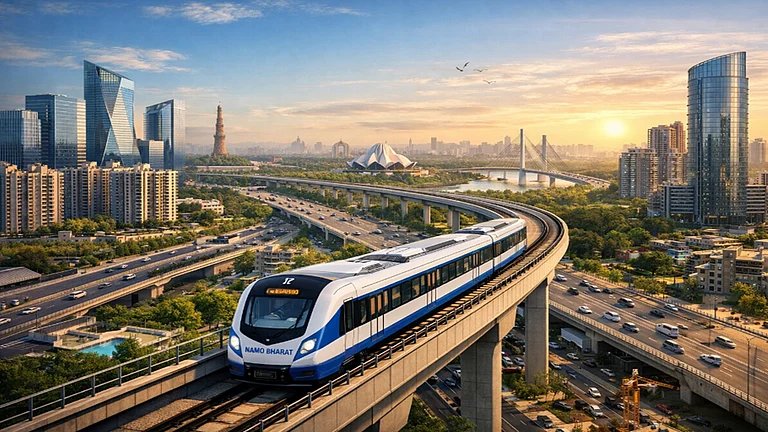
Infrastructure First: How Corridors Create Housing Markets
Residential demand tracks the predictability that infrastructure creates in daily life. When travel becomes consistent, a location starts fitting more naturally into work routines, school schedules, healthcare access, and everyday convenience, thus reinforcing the demand with the confidence of reliable access.
The corridor functions not only as a pass-through route, but also as an urban connector that supports residential planning along its length. As a result, micro-markets along the corridor are now being evaluated as viable primary residential choices.
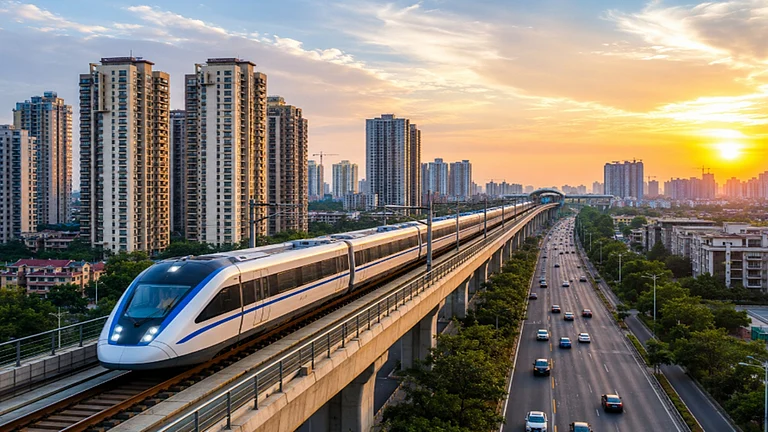
Says Sanjay Sharma, director, SKA Group: “NH-24 is fast emerging as one of Ghaziabad’s sought-after residential corridors. The transformation is largely infrastructure-led. While the Delhi–Meerut Expressway has reduced travel times to Delhi and Noida, the proximity of the Blue and Red metro lines and the upcoming RRTS has transformed the region’s perception.”
“Besides, its proximity to the Faridabad-Noida-Ghaziabad (FNG) and the Eastern Peripheral expressways, as well as its nearness to Noida's institutional sectors and employment hubs, has enhanced the region’s value proposition. Rapid infrastructure growth, combined with a wide range of housing options - from mid-income to luxury, including integrated townships, such as Siddhartha Vihar and Wave City - has further boosted the real estate appeal while offering strong long-term value creation,” he adds.
Recalibrating Proximity: When Accessibility Starts Redefining Value
With access becoming consistent, buyers recalibrate what feels “far.” Locations that were previously not part of their preferences due to time unpredictability enter the active consideration set. Families start prioritising better layouts, larger homes and a calmer day-to-day environment over prestige anchored in merely pin-codes.
According to industry experts, NH-24 is aiding this recalibration by fundamentally altering buyer’s behaviour. Ghaziabad is increasingly being perceived not as a peripheral alternative, but as a well-integrated residential market, especially for those homebuyers desiring balance in terms of access without congestion, space without isolation, and new formats of living without density.
From Peripheral Alternative to Integrated Premium Market
Another facet of the change in buyer’s preferences due to infrastructure development has been a shift from only apartment-led affordability towards more premium, lifestyle-oriented housing. With Ghaziabad emerging as a luxury housing destination, development is no longer dominated by isolated projects competing primarily on price. Instead, the market is witnessing a stronger focus on gated communities, improved internal planning, better everyday conveniences, and housing formats designed for end-user living.
Several landmark and high-end projects have already supplied the corridor with luxurious residences. In practical terms, this means the corridor is not just adding housing; it is upgrading the quality and intent of what is being built.
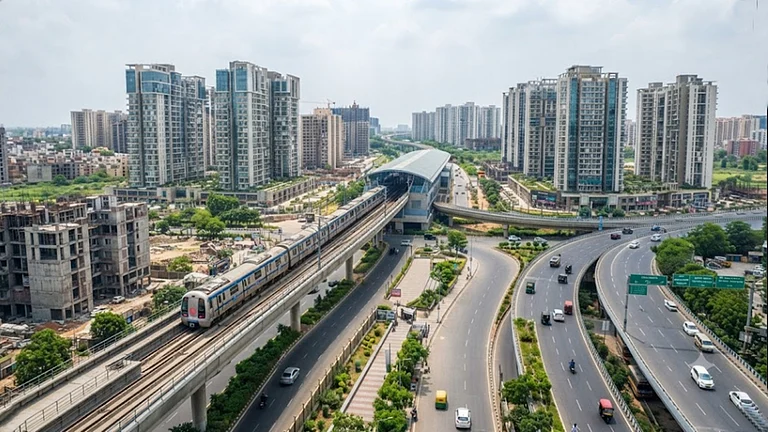
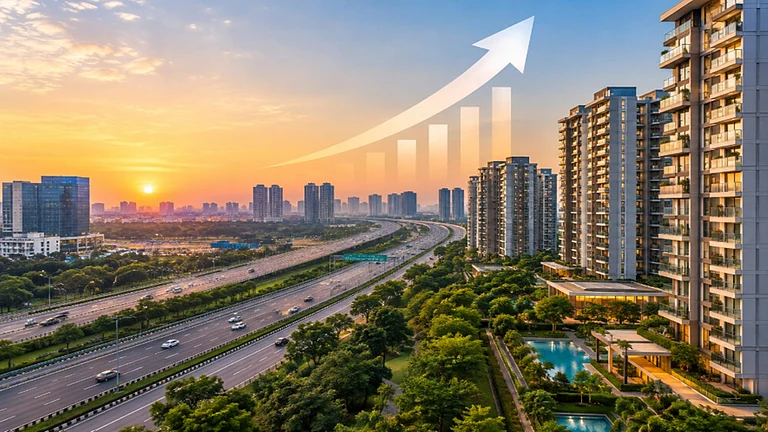
Says Ashish Agarwal, director, AU Real Estate: “We see Ghaziabad, particularly the NH-24 and Delhi-Meerut Expressway corridor, at a clear inflection point. Over the past few years, connectivity, infrastructure, and social ecosystem development have significantly improved, which is changing both buyer perception and aspiration. Today, there is a strong demand for premium, spacious homes in this region, especially from families who want to upgrade, but remain close to East Delhi and Noida.”
Confidence As A Market Driver: Why Infrastructure Improves Development Quality
Infrastructure influences housing demand not only through harnessing efficient connectivity, but also through induced market confidence. When access becomes dependable, not only it reinforces buyer confidence, but also increases organised developer participation, typically raising construction quality, amenity standards, and long-term asset management.
NH-24 increasingly benefits from this quality cycle, which is why it is being positioned as a residential corridor in addition to a transit corridor.
The Ecosystem Effect: Why ‘Complete Living’ Matters for Long-Term Demand
Residential value compounds when social infrastructure keeps pace with housing. Retail, healthcare, education, and community services need to follow residential density for an area to feel self-sustaining.
Along NH-24, this ecosystem effect is becoming more visible. As housing demand strengthens, supporting infrastructure tends to deepen around it, creating pockets that function as complete neighbourhoods.
What NH-24 Ultimately Changes for Ghaziabad
NH-24 has played a central role in fundamentally shifting Ghaziabad's residential narrative from a purely price-driven market to a lifestyle-oriented destination. The corridor has facilitated efficient regional movement, reduced friction in everyday commuting, and expanded the viable residential map for NCR households
As public capital expenditure continues to scale and transport corridors develop further, Ghaziabad and other such markets are likely to continue to benefit from the stable, infrastructure-driven growth story. The strength of NH-24 is in the predictability it brings to daily life. It is this combination of reliability and predictability that ultimately converts infrastructure corridors into residential locations.





