

Summary of this article
PIB debunks viral claim that E20 fuel affects insurance validity completely fake.
ICICI Lombard confirms E20 fuel does not impact motor insurance claims approval.
Insurance claims depend on accidents not fuel type used vehicles basis evaluation.
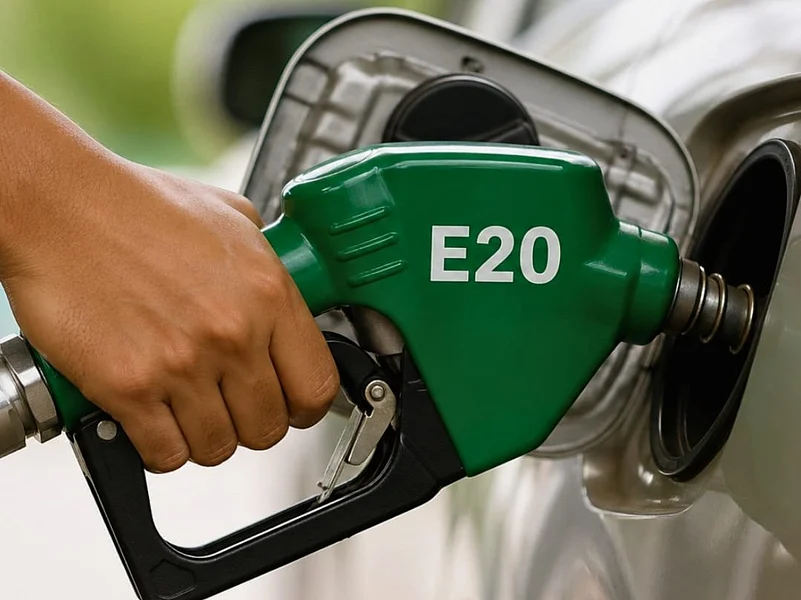
E20 petrol, a blend of 80 per cent petrol and 20 per cent ethanol, is becoming more common at fuel stations across India as part of the country's ethanol-blending programme. Alongside its growing adoption, claims about its impact on motor insurance coverage have also surfaced on social media.
PIB Says Viral E20 Fuel Insurance Claim Is Fake
Social media posts have recently claimed that the use of E20 fuel could result in rejection of vehicle insurance claims. Amid these discussions, the Press Information Bureau’s (PIB) Fact Check unit issued a clarification on social media, describing the claim as fake.
“Motor insurance policies remain valid with the use of E20 fuel,” the PIB Fact Check unit said in a post on X (formerly Twitter).
With fake news becoming increasingly common and spreading rapidly, users are urged to verify information through official sources before sharing or acting on such claims. The PIB have also appealed to the public to help curb misinformation by reporting suspicious content through official channels, including WhatsApp and email.
In this context, ICICI Lombard General Insurance has also clarified its position on the use of E20 fuel in vehicles.
Insurer Clears Motor Insurance Rejection Claims On E20 Fuel Use
ICICI Lombard General Insurance has stated that the use of E20 fuel does not impact the validity of motor insurance policies. The company stated that using ethanol-blended petrol in older vehicles is not considered carelessness and described the E20 programme as a positive step towards cleaner and more sustainable fuel usage.
In a post on X (formerly Twitter), the insurer noted that its policies continue to provide standard coverage for risks such as accidental damage, theft, personal accidents for vehicle owners and passengers, and third-party liabilities, depending on the selected plan.
It further highlighted that insurance claims are evaluated based on covered incidents, such as accidents or theft and not on the type of fuel used in the vehicle. The company added that fuel choice, whether petrol, diesel, CNG or E20, does not influence claim approval, and claims are not rejected on this basis.
The clarification has been issued amid rising misinformation on social media about E20 fuel and motor insurance claims.