






Summary of this article
Mumbai flooding highlights need for home insurance protection
Bharat Gruha Raksha covers flood damage to homes and contents
Tenants may need separate contents insurance for personal belongings
Policyholders should document damage before cleanup or repairs
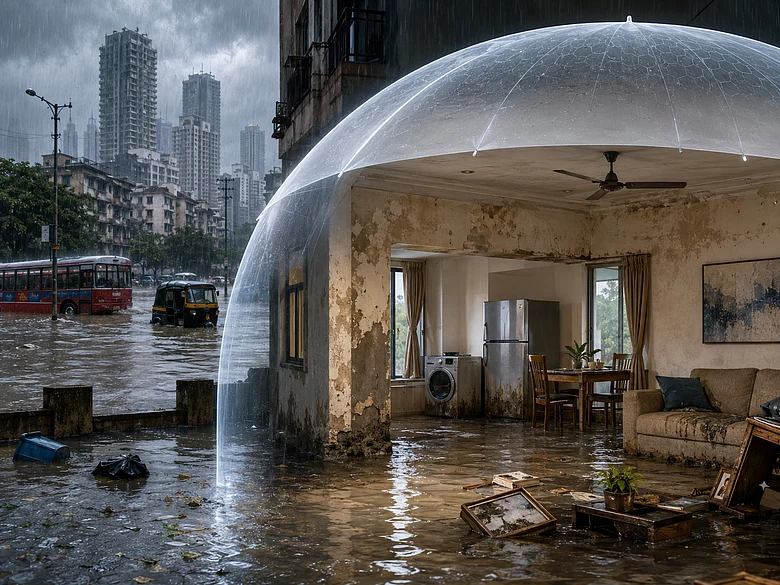
Mumbai’s rain-triggered flooding over the past week has damaged homes and disrupted daily life across several areas. The period has also seen fatal incidents involving falling trees, electrocution, a house collapse and an open drain, underlining that the impact of severe rain goes beyond water entering homes.
For homeowners, the financial fallout can include damage to walls, flooring, furniture, electronics and appliances. Whether an insurer pays, however, depends on the type of policy, the sum insured and whether the affected property or items were included in the cover.
What A Home Policy Can Cover
A home insurance policy can be bought for the building, household contents or both. The Bharat Gruha Raksha policy covers natural calamities, including flooding.
“Home insurance policies typically cover damage from natural catastrophes, such as floods, to both the home building and home belongings. Consumers can purchase insurance for the structure, its contents, or both,” says Parth Thakkar, head, affinity underwriting, Tata AIG.
This may include kitchenware, furniture, electronics and other household goods, subject to the policy wording, exclusions and the sum insured. Tenants should note that a landlord’s policy may protect only the structure. They may need a separate contents policy for their own belongings.
“Yes. The Bharat Gruha Raksha policy formulated by the Insurance Regulatory Development Authority (Irda) and used by all insurance companies cover natural calamities including flooding. Basements are also covered under the policy unless specifically excluded,” says Hari Radhakrishnan, expert, Insurance Brokers Association of India (IBAI).
Act Fast, Preserve Evidence
The first step after water recedes is safety. Once it is safe to return, policyholders should inform the insurer promptly through its helpline, app or other claim channel. They should photograph and video-record each damaged room and item before beginning the clean-up.
“Take photos and videos before touching anything or starting cleanup. Keep a simple list of what's damaged, and if bills or receipts are handy, keep those too,” says Thakkar.
Insurers may appoint a surveyor to inspect the loss. Damaged articles should be separated and preserved for inspection. Policyholders should avoid carrying out repairs without the insurer’s or surveyor’s concurrence unless there is an urgent health or safety risk.
“The damaged items should be segregated and securely kept. During the visit of the surveyor, the damaged items have to be shown for assessment of loss,” says Radhakrishnan.
Know The Exclusions Before You Claim
Not every water-related loss will qualify. Ordinary seepage or leakage that develops gradually, wear and tear, and damage linked to poor maintenance may be excluded. Basement losses can be subject to specific terms, although they may be covered unless expressly excluded.
High-value items such as jewellery, collectibles and artwork should be specifically declared and insured. An undisclosed valuable may not be eligible for a claim. Homeowners should read exclusions closely, update the contents list regularly and keep proof of ownership in a safe digital folder before the next monsoon.
FAQs
1. Does home insurance cover flood damage to furniture and appliances?
It can, provided the policy covers household contents and flooding is an insured event. Payment will depend on the sum insured, policy terms, and whether the damaged items were listed or covered.
2. What should a homeowner do immediately after floodwater recedes?




Inform the insurer as soon as it is safe, take photos and videos of the damage, and make an item-wise list of losses. Do not discard damaged articles or begin repairs before the surveyor’s assessment, unless necessary for safety.
3. Are seepage, basement losses and jewellery covered under home insurance?
Gradual seepage, poor maintenance and wear and tear are usually excluded. Basement damage may be subject to policy conditions, while jewellery and other valuables generally need to be specifically declared and insured.





