Summary of this article
Old vehicle damage should not automatically invalidate a fresh accident claim
Insurers should assess pre-existing and new accident damage separately
Photographs and repair records can strengthen a disputed motor insurance claim
Policyholders should seek written reasons before challenging claim rejection
A car may already have a dent or a scratch when it meets with an accident. But does that earlier damage give the insurer grounds to reject the entire repair claim? For the owner, the dispute can mean having to pay for fresh accident damage as well as an old blemish.
An old dent by itself should not automatically wipe out a claim for damage caused by a later accident. The insurer still has to examine what damage is attributable to the insured event and what was already present on the vehicle.
Assess Old And New Damage Separately
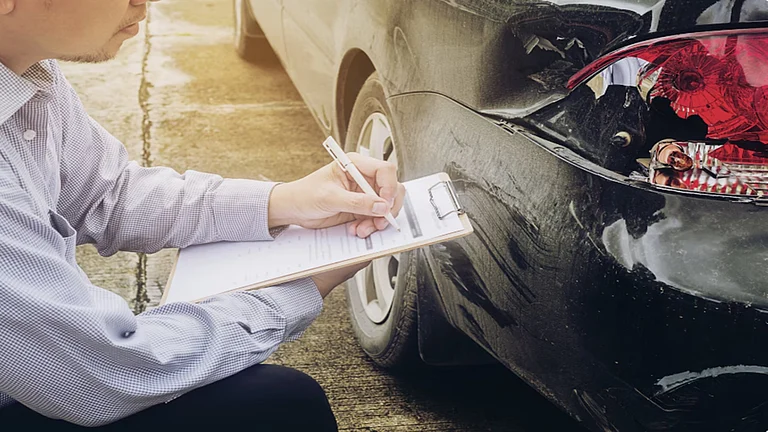
In practice, this is usually done through photographs, surveyor observations, repair estimates, and where needed, a closer technical assessment.
“If one panel had a pre-existing dent but the accident caused fresh damage elsewhere, the two should be considered separately. The important point is that any deduction or rejection should be backed by evidence,” says Abhishek Bansal, CEO, insurance business, InsuranceDekho.
A blanket repudiation would ordinarily require clear supporting evidence and policy grounds. For a motorist facing a rejection, the question is, therefore, what the insurer has established about each part of the damage. A previous dent and fresh accident losses need to be examined separately rather than be treated as one repair expense.
The repair estimate can help frame that discussion. So, it’s important to compare the work proposed by the workshop with the damage recorded in the photographs and the surveyor’s observations. Where only part of the bill is disputed, one should ask the insurer to explain why that disagreement affects the rest of the claim.
Keep Records And Seek Written Grounds
A few simple records can prevent a minor dispute from escalating into a larger one. Owners should retain, wherever possible, photographs of the vehicle taken at policy renewal, during any inspection, and after repairs. If the car has an existing dent or scratch, it is useful to photograph it clearly rather than leave its condition open to interpretation later.
Service invoices, body-shop bills, and job cards should also be preserved because they help establish when an earlier damage was repaired. After an accident, one should also take photographs from several angles before the vehicle is moved or repaired, if it is safe to do so. Dashcam footage, accident-site photographs and the insurer or surveyor’s inspection report can further help establish what damage is fresh.
The first step is to ask the insurer for a written reason for the rejection rather than relying only on a verbal explanation.
“The policyholder should specifically seek written grounds, and where available/disclosable, the surveyor’s findings and supporting evidence, including photographs, inspection notes, and any forensic or technical report relied upon to classify the damage as pre-existing,” says Bansal.
These can then be compared with pre-policy inspection photographs, earlier service records and images taken immediately after the accident. If the evidence does not support a full rejection, the policyholder can raise a formal grievance with the insurer, and if unresolved, approach the Insurance Ombudsman, subject to eligibility and jurisdiction, or other appropriate consumer forum.
A challenge is stronger when it points to specific gaps in the insurer’s assessment rather than merely disputing the outcome. So, it’s important to identify which damage has been labelled old, what evidence supports that finding, and whether the assessment accounts for the fresh damage claimed. The records should help explain why a particular repair belongs to the later accident.
FAQs
1. Can an insurer reject an entire accident claim because of an old dent?
An old dent alone should not automatically lead to full rejection. The insurer should assess fresh accident damage separately and support any rejection with evidence and policy grounds.
2. What records help distinguish old damage from fresh accident damage?
Pre-policy inspection photographs, service invoices, repair bills, and photographs taken after the accident can help establish when and how the damage occurred.
3. How can a policyholder challenge a rejected claim?
Seek written reasons and supporting evidence, then raise a formal grievance with the insurer. If unresolved, approach the Insurance Ombudsman, subject to eligibility, or an appropriate consumer.