

Summary of this article
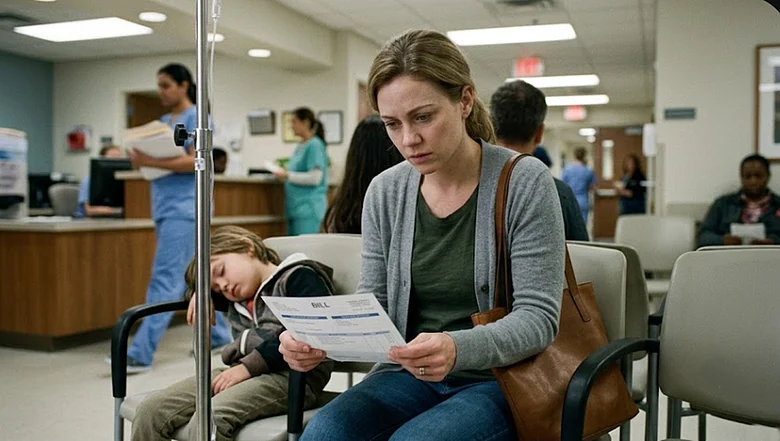
Increasingly, what keeps middle-class families up at night isn't a pink slip. It's a hospital bill.
This is not because jobs have become more secure. But because healthcare costs have risen so sharply, so fast, that a single serious illness can undo years of careful saving in a matter of weeks.
A job loss gives you time. You can cut expenses, dip into savings, or look for new income. A medical emergency gives you no such runway.
For decades, the biggest financial fear of India's middle class was simple: losing a job. Your salary was the thread holding everything together: the equated monthly instalments (EMIs), the school fees, the household, and the savings. As long as that kept coming in, you were okay.
That fear hasn't gone away. But something else has quietly moved up alongside it. Increasingly, what keeps middle-class families up at night isn't a pink slip. It's a hospital bill.
Not because jobs have become more secure. But because healthcare costs have risen so sharply, so fast, a single serious illness can undo years of careful saving in a matter of weeks.
"A job loss is difficult, but it usually unfolds over time," says Sanjiv Bajaj, Joint Chairman & MD, Bajaj Capital Ltd. "A medical emergency demands immediate financial resources, often several lakhs, sometimes crores, at a moment when your only focus should be on the person who's unwell."

The Bill Nobody Was Prepared For
The shock for most families isn't that medical costs are high. It's how fast they've climbed.
A surgery that cost a few lakhs a decade ago can easily cost several times that today, particularly in the private hospitals that most urban families now prefer, because of better infrastructure, faster access to specialists, and more reliable care. That preference is understandable. But it comes with a price tag that routinely blindsides people. A heart procedure, a cancer diagnosis, a few extra days in the ICU - any of these can turn into a financial emergency alongside a medical one. The bills arrive when the family is least equipped to deal with them.
"Medical inflation is one of the most underestimated risks in personal finance," says Bajaj. "Many families have built strong savings and investment habits, but healthcare costs are growing at a pace that requires separate planning."
The Coverage Gap Nobody Talks About
Most urban households today do have health insurance. But having a policy and being adequately covered are two very different things.
Policies bought years ago reflect the treatment costs of years ago — not today's. Employer group insurance, while convenient, often isn't enough for serious illness and vanishes entirely when you change jobs or retire. And many families simply haven't revisited their coverage since they first bought it.
"One of the biggest mistakes we see is treating health insurance as a one-time purchase," says Bajaj. "Coverage that felt adequate ten years ago may not be adequate today. Periodic review isn't optional - it's essential."
Protection First, Then Wealth
The traditional sequence of financial planning: invest, buy a home, plan for retirement, and sort out insurance somewhere along the way, is being rethought. A job loss gives you time. You can cut expenses, dip into savings, or look for new income. A medical emergency gives you no such runway. The money is needed immediately, in full, regardless of where your portfolio stands or how inconvenient the timing is.
This is why more advisors are now saying: protection has to come before wealth creation, not after it.
"You cannot build long-term wealth if a single event can wipe out years of accumulated savings," says Bajaj. "Health insurance isn't an expense competing with your investments. It's what protects those investments from being erased."
The middle class has become genuinely disciplined about building wealth over the past two decades. SIPs, goal-based investing, and retirement planning habits are there. What hasn't kept pace is the protection layer underneath. The question every household now needs to answer has quietly changed. It's no longer just what happens if my income stops. But what happens if a major medical bill arrives tomorrow?
FAQs
1. Rising healthcare costs have made medical emergencies costlier than job loss. How true is that?
With costs ballooning, hospitalisation/emergency treatment can create exigencies and leave you paying medical bills of several lakhs. It can put immediate pressure on your household finances.
2. Is employer-provided health insurance enough?
In many cases, no. Employer group health insurance may not provide adequate coverage for major illnesses and typically ends when you change jobs or retire.
3. What measures can families take to prepare for spiralling healthcare costs?
Ensure health cover is reviewed regularly or top up your existing cover/increase sum insured/or buy a super top-up plan. Health protection should be an integral part of your financial planning.