





Summary of this article
The mid-segment currently accounts for the majority of housing demand and has witnessed price appreciation of approximately 5 per cent in the last one year in certain markets, pulling in both end-users and long-term investors.
With home loans ranging from 7.25 per cent to 9.65 per cent currently, the mid-segment also continues to be one of the most affordable sections with high growth potential.
Apart from product quality and capital appreciation, growing infrastructure is also playing a key role in the growing demand for mid-segment homes.
Mid-segment residential units appear to be in high demand again after a considerable time. Buyer enquiries for mid-segment homes (Rs 75 lakh– Rs 1.5 crore) have witnessed a significant year-on-year growth of 24.9 per cent, as per data shared by property consultant Magicbricks recently.
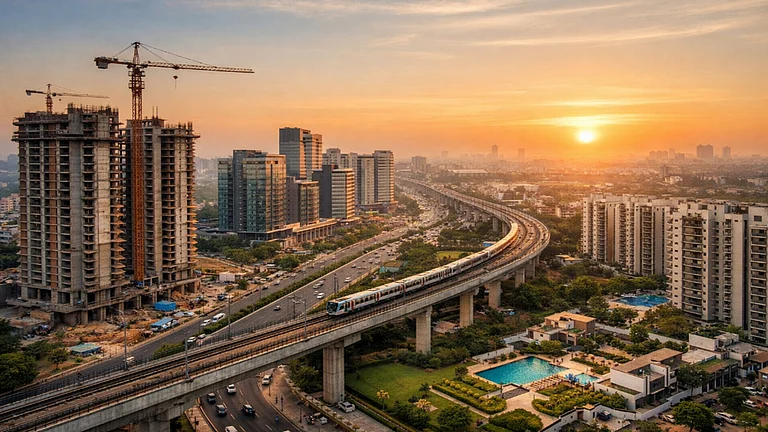
The demand growth has been noted majorly in the upcoming peripheral corridors. The report attributed the demand to the increasing attraction towards “satellite hubs” or “growth corridors”, aided by infrastructure-led developments such as expressways and metro extensions in the areas, opening up better connectivity and pushing residential limits farther than usual.
The mid-segment currently accounts for the majority of housing demand and has witnessed price appreciation of approximately 5 per cent in the last year in certain markets, pulling in both end-users and long-term investors. With home loans ranging from 7.25 per cent to 9.65 per cent currently, the mid-segment also continues to be one of the most affordable sections with high growth potential.
Key Factors Behind Mid-Segment Housing Surge
According to property experts, the surge in mid-segment housing inquiries is not a cyclical blip; something more fundamental has shifted.
“The Indian homebuyer today is sharper, better informed, and frankly, less patient with compromise. Post-pandemic, the brief was simple: more space, better design, a real neighbourhood - not just a postal address. The mid-segment stepped up to meet that ask. Developers started building better products in this bracket, and buyers responded,” says H.S. Kandhari, Executive Director, Harmony Infra Ventures.
Pushpender Singh, Managing Director, JMS Group, says, “What we’re observing currently is a very organic change in how individuals are opting to live and invest. There is a growing preference for homes where aspiration can meet the buyer's achievement, particularly ideal for expanding families and young professionals without getting under an uncomfortable financial burden. Simultaneously, enhancing connectivity - via new highways, expressways, or metro links - is making outlying areas seem much more reachable than they were a few years back. Areas that were previously seen as ‘outskirts’, such as Manesar and Sohna, are now developing into well-designed, habitable communities.”
In the future, the mid-segment is set to grow even more robustly. As infrastructure continues to grow, these corridors will evolve into independent micro-markets with enhanced social and commercial systems. “This segment provides a balanced option for both end-users and long-term investors - consistent growth, lower entry expenses, and practical utility. It mirrors the future of Indian housing in numerous aspects, emphasising that connectivity and liveability are equally important as location,” he adds.
Mohit Mittal, CEO, MORES, a real estate consultant, says a few things have come together at the right time. Product quality in this segment has genuinely moved - what a mid-segment buyer gets today in terms of design, amenities, and location is a different proposition from, say, five years ago. Loan rates are not at their historic lows, but they are workable, especially for dual-income households, which is increasingly the norm among this buyer profile.
“And then there is the capital appreciation story, which has been playing out quietly in select micro-markets - consistent, not flashy, but real. That combination of liveable product and investment credibility is pulling in end-users and investors at the same time. When two very different buyer motivations land in the same category, inquiry volumes do not just rise - they accelerate. That is what the data is telling us," Mittal adds.
Apart from product quality and capital appreciation, growing infrastructure is also playing a key role in the growing demand for mid-segment homes. A new expressway or metro extension does not just cut travel time - it changes how a location is perceived, and perception is what drives early demand. Buyers who had reservations about a market purely on connectivity grounds revisit those reservations the moment the infrastructure picture shifts.
Kandhari says connectivity is what converts potential into price. The Delhi-Meerut Expressway - NH-9 is the clearest proof of that in recent memory. It did not just make Indirapuram more accessible. It repositioned it entirely. Buyers who had drawn a hard boundary at a certain distance from Delhi started reconsidering and then started buying.


“More importantly, NH-9 connects Indirapuram forward - toward the Jewar airport corridor, toward where NCR is headed over the next decade. That forward link is what makes it a growth corridor rather than just a well-connected suburb. In Mohali, we are watching a very similar story take shape. PR-7, the Airport Road corridor, has already transformed the city's residential landscape. And the Chandigarh-Ambala Greenfield Expressway under Bharatmala is the next chapter - IT City, New Chandigarh, Kharar, all coming into sharper focus for buyers and investors. Those who see the infrastructure first and act on it tend to be the ones who look very smart a few years later," observes Kandhari.





