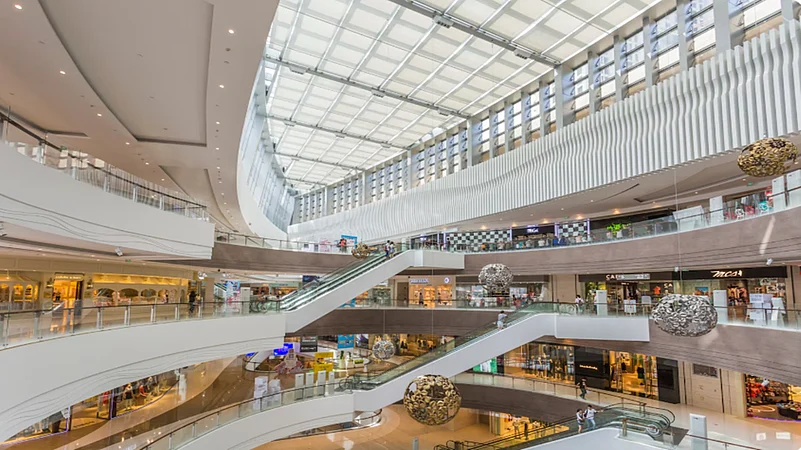

India’s retail sector today is not just about adding new shopping centres on the skyline; it is equally about unlocking value from dormant stock. The country has accumulated a significant number of shopping centres that have stagnated for various reasons or shut down in the last two decades.
These so-called ‘ghost’ retail properties may appear to be failures at first glance, but they in fact represent wasted potential or ready-made retail infrastructure that could be revived or repurposed to meet current market needs, according to Knight Frank India.
Knight Frank India’s flagship retail study - ‘Think India, Think Retail 2025 – Value Capture: Unlocking Potential’ – has identified 74 of 365 shopping centres in 32 cities as ‘Ghost Malls’ - assets marked by high vacancies, weak tenant curation, ageing infrastructure, and declining relevance. It says that reinvigorating India’s ghost shopping centres can unlock Rs 357 crore in annual rentals.
By targeting the right assets and executing thoughtful turnaround strategies, investors and developers can transform these underperforming centres into vibrant destinations once again.

Why Shopping Malls Fail
Despite the initial hype, numerous shopping centres or malls in India have suffered stagnation or closure due to structural flaws in their concept or execution. Some common root causes include:
Poor Catchment Planning & Oversupply
Some shopping centres were built in areas without a sufficient immediate customer base, or in markets that became oversaturated with competing retail projects.
For example, Gurugram’s MG Road – often dubbed the ‘Mall Mile’ – once saw five large shopping centres in close proximity. Inevitably, only the best-located and the best-managed one retained healthy footfalls, while the others became increasingly languid.
“Whenever too many shopping centres compete in one catchment area, the weaker ones lose the critical mass of shoppers and tenants, entering a vicious cycle of decline. In smaller cities, during the 2000s, developers sometimes overestimated future demand and built multiple shopping centres where one would have sufficed – leaving several half-empty almost from the start,” states the report.
Ageing Infrastructure & Lack of Upkeep
A number of first-generation shopping centres (opened in the early/mid-2000s) did not keep pace with evolving consumer expectations. As shiny new complexes opened elsewhere, older centres that failed to renovate or reinvent themselves, saw patrons drift away. A classic case is the cluster of early shopping centres on MG Road in Gurugram – once the city’s go-to retail stretch. They lost appeal as newer destinations like CyberHub and shopping centres on Golf Course Road emerged nearby. If a shopping centre’s facilities, interiors, and overall ambience appear to be stuck in the past, shoppers will naturally gravitate to newer options, typically, if no updates are made within 10–15 years of opening.
Design Flaws & Poor Layout
The physical design and layout of a shopping centre can make or break its fortunes. Centres with confusing layouts, dark corners or dead-end corridors, insufficient signage, or lack of natural light and ventilation tend to discourage repeat visits. If a centre’s floor plan prevents easy navigation and fails to expose all shops to foot traffic, retailers in the “hidden” pockets will underperform and eventually exit.
Another related pitfall was the “bazaar-style” strata-sold shopping centre – developments configured with too many small shops sold to individual investors. These often end up looking chaotic with space lacking for large anchor stores, undermining the shopping centre’s ability to draw crowds.
Strata Ownership Model Issues
Quite a few underperforming shopping centres in India suffer from fragmented ownership. In such projects, the developer sold shop units to numerous investors, often as a financing strategy during construction. However, without unified ownership and management control, maintaining quality standards and a curated tenant mix becomes nearly impossible as each unit owner leases to whoever will pay rent, leading to an ad-hoc mix of tenants, inconsistent storefronts, and no collective marketing. The overall centre quality and standard can’t be controlled effectively, and many such properties devolve into nothing more than collections of unrelated small shops rather than a cohesive shopping destination.
Anchor Tenant Loss
The exit of a major anchor tenant – such as a prominent department store, hypermarket, or multiplex cinema – can deal a severe blow to a shopping centre’s viability if not addressed swiftly. Anchor tenants are key footfall drivers; when one pulls out, the reduced traffic often causes sales for smaller stores to collapse, prompting a broader exodus of tenants.
In many cases, this scenario has proven fatal. Once the big draw eaves, a domino effect kicks in where other retailers “bleed” and vacate, sometimes forcing the centre to shut down entirely if a suitable replacement anchor cannot be found in time.
E-Commerce Impact & External Shocks
The rapid rise of e-commerce in the last decade hit mid-tier shopping centres particularly hard – especially those that did not differentiate themselves with experiences or exclusive offerings.
Commodity retail segments (books, music, basic electronics, etc.) saw declining footfall as consumers shifted those purchases online. Centres that were heavily reliant on these categories struggled to generate reasons for people to visit, aside from perhaps a food court or cinema. Those draws alone aren’t always sufficient if the centre is poorly located or otherwise unappealing.
Additionally, unforeseen shocks like the COVID-19 pandemic
delivered a heavy blow to weaker shopping centres in 2020. Many properties already financially shaky pre-pandemic, did not recover post-lockdown, as they lacked the resilience in terms of tenant mix or customer loyalty, to bounce back from months of closure.
Regulatory and Legal Troubles
In some cases, external administrative issues caused the doom of a shopping centre. Projects entangled in prolonged legal disputes (for instance, litigation over land titles or zoning, or delays in getting occupancy certificates and approvals) could not lease space effectively, resulting in empty buildings. A notable example is a mall in Bengaluru, which was caught up in legal issues around land use. It was never able to fully open and was ultimately demolished – an extreme case of value destruction.
Such regulatory snags or compliance failures can scare away retailers and visitors, causing even a well-designed centre to turn into a dead asset if the issues aren’t resolved promptly.
Shopping Centres “die” when their fundamental value proposition collapses – be it from a flawed location, mismanaged operations, eroded consumer trust, or simply economic forces making them unviable. Unfortunately, India has accumulated dozens of such struggling or closed Shopping centre, especially in metro suburbs and smaller cities from the first wave of mall construction.
Demand vs Supply Crunch
Even as some retail assets lie underutilised, the broader market’s appetite for quality space continues to grow. In recent years, the supply of new Grade A shopping centres has been relatively limited as developers have been cautious post-2015, and the pandemic further slowed project pipelines. Yet, retailer expansion has picked up pace again. This mismatch – strong demand versus constrained fresh supply – is especially evident in Tier 2 cities, where many national and international brands are eager to establish a presence but find few suitable modern centres to operate in. The gap is prompting stakeholders to take a second look at older properties. The entry of dozens of new brands into India and the robust growth of categories like affordable fashion, quick-service restaurants, and family entertainment centres signal that retailers are actively scouting for space. If they can’t find it in shiny new developments, many are willing to consider a revamped older centre that can meet their requirements.
In essence, a supply crunch of quality retail space is turning into a catalyst for reinvigoration. Shopping centre owners are now fielding interest from tenants that might have shunned their properties a few years ago, provided the owners commit to upgrades. Likewise, city authorities and investors are recognizing that rejuvenating an existing but languishing centre can quickly augment the local retail infrastructure without waiting years for a new build. All these factors have created a fertile environment for dormant retail assets to be brought back into play through renovation, repositioning, or complete repurposing.