







Summary of this article
The senior housing sector is valued at USD 1.9 billion and estimated to be within USD 12 to 18 billion by 2030.
India’s senior living sector is shifting from managing decline to enabling purposeful, autonomous lives for the elderly population.
Communities like the GIFT City project integrate housing, healthcare access, and work opportunities.
By Anantharam V Varyur
Government projections put the country's senior citizen population at around 230 million by 2036, roughly 15 per cent of the total population. The Longitudinal Ageing Study of India (LASI), conducted in 2021 under the Ministry of Health and Family Welfare, places the current elderly share at 12 per cent. By 2050, that figure could reach 319 million, growing at close to 3 per cent annually.
The picture varies sharply by state. Kerala is heading toward an elderly population share of 23 per cent by 2036, up from 13 per cent in 2011, making it the oldest state in the country demographically. Tamil Nadu, Himachal Pradesh, and Punjab follow similar trajectories. Even Uttar Pradesh, with a comparatively younger population, is expected to see its elderly share grow from 7 per cent to 12 per cent over the same period.


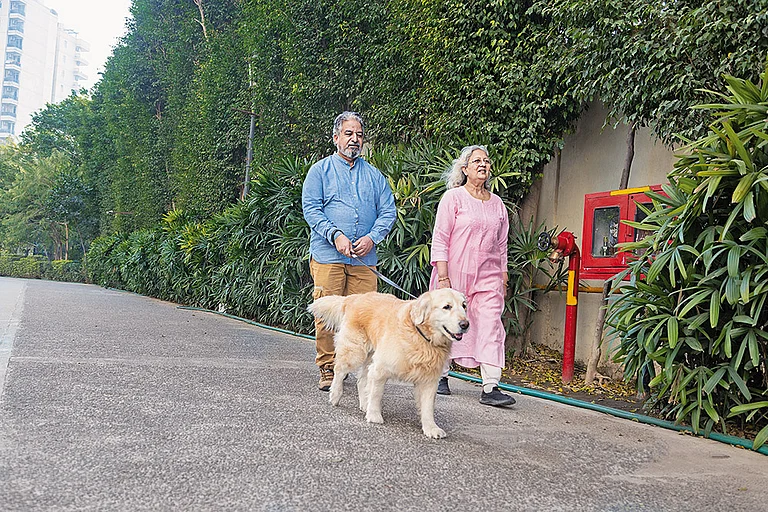
Seniors Are Asking Different Questions Now
The more interesting shift is attitudinal. The generation now entering retirement is healthier than any before it, carries more financial awareness, and is far less willing to accept a diminished daily life as the price of growing old. The LASI 2021 study notes that women make up 58 per cent of India's elderly population, of whom 54 per cent are widows. That is a large cohort navigating later life with limited institutional support and, increasingly, with expectations that institutions have been slow to meet.
Across the board, seniors today are asking different questions. The request is for autonomy, for a daily life with texture and purpose, for environments that treat them as whole people rather than as medical cases requiring management.
Retirement, for many, has stopped meaning exit. A growing number of professionals, particularly those coming out of knowledge-intensive careers, want five to eight more years of structured engagement; consulting work, advisory roles, and peer networks. They want a base, a system to do that, rather than a facility to slow down.
The active senior living project being developed at Gujarat International Finance Tec-City (GIFT) in Ahmedabad is a direct response to this; the project is designed to sit within GIFT City's financial and technology ecosystem. Residents are expected to transition into advisory or consulting roles while living in a secure, purpose-built community.

The Market Is Growing
India's senior housing sector is currently valued at around USD 1.9 billion. Industry estimates place it on a trajectory toward USD 12 to 18 billion by 2030. This sits within a broader real estate sector expected to cross USD 1 trillion in value by the end of the decade. Within that landscape, purpose-built senior communities offer something that generic residential products struggle to match: stable occupancy, a clearly defined and growing demand base, and a product differentiation that is hard to replicate.
What is driving this demand is specific. Seniors want healthcare access without living inside a hospital. They want safety without surveillance. They want a social connection that is available but unforced. They want the kind of physical environment that makes daily movement easy and comfortable rather than something to be planned around. These are not luxury demands. They are reasonable ones that the mainstream housing market has consistently failed to address.

What Good Design Actually Means Here
Barrier-free layouts, biophilic elements, good light, wide corridors, legible way-finding, and interiors that adapt to changing physical needs are functional. Markets in Japan, the Netherlands, and parts of Scandinavia have spent decades demonstrating that when spatial design takes ageing seriously, residents live better and communities hold together longer.
India's developers are at an early but consequential point in this learning curve. The choices being made now, about what gets built into a floor plan, will define how this sector is perceived and trusted for years to come.
The urge is to create environments where dignity is structural, where it is built in from the first drawing rather than added at the end as a feature. Social spaces that encourage unplanned interaction, gardens that work for people with limited mobility, wellness infrastructure that goes beyond a gymnasium; these are the details that determine whether a community actually functions as one.

Senior living, at its best, is a form of life architecture. The distinction worth holding onto is between managing decline and enabling continued vitality. One is a defensive posture. The other is a design brief. The communities getting it right are the ones that start with the second and treat the first as a support function rather than the central purpose.
India's built environment reflects what its society values. The emergence of senior living as a serious real estate and social category, from Kerala's coast to GIFT City's towers, is a signal that the country is beginning to take that reflection seriously.
The author is the Co-Founder of Manasum Senior Living
(Disclaimer: Views expressed are the author’s own, and Outlook Money does not necessarily subscribe to them. Outlook Money shall not be responsible for any damage caused to any person/organisation directly or indirectly.)





