







Summary of this article
The Supreme Court of India held that compulsory retirement is not punitive and carries no stigma.
The Court said principles of natural justice (like the right to be heard) do not apply, but such orders can still be challenged if found mala fide, arbitrary or perverse.
In a CISF inspector’s case, the Court upheld compulsory retirement after noting a decline in performance.
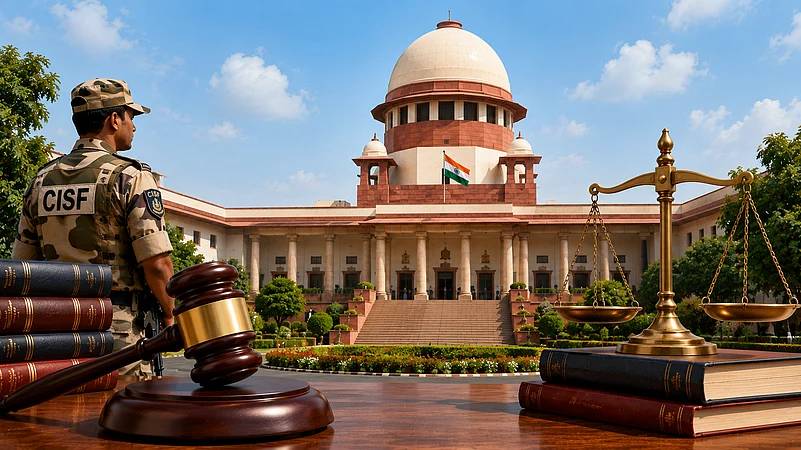
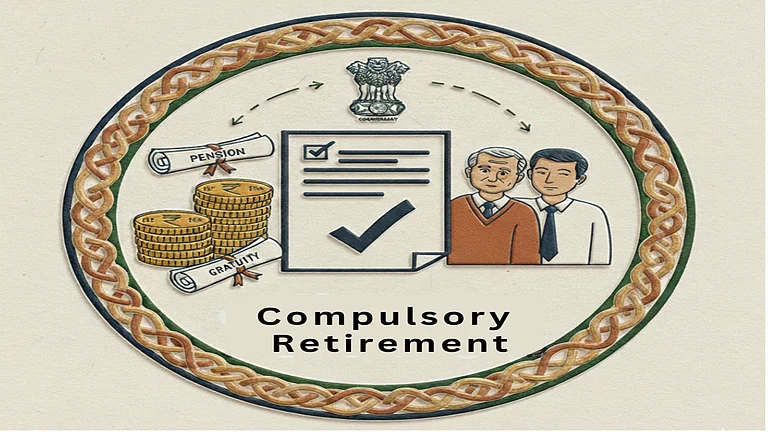
The Supreme Court clarified the boundaries between employee rights and administrative power while hearing a case regarding compulsory retirement on August 6, 2026. The Bench, comprising Justices Prashant Kumar Mishra and Shree Chandrashekhar, held that compulsory retirement is not a punishment, and emphasised that it is not a stigma or a suggestion of misbehaviour against the employee.
“It is trite law that an order of compulsory retirement is not punitive in nature and implies neither stigma, prejudice nor any suggestion of misbehaviour. The order of compulsory retirement is in public interest and is passed on the subjective satisfaction of the Government,” he said.
The Bench noted that the principle of natural justice, the rule of audi alteram partem, which means the right to be heard, does not apply in the case of compulsory retirement. However, it added that this does not mean that the order of compulsory retirement is “insulated” from judicial scrutiny in case of doubts about an arbitrary or mala fide order. The courts, whether high courts or the Supreme Court, can interfere only when an order is found to be malafide, perverse, or arbitrary, it added.





It further clarified that the decision regarding compulsory retirement is taken only in the public interest, and is crucial when it comes to the uniformed services.
The matter pertained to a former Inspector in the Central Industrial Security Force (CISF), who joined the force in 1982 as an Assistant Sub-Inspector. He was promoted during his service and became an Inspector in 2003. Upon reaching the age of 50, his service record was reviewed by an Internal Screening Committee as per Rule 56(j) of the Fundamental Rules.
He was found unfit for retention. Later, the Review Committee also affirmed the decision. He submitted a representation to the Representation Committee, but it was rejected, and subsequently he was retired.

He approached the Delhi High Court by filing a writ petition, but the High Court, observing a decline in his service efficiency during the final two years of his service under review, dismissed the writ.
The Supreme Court, after reviewing the record, found a decline in appellant’s performance in the last few years before his retirement was ordered.
The court observed that following his promotion in 2003, the appellant was imposed a minor penalty of censure for furnishing a false reason to obtain leave, besides four warnings for negligence in duties and two cautions for a lethargic attitude.
It also observed a decline in his grading from “Good” to “Average” in the last two years.
The Bench emphasised that the government must examine an employee’s entire service record, and give greater weight to recent performance while evaluating the favourable and adverse remarks.
In this case, the court noted that CISF is a disciplined uniformed force required to perform security functions, and thus, its members are held to high standards of efficiency.
The Court said, “.. the appellant was serving in the CISF, a disciplined and uniformed force entrusted with vital security functions. Members of such a force are expected to maintain a consistently high standard of efficiency, vigilance and discipline. Viewed in that light, the decision of the competent authority warrants no interference.”
The Supreme Court upheld the Delhi High Court’s decision and declined to interfere with the compulsory retirement order.





