Summary of this article
Kerala High Court rules daughter-in-law not liable to pay maintenance to in-laws.
The Act excludes daughters-in-law if seniors have living kids.
The Court sets aside the Maintenance Tribunal order against the widow daughter-in-law.
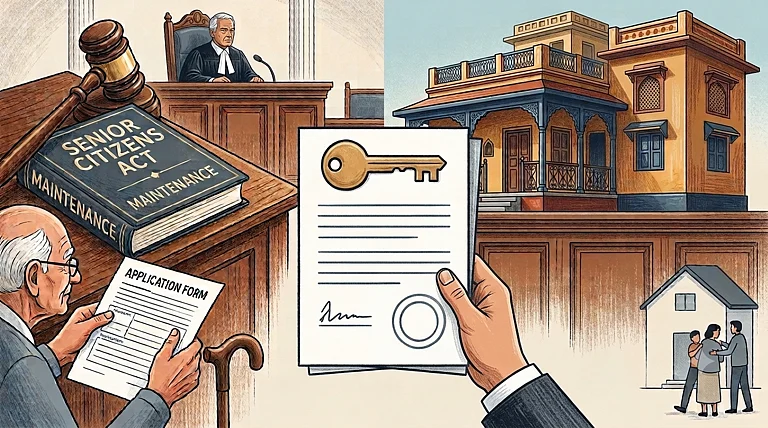
The daughter-in-law is not liable to pay maintenance to her in-laws if they have their own children alive. In a recent hearing, the Kerala High Court clarified the boundaries of financial liability under the Maintenance and Welfare of Parents and Senior Citizens Act, 2007. Justice Harisankar V. Menon ruled that a daughter-in-law cannot be compelled to pay maintenance to her mother-in-law under the statutory provisions of the Act. The court emphasised that while the Act aims to protect seniors, maintenance tribunals cannot expand the statutory definitions beyond legislative intent.
The case involved a 78-year-old mother who sought maintenance only from her daughter-in-law despite having four other children, including the son with whom she (mother-in-law) was staying. The 52-year-old widow daughter-in-law (petitioner) filed this petition challenging an order passed by the Maintenance Tribunal in Thalassery, Kerala. Following the death of her (petitioner) husband, her mother-in-law executed a settlement deed in February 2021 and transferred certain properties to the petitioner while reserving the life interest for herself. However, subsequently, she approached the Tribunal alleging that she had not been maintained by the petitioner.
In July 2021, the Maintenance Tribunal passed an order directing the petitioner to pay a monthly allowance of Rs 10,000 to her mother-in-law’s bank account. Notably, the Tribunal recorded that the mother-in-law resided with one of her sons and wished to continue residing with him. Then the petitioner approached the High Court to set aside the Tribunal’s order.




Arguments
The counsel for the petitioner contended that the mother-in-law’s four surviving children are financially well-off and have sufficient means to support their mother. The counsel highlighted that the mother is even living with one of her sons, and questioned why maintenance was sought only from the widowed daughter-in-law.
The counsel for the respondents (mother-in-law and her four surviving children) argued that the petitioner has a duty to maintain her mother-in-law and pointed out that she has barred her mother-in-law from entering her property. The counsel added that as the order was passed pursuant to conciliation, the court should not interfere.
Court Observation
The Court framed two main points in the case. First, it noted that the mother-in-law was not justified in picking and choosing her widowed daughter-in-law when her biological children are capable of maintaining her.
Second, it examined Section 9 alongside Section 2(a) and 2(g) of the Act, and observed that a maintenance order can only target ‘children’ or ‘relatives’. It clarified that Section 2(a) defines ‘children’ as sons, daughters, grandsons, and granddaughters. Daughters-in-law are not included in it. Further, Section 2(g) defines a ‘relative’ strictly as a legal heir of a ‘childless’ senior citizen. As in this case, the mother-in-law has surviving children, Section 2(g) could not apply to the daughter-in-law (petitioner).

Court Judgment
The court allowed the writ petition, setting aside the Maintenance Tribunal’s order. However, it held that maintenance that has already been paid to the mother-in-law up to the date of judgment need not be refunded.