







Summary of this article
The Supreme Court of India reviews decade-old PIL for old-age homes establishment in every district and facilities provided therein.
The Court gave States four weeks to submit the fresh reports.
The Court sought information and clarified the High Courts' role for effective execution.
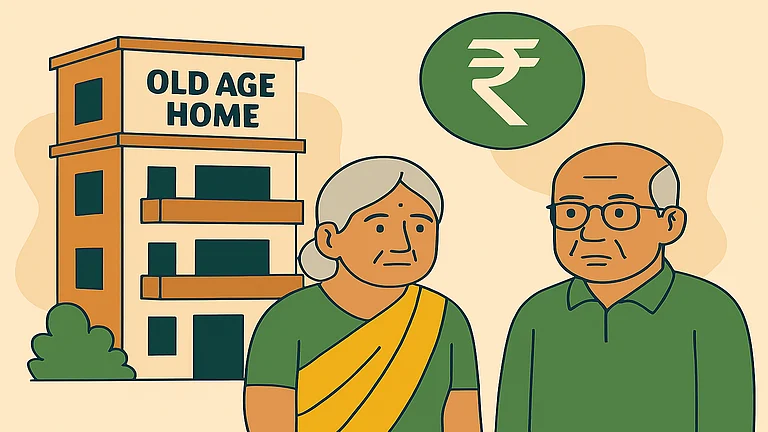
The Supreme Court has directed all state governments to submit a fresh status report on old-age homes and the facilities currently available in them for senior citizens. A Bench comprising Chief Justice Surya Kant, Justice Joymalya Bagchi, and Justice V Mohana issued the directive in this regard on September 7, 2026, while hearing a long-pending public interest litigation (PIL) filed in 2016. The petitioner, Dr. Ashwani Kumar, has sought the enforcement of directions regarding geriatric care, adequate pensions, and establishing old-age homes in every district.
During the hearing, the petitioner submitted that the mandamus (a court order that forces a lower court, or public agency, or a government official to carry out their job) in this case had been unheard of for many years and requested the Bench to consider the matter as it is for the rights and welfare of the millions of elderly persons in the country.
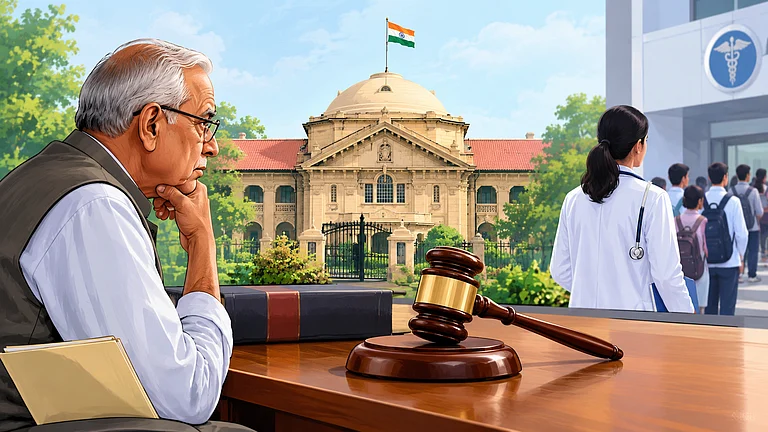


The CJI said that while the top court could lay down broad principles, high courts could be asked for effective implementation of the principles. According to a PTI report, the Centre has suggested transferring the matter to the respective high courts, but the Bench decided to seek updated information from all states regarding the existing infrastructure and facilities for senior citizens in such old age homes.
The case, when filed in 2016, received an order on April 8, 2016, only from the apex court, in which the court issued a notice to the Centre and sought assistance of the National Legal Services Authority (NALSA).

Dr. Kumar, in the PIL, sought assistance of HelpAge India, a not-for-profit organisation working in the protection of elderly rights and their welfare, in the matter to reach an agreeable solution to the problem, and the court agreed to it. At that time, it permitted Dr Kumar to argue the matter in person and associated HelpAge India with the proceedings, noting the organisation's role in the welfare of elderly and infirm persons.
Now, the court has asked HelpAge India to assist the Bench in working out a solution to the problem highlighted in the petition.

The Bench also issued notice to the member-secretary of NALSA to place on record whether any scheme had been formulated to protect the right of the elderly, and if there is any such existing scheme, place a copy of that before the court. If there is no such scheme, the court asked it to confirm whether it could formulate a scheme to provide legal assistance under existing laws. The Bench also asked to provide the details of other measures that NALSA and State Legal Services Authorities could take to assist elderly persons in protecting their statutory and legal rights.
Noticing the long pendency of the case, the Bench has mandated that states must file the status report within four weeks from the receipt of communication. The court ordered a formal communication to be sent by the Attorney General, R Venkataramani, to the Advocates General of all the states, and these advocate generals must submit the latest status reports regarding the establishment of old-age homes and the facilities provided to the elderly therein.
This order is a significant step in the journey of this PIL, as it has been pending for the last 10 years.





