







Summary of this article
India is witnessing a surge in cyber fraud, with 28 lakh cases and losses of Rs 22,931 crore in 2025.
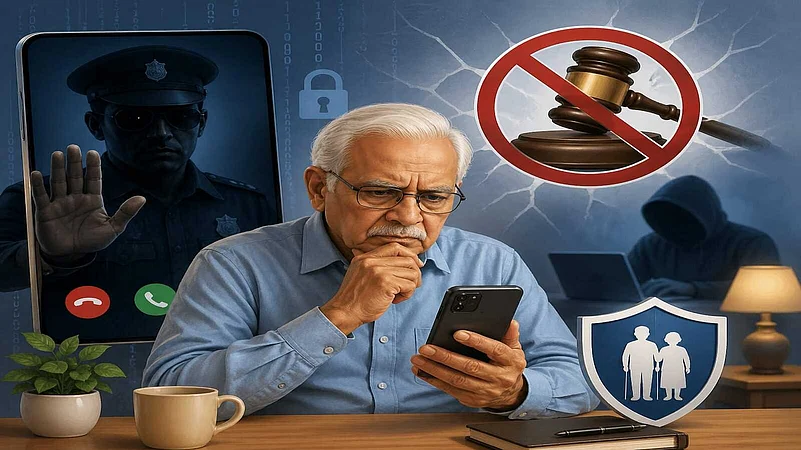
A growing menace is digital arrest, where scammers pose as officials, keep victims on video calls, threaten fake arrest warrants, and coerce them to transfer money.
Experts stress that digital arrest has no legal standing. Awareness remains the key to avoiding fraud.
Around 28 lakh cyber fraud cases were reported in 2025, according to data from the National Cyber Crime Reporting Portal. This resulted in a loss of Rs 22,931 crore. Senior citizens are one of the vulnerable groups to such digital fraud. Digital Arrest is one of the tricks fraudsters use to dupe the elderly, where they impersonate a government official, police, or other such government bodies to coerce seniors and make them transfer money.
Recently, an 85-year-old Lucknow-based resident fell victim to the digital arrest scam and lost Rs 9.5 lakh. On April 6, he received a WhatsApp video call from individuals posing as the National Investigation Agency (NIA) officials. They accused the elderly of being involved in terrorist activities. To frighten and trap him further, the fake officials (fraudsters) showed some forged legal documents, telling him that an arrest warrant had already been issued in his name, as per the Times of India report.
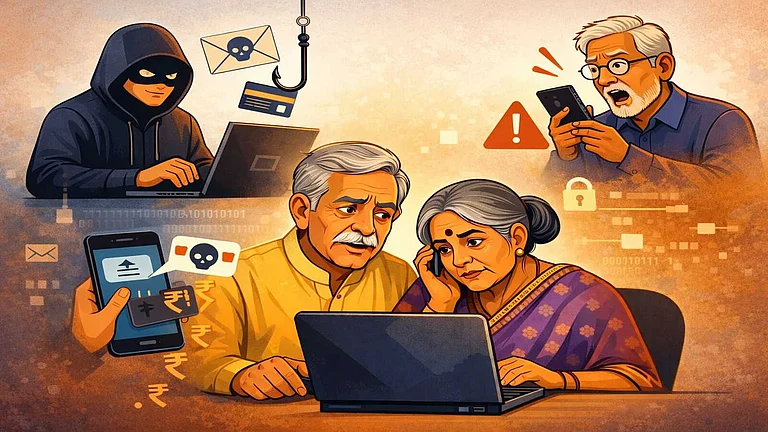



For three days in a row, they kept him under video surveillance through prolonged calls and isolated him from his family and external help. They threatened him with imprisonment, and coerced to transfer his savings to a bank account suggested by them to avoid it. Under pressure, he transferred a total of Rs 9.5 lakh through two real-time gross settlement (RTGS) transactions (Rs 7.5 lakh and Rs 2 lakh) during his three-day ordeal.
Later, realising that he had been swindled, the senior citizen contacted the cybercrime helpline and reported the fraud, and lodged the FIR.
Such incidents have become common nowadays, where seniors, many times, retirees from senior positions having a decent corpus, have fallen prey to tricks, thinking digital arrest is legal.
Digital Arrest Has No Legal Standing
Campaigns have been run to spread awareness around digital arrest, but fraud is still happening. Senior citizens must be very clear that digital arrest has no legal standing. They must be aware that if a person posing as an official asks them to stay online and keep the video call on, such a forced video call (digital arrest) is illegal. They should discuss it with the family immediately and inform the cyber helpline at 1930 or the police.
Awareness is the key to keeping one’s savings safe and avoiding the stigma and mental and emotional suffering.

Reserve Bank Of India Measures Against Digital Frauds
To combat such digital fraud cases, the Reserve Bank of India (RBI) has recently published a discussion paper, proposing a series of defensive measures to curb unauthorised transactions. These measures include a mandatory one-hour time lag for digital payments if the transaction amount exceeds Rs 10,000. This would allow users some time to cancel a suspicious transaction. Other proposals include additional authentication by a trusted person for senior citizens or divyang individuals, for high-value transactions. In addition to this, a digital switch on/off facility for payment modes, setting transaction limits, and using a regulatory measure to review the aggregate credit transactions in a bank account to prevent it from being used as a mule account. RBI has invited comments and feedback on these proposed safety measures through the Connect 2 Regulate link on its official website. The link is open till May 8, 2026.
Digital fraud is becoming common in today’s times. To avoid such incidents, the only safeguard is awareness and staying alert.





