




Sponsored Content
Business Loan Eligibility Checklist: Documents & Credit Score Requirements Across Banks
Business Loan Eligibility is determined by lenders based on the assessment of credit profile, financial stability, business performance, and repayment capacity.
Eligibility norms may vary across lenders and loan products based on risk assessment frameworks and borrower profiles.
Core Factors In Business Loan Eligibility
Most lenders in India follow broadly similar parameters, even though exact thresholds differ from one institution to another. Typically, they consider the profile of the business owner, the strength of the enterprise, and the stability of income before sanctioning a business loan.
Key aspects usually include age band, whether the borrower is an Indian resident, and whether the business falls within eligible categories such as proprietorship, partnership, limited liability partnership, or company. Lenders also evaluate business vintage, turnover trends, profit consistency, existing loan obligations, and overall repayment capacity as part of the business loan eligibility criteria.



Credit Score and CIBIL Score for Business Loan
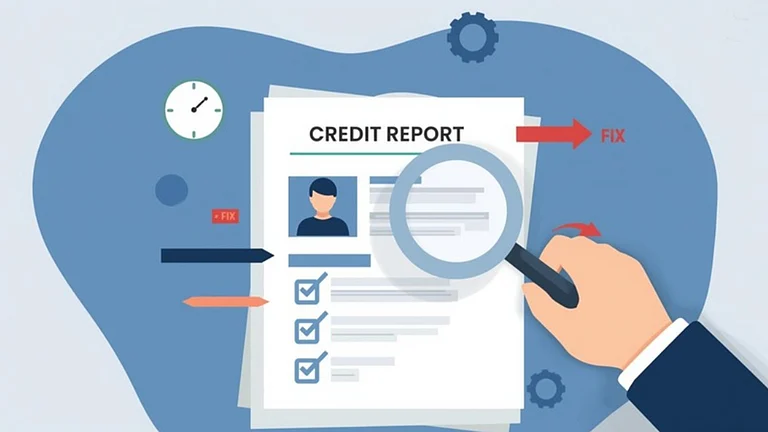
Credit history plays a central role in most business loan decisions in India. Many lenders prefer that the CIBIL score for business loan applications is in a healthy range, as it signals responsible borrowing and timely repayment behaviour.
However, the credit score is only one piece of the puzzle. Banks typically review both the individual promoter’s profile and, where available, the business credit report, along with the repayment track record on existing loans and credit cards. A stronger credit profile may help improve loan terms, while a weaker score might lead to closer scrutiny or stricter conditions even if other parameters are favourable.
Minimum Turnover for Business Loan and Business Vintage
Lenders usually expect a minimum turnover for business loan applications so that they can assess the scale and stability of operations. While the exact figure varies by bank and product category, higher turnover combined with consistent sales tends to strengthen the case for approval.
In addition to turnover, business vintage is a key lens for evaluating continuity. Many institutions prefer that the enterprise has been operating for a defined period at the current location so that they can review trends across multiple financial cycles. For newer businesses, the lender may compensate by focusing more on promoter experience, business plans, and available security.
Documents Required for Business Loan Applications
Preparing the right documentation in advance can significantly reduce back-and-forth during the loan journey. Although each lender has its own checklist, certain documents required for business loan evaluation are fairly standard across banks and non-banking financial companies.
Commonly requested documents include know your customer documents such as Aadhaar card, permanent account number, and acceptable address proof. On the business side, lenders may ask for income tax returns, bank statements for recent months, profit and loss statements, balance sheets, goods and services tax registration or filings where applicable, and proof of business registration. For secured products, ownership documents for property or other collateral can also be part of the file.
How A Business Loan Eligibility Calculator Helps
A business loan eligibility calculator can be a practical first step before approaching any lender. These online tools typically allow business owners to input approximate turnover, net profit, existing loan obligations, and sometimes an estimated credit score to get an indicative view of the funding amount they might qualify for.
Although calculators do not guarantee sanction and do not replace a full credit assessment, they can help the applicant choose realistic loan amounts, compare offers across banks and plan documentation better. By aligning expectations early, such tools help borrowers approach formal applications with more confidence and clarity.
Practical Checklist Before Applying
Before submitting a business loan application, it can be useful for a borrower to walk through a simple self-checklist. The aim is to align as closely as possible with the typical business loan eligibility criteria that banks follow while keeping the process practical and actionable.
A business owner can begin by confirming that basic eligibility such as age band, citizenship and business structure aligns with typical lending norms in India. The next step is to review CIBIL score and broader credit history, check whether turnover and profits have been stable, and ensure that existing loan obligations do not stretch repayment capacity. Parallelly, assembling all documents required for business loan assessment, such as know your customer and financials, ahead of time helps avoid delays during verification.
Ways To Strengthen Business Loan Eligibility
Even if a business is not fully ready today, there are practical ways to improve eligibility over time. Many lenders highlight that a disciplined approach to banking transactions and compliance can gradually enhance a borrower’s profile.
Maintaining consistent credits and debits in business bank accounts, reducing unnecessary credit utilisation, and ensuring timely repayment of existing obligations are some straightforward steps. Keeping tax filings up to date, preserving clear financial records, and formalising cash-based transactions wherever possible also support a stronger case. When combined with a realistic business plan and transparent communication with the lender, these measures may improve access to finance, even though approval remains at the sole discretion of the lending institution.
Conclusion
Every lender ultimately applies its own internal policies, risk models and documentation standards, so experiences may differ from bank to bank. However, a clear understanding of documents required for business loan applications, the role of CIBIL score for business loan decisions, and the importance of steady turnover can help business owners navigate these differences with greater confidence and control.





