




Sponsored Content
Wagle Estate is witnessing a significant urban shift that is redefining its identity within the Mumbai Metropolitan Region. What was once an industrial belt defined by factories and MSME units is now growing into a mixed-use or live-near-work arrangement. Developments such as Grade-A offices, residential buildings, organised retail, and metro infrastructure are shaping this transition.
Today, however, the conversation around Wagle Estate is beginning to change.
Where Connectivity and Accessibility are Reshaping Demand
What makes this shift notable is not the speed of development alone but the nature of it. Across the Mumbai Metropolitan Region, homebuyers are prioritising access, commute efficiency, and integrated urban infrastructure over legacy residential pin codes.
Well-Connected to the Rest of the City
Positioned along key connectivity routes linking Thane, Mulund, Powai, and Navi Mumbai, the locality offers a degree of everyday accessibility. The upcoming Metro Line 4, which will connect Wadala to Kasarvadavali, is expected to further strengthen east-west movement across the Mumbai Metropolitan Region. Combined with access to the Eastern Express Highway and Ghodbunder Road, this connectivity is making everyday commutes more efficient in a city where travel time increasingly shapes residential choices.


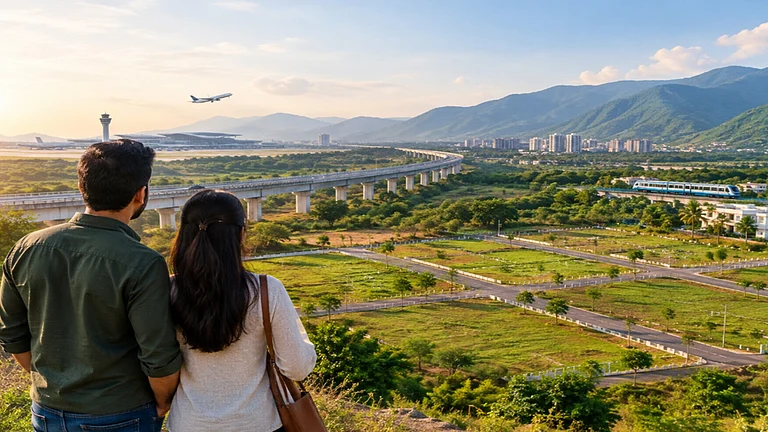
This improving connectivity continues to expand workplace clusters across Thane and the central suburbs. In response, homebuyers are driving more decentralised residential demand by prioritising access and convenience. Professionals are no longer evaluating homes solely through the lens of distance from South Mumbai or traditional western suburbs. The emphasis is shifting toward neighbourhoods that support a more balanced daily rhythm, where workspaces, social infrastructure, healthcare, education, and leisure are accessible without requiring excessive cross-city movement.
Wagle Estate sits at the intersection of this transition.
Easy Access within the Micro-Market
The locality’s commercial foundation has also contributed to a more self-sustaining urban environment. It has established corporates, retail activity, schools, hospitals, and hospitality infrastructure operating within it. That base is what separates Wagle Estate from a purely office-driven district. In many ways, Wagle Estate is emerging as Thane’s own BKC in the making, where business activity and residential growth are evolving together.
This evolution is influencing the type of housing demand emerging in the area. The interest is not limited to speculative investment alone, but rather it is increasingly being driven by end users seeking long-term liveability. Particularly working professionals and families looking for better spatial value without disconnecting from established employment hubs.
A More Layered Urban Landscape
Developers like L&T Realty are responding accordingly. Residential projects entering the micro-market are placing greater emphasis on design efficiency, amenities, green spaces, and community-orientated planning. These additions create more space for recreation, social interaction, and wellness within residential communities. They also bring a greater sense of balance to everyday life in increasingly fast-paced urban environments.
This growing demand is also beginning to strengthen ROI across Wagle Estate’s residential and commercial market. As infrastructure improves and workplace activity expands, the locality is attracting stronger interest from both end users and investors. For many buyers, the appeal now extends beyond connectivity to the potential for long-term value appreciation within a more established urban corridor.
Backed by Infrastructure and Policy Momentum
This transition is expected to gather pace through ongoing cluster redevelopment and public infrastructure initiatives across Thane. The Maharashtra government has also increased its focus on Wagle Estate’s long-term expansion. Then Chief Minister Eknath Shinde (now Deputy Chief Minister) had allocated ₹2,000 crore in funding toward redevelopment efforts in the locality, signalling stronger institutional support for the area.
With this, the older industrial pockets are gradually making way for newer commercial and residential formats. Wagle Estate is steadily strengthening its position as one of the city’s more prominent mixed-use corridors.
Disclaimer: This is a sponsored article. It is not part of Outlook Money's editorial content and was not created by Outlook Money journalists.





