

Summary of this article
Delhi High Court questions 18 per cent GST on air purifiers amid severe air pollution.
Judges flag equity concerns, saying high GST limits access to cleaner indoor air.
Court asks Centre to place air purifier GST issue before GST Council.
Case raises broader debate on taxing preventive health products during pollution crises.
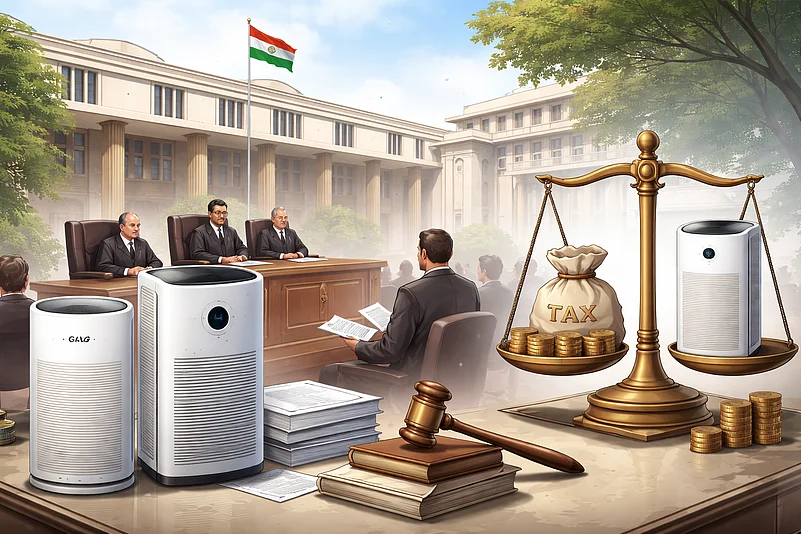
The Delhi High Court has questioned the rationale behind levying an 18 per cent Goods and Services Tax (GST) on air purifiers at a time when air pollution has become a daily health concern for residents of the national capital, according to a recent report by the Times of India. Observing that people are being forced to rely on such devices to breathe cleaner air indoors, the court asked whether it was reasonable to tax them at the highest slab when clean air itself is increasingly unavailable.
The bench noted that air purifiers are no longer niche consumer appliances. In Delhi, air purifiers have quietly found their way into living rooms, classrooms, clinics, and office floors whenever pollution levels spiral. Against this backdrop, the court sought a response from the central government and asked that the issue be placed before the GST Council for reconsideration.
Judges Raise Questions On Access And Equity
During the hearing, the court underlined that the burden of pollution is not evenly distributed. While some households can afford costly air-cleaning devices, many others cannot. The judges remarked that imposing a steep tax on equipment meant to reduce health risks effectively restricts access to cleaner indoor air to those with higher incomes.

1 October 2026
Get the latest issue of Outlook Money

The petition before the court argues that air purifiers perform a preventive health function and should not be treated at par with discretionary household gadgets. It notes that breathing polluted air over long periods has been associated with a higher incidence of lung and heart-related illnesses, with children and the elderly among the worst affected. From that perspective, the continued classification of air purifiers under the 18 per cent GST bracket appears disconnected from public health realities.
The court also questioned whether the government had examined the issue in light of repeated pollution emergencies and whether any assessment had been carried out on how taxation affects affordability and adoption of such devices.
GST Council’s Role Comes Into Focus
The centre told the court that GST rates are decided by the GST Council, a body that brings together the Union and the states. While acknowledging this structure, the court said the urgency of the situation demanded timely attention and asked the government to indicate when the matter could be taken up by the council.
The bench observed that when environmental conditions deteriorate to the point of becoming a health hazard, fiscal policy cannot remain static. The court observed that a lower tax would bring down prices and make it easier for people to afford protection during severe pollution spells.
Policy experts say the case has wider implications beyond a single product category. It raises questions about how tax systems respond to emerging environmental risks and whether items that help mitigate those risks should be treated differently from ordinary consumer goods.
The matter is scheduled to come up again after the centre files its response. Any decision to review the GST rate could influence pricing, demand, and broader policy thinking around health-related products in pollution-prone regions.