






Summary of this article
RBI keeps repo rate unchanged at 5.25 per cent.
Inflation forecast raised, while FY27 growth outlook lowered.
New measures aim to attract foreign capital inflows.
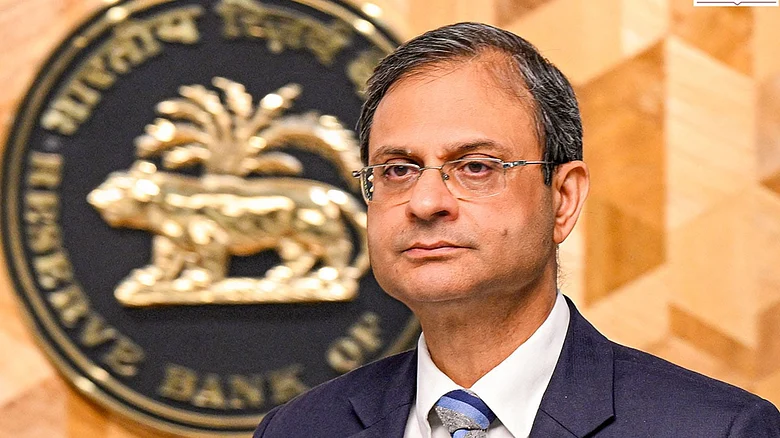
The Reserve Bank of India’s (RBI) Monetary Policy Committee (MPC) kept the benchmark repo rate unchanged at 5.25 per cent at the conclusion of its three-day meeting held from June 3-5, 2026. RBI Governor Sanjay Malhotra also mentioned that the Standing Deposit Facility (SDF) rate has been kept unchanged at 5 per cent, while the Marginal Standing Facility (MSF) rate and the Bank Rate have been retained at 5.50 per cent.
The MPC opted for a pause amid global economic uncertainty and concerns over inflationary pressures arising from geopolitical tensions and volatile crude oil prices. The decision was largely in line with market expectations.
Measures Announced To Attract Foreign Capital
Alongside the rate decision, RBI also announced a series of measures aimed at attracting foreign capital and supporting rupee stability. These include widening the universe of government securities available under the Fully Accessible Route (FAR), opening discounted swap windows for foreign currency non resident or FCNR (B) deposits, easing certain external commercial borrowing norms, and proposing tax-related incentives for foreign debt investors.
The central bank also revised its inflation outlook upward while trimming its growth projections for FY27, reflecting concerns around elevated crude oil prices, geopolitical tensions in West Asia, weather-related risks and global economic uncertainties.
Inflation Concerns Drive Cautious Policy Stance
Radhika Rao, senior economist and executive director, DBS Bank, said: “The central bank ticked all boxes to spur dollar inflows and stabilise the currency, signalling that all hands are on deck. Announcements included widening the universe of eligible bond securities, discounted swap windows for FCNR (B) deposits, and moves to boost concessional external commercial borrowings, among others.”
She added: “Benchmark rates were held unchanged, but the policy guidance was cautious on inflationary risks from the ongoing West Asia crisis and sub-normal southwest monsoon. Concern over inflation was reflected by 50 basis points (bps) upward revision in the FY27 inflation projection, while the view on growth was tempered.”
Debopam Chaudhuri, chief economist, Piramal Group, said that “while the decision to keep policy rates unchanged and maintain a neutral stance was largely in line with expectations, the inflation outlook effectively serves as a signal of continued policy caution, or in a way precursor to hawkishness”.
“With inflation projected to rise to 5.90 per cent in Q3, it is unlikely that domestic borrowing costs for Indian corporates will revert to pre-Gulf crisis levels,” he added.
Foreign Investment Measures Receive Positive Response
Chaudhuri also welcomed RBI’s move to expand foreign participation in government securities.
“The decision to expand foreign investor participation in longer-tenure government securities through FAR is a constructive measure. It not only has the potential to support foreign capital inflows and provide stability to the rupee, but also helps mitigate any crowding-out effects within private corporate borrowers arising from higher government borrowing requirements owing to the prevailing crisis,” he added.
Growth Support Remains A Priority
Rumki Majumdar, economist, Deloitte India, said the RBI will, however, remain watchful of the price movement in the coming months.
“By keeping the policy rates unchanged, it is preserving its monetary ‘armour’ to fight the inflation war as and when it happens. The RBI has prioritised supportive domestic financial conditions for growth right now. Instead, the RBI probably will use a wider toolkit, such as liquidity operations, forex intervention and policy communication, to manage inflation and currency volatility.”
Majumdar also noted that RBI’s downward revision of FY27 growth to 6.60 per cent broadly aligns with expectations amid global uncertainties, elevated energy prices and weaker external demand.
Households Unlikely To See Immediate Impact
Adhil Shetty, CEO, BankBazaar, said the MPC's unanimous decision to keep the repo rate unchanged at 5.25 per cent while retaining the neutral stance reflects that it is increasingly concerned about inflation risks but is not yet convinced that a policy response is warranted.
“The RBI has materially revised its macroeconomic assessment since April, lowering its FY27 growth projection to 6.60 per cent from 6.90 per cent, and raising its inflation forecast to 5.10 per cent from 4.60 per cent”, he added.
According to Shetty, existing borrowers are unlikely to see any immediate change in loan rates or equated monthly instalments (EMIs), while deposit rates are expected to remain broadly supported.
Saurabh Bansal, a SEBI (Securities and Exchange Board of India) registered investment advisor and founder of Finatwork Investment Advisor, explains, "The RBI's decision reflects a shift from supporting growth to preserving macroeconomic stability. With inflation remaining benign but global risks elevated, the central bank appears to be prioritising flexibility over committing to a particular rate trajectory. The policy is less about today's repo rate and more about keeping room to respond to evolving risks around oil, currency, and global growth."
Markets Watch Inflation And Global Developments
Market participants will now closely monitor incoming inflation data, the monsoon progress, global crude oil prices, and geopolitical developments for clues on RBI's future policy trajectory. While the central bank has opted to pause for now, its revised inflation projections and emphasis on price stability suggest that inflation management and currency stability have emerged as the key priorities for policymakers in the coming quarters.





