


Summary of this article
The Karnataka High Court has directed immediate police action after a Bengaluru senior citizen alleged his lender seized his passport over unpaid dues. The court held that coercive recovery methods amount to a cognisable offence and ordered full investigation of the matter, not just a preliminary inquiry
The Karnataka High Court ordered a quick police action on a Bengaluru-based senior citizen’s complaint alleging his passport was seized by the lender. The senior citizen has filed a plea regarding the coercive recovery methods used by the person who lent him money, saying that the lender has taken his (senior’s) passport because he was unable to pay back the money.
The petitioner (senior citizen) first filed the complaint regarding the matter with the police commissioner on December 12, 2025, and then with the assistant commissioner of police (CCB) on February 27, 2026, per the Times of India report. In the petition to the High Court, the petitioner highlighted the unfair recovery practice and the provisions under the Karnataka Prohibition of Charging Exorbitant Interest Act, 2004. Upon hearing the matter, Justice Sachin Shankar Magadum allowed the petition and ordered an immediate police investigation as per the law.





The court observed that prima facie there has been a cognisable offence under Section 4 of the Act, amended in 2025. The Section deals with the penalty in case of lenders charging exorbitant interest on any loan or following coercive practices.
According to the Section 4 of the Karnataka Prohibition Of Charging Exorbitant Interest (Amendment) Bill, 2025, “Notwithstanding anything contained in the Karnataka Money Lenders Act, 1961, whoever contravenes the provision of section 3 or molests or abets the molestation of any debtor for recovery of any loan shall be punishable with imprisonment for a term which may extend to ten years and also with fine which may extend to five lakh rupees.”
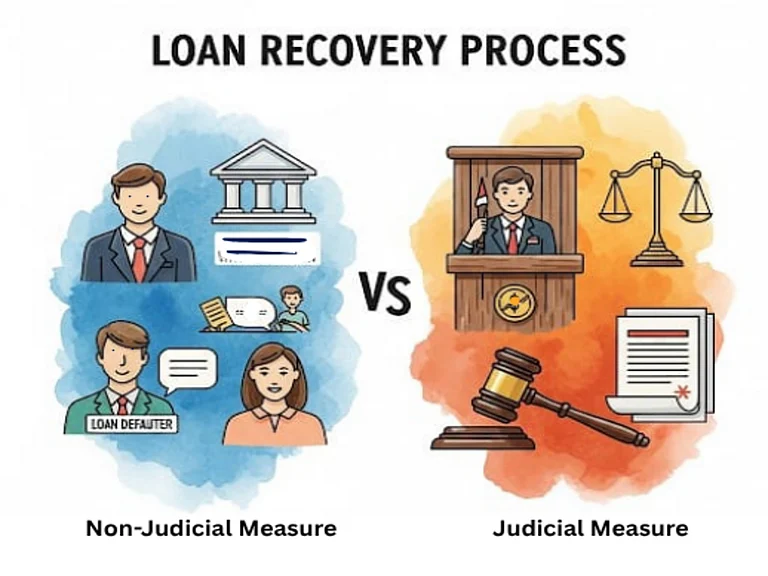
Section 3 of the Act, says that no person shall charge exorbitant interest on any loan advanced by him and money lender shall not use any coercive action either by himself or by his agents or by his family members for recovery of money from the debtor and any form of coercive recovery shall be liable for punishment under the provisions of this Act and empower the Registering Authority to suspend or cancel the Registration of such Money Lender as provided under the provisions of this Act.
Observing the extent of punishment that could go up to 10 years, the Court emphasised that in matters involving such a punishment, the jurisdictional police officers cannot act passively and stop after just a preliminary inquiry.

It noted that when a complaint is received alleging a cognisable offence, the case should be registered under the criminal procedure provisions. The Court also pointed out the hesitation of the investigating officer, and attributed it to the officer’s possible reference to the original version of the Act, which prescribed ‘three years’ imprisonment or Rs 30,000 fine, at the maximum. But the 2025 amendment in the Act has significantly increased the punishment, making any coercive practice a serious crime requiring immediate intervention.
The Court clarified that the police should not limit the investigation to just a preliminary inquiry, but register an FIR and proceed with the investigation as per law.