








Summary of this article
The Bombay High Court has ruled that a transfer or gift of property by parents to their children carries an implied condition of care by the children.
The court upheld the cancellation of a son’s property rights for failing to maintain his 67-year-old mother.
It upheld the cancellation of the relinquishment deed and the monthly maintenance of Rs 10,000 payable to the mother.
The property transfer of the gifts made by the parents to their children is implicitly conditional, ruled the Bombay High Court, in a recent case. The court held that under the Maintenance and Welfare of Parents and Senior Citizens (MWPSC) Act, 2007, when parents transfer or gift their property or other assets to their children, it is implicit that their children will take care of them. The Act makes the child/ren bound to take care of the basic amenities and medical needs of their parents. Failing to do so may result in such a transfer or gifting of the asset void.
Ruling this, Justice Sanjay S Deshmukh dismissed the petition filed by 46-years old son. The petitioner (son) filed this petition to challenge the senior citizen appellate tribunal order passed in September 2025, in which the tribunal cancelled the relinquishment deed made in his favour by his 67-year-old mother. Petitioner’s father passed away in 2007, and that is when the dispute started, leading the mother and her two daughters to relinquish their rights to ancestral and self-earned properties in favour of the son.



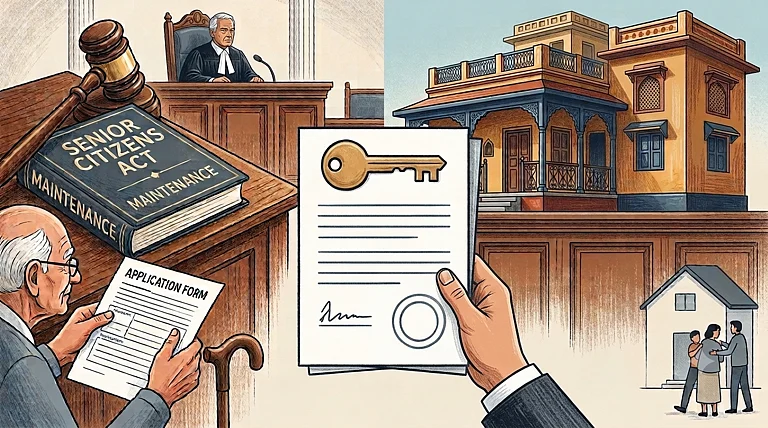

However, the property ownership turned into a legal battle when the mother approached the senior citizen tribunal seeking cancellation of relinquishment deeds and asking for maintenance for her son, according to reports by the Hindustan Times. The tribunal ordered in her favour. It revoked the transfer of the property and also ordered the son to pay a monthly maintenance of Rs 10,000 to his mother.
To challenge the order, the son argued that the deed was executed voluntarily and doesn’t bear any reference that requires him to maintain his mother.
While hearing the petition, the court rejected the argument, saying that Section 23(1) of the MWPSC Act stipulates that property transfer by senior citizens is both implicitly and explicitly subject to the condition of care.

According to Section 23(1), “Where any senior citizen who, after the commencement of this Act, has by way of gift or otherwise, his property, subject to the condition that the transferee shall provide the basic amenities and basic physical needs to the transferor and such transferee refuses or fails to provide such amenities and physical needs, the said transfer of property shall be deemed to have been made by fraud or coercion or under undue influence and shall at the option of the transferor be declared void by the Tribunal.”
The court clarified that if the transfer has been made under undue influence, coercion, or fraud, the tribunal has the right to declare the transfer void and ensure a dignified life for the elderly.

The court also dismissed the petitioner’s claim that the relinquishment should not be cancelled if he pays the monthly maintenance. The court rejected the argument, noting that it would allow the child to still hold rights over the property, and that may make the parent financially vulnerable again. The court reinforced Section 23 of the Act, which has been designed to protect the elderly against destitution by their children.





