On January 1, 2026, the BSE Sensex completed 40 years since its launch as India’s benchmark equity index. Over the past four decades, the index has evolved into a reliable barometer of India’s economic transformation and the growing maturity of the country’s equity markets.
Launched on January 2, 1986, with a base date of 1978-79, at a level of 549, the Sensex began its journey in an India that was very different from what it is today. At the time, the Indian economy operated under pre-liberalisation policies, stock market investing was limited to a limited number of brokers and high-net-worth individuals, and market infrastructure and regulation were still at a nascent stage. Forty years later, the index scaled a record high of 86,159 on December 1, 2025. At the closing of 85,762 on January 2, 2026, the benchmark index has delivered an absolute growth of 15,681 per cent since its inception.
Rs 10,000 Turned Into Rs 15.60 lakh In 40 Years
Suppose a small investor had put Rs 10,000 into a Sensex-linked portfolio in January 1986 and held on through every crash, scam, war and policy shock. At January 2, 2026’s closing, that Rs 10,000 would have grown into roughly Rs 15.60 lakh on a price-return basis alone.
It is worth noting that these figures do not include all the dividend payouts Sensex companies paid to their shareholders throughout the past four decades.
A Barometer Of Economic Growth
The Sensex sometimes ran ahead of the economy, sometimes lagged; however, it always gravitated back to the country’s underlying growth trajectory.
Over the past four decades, the Sensex has delivered a compounded annual growth rate (CAGR) of around 13.40 per cent, in line with India’s nominal gross domestic product (GDP) growth of about 12.97 per cent over the same period.
“As the nation opened its doors in 1991, Sensex became the storyteller of reforms, surging through the waves of liberalisation, technology booms, and global crises. It reflected India’s resilience during the Asian crisis, its ambition during the IT revolution, and its maturity through the global financial meltdown and the pandemic shock,” BSE Index Services Pvt Ltd mentioned in its research report released on this occasion.
Stocks That Stood The Test Of Time
Over the past four decades, the Sensex has seen constant churn, with companies entering and exiting the index as the economy and markets evolved. Through all this change, only four companies have remained part of the Sensex without interruption since its inception. These companies are Hindustan Unilever, ITC, Larsen & Toubro and Reliance Industries.
Among them, Reliance Industries best captures the scale of change India has gone through, evolving from a textiles company into a diversified conglomerate spanning petrochemicals, telecom, digital services and now green energy.
Several other companies did not make it into the original index but have spent most of the past three decades as Sensex constituents. Infosys, Tata Consultancy Services (TCS), State Bank of India (SBI) and HDFC Bank, despite brief exits at different points, have remained central to the index for long stretches.
Important Phases That Shaped The Sensex
The liberalisation (1991): If any single year changed the direction of the Sensex, it was 1991. India was facing a balance-of-payments crisis when Finance Minister Manmohan Singh presented a reform-driven budget that dismantled the licence raj and opened up the economy. The market responded immediately. On budget day, July 24, 1991, the Sensex rose sharply, and by the end of the year it had posted a calendar return of 82 per cent, among the strongest annual gains in the index’s history.
The Harshad Mehta scam (1992): The rally extended into early 1992, with the Sensex surging past the 4,000 mark for the first time. The surge ended abruptly. On April 28, 1992, the index crashed 12.77 per cent in a single session after the Harshad Mehta scam surfaced, its steepest fall outside the Covid period. Even after the sharp correction and increased volatility, the Sensex closed the year with gains, showing the market’s capacity to absorb major shocks.
The technology boom and the Ketan Parekh episode (1999–2001): The late 1990s saw the rapid rise of India’s software industry, with technology stocks driving the Sensex past the 5,000 mark in 1999 as optimism around IT exports peaked. The rally ended abruptly with the global dotcom crash and the exposure of the Ketan Parekh scam in 2001, leading to a long-lasting correction.
The global financial crisis (2008): The global financial crisis of 2008 was one of the toughest challenges the Sensex has ever faced. After years of strong gains, the collapse of Lehman Brothers in September 2008 triggered a sudden sell-off. The Sensex lost more than half its value that year, its worst annual performance. On October 24, 2008, the index fell nearly 11 per cent in a single day. The recovery was quick but hard-won, with 2009 becoming one of the strongest years in Sensex history as the index rose 81 per cent.
The Covid Shock (2020): March 2020 witnessed the fastest market crash in the history of the Sensex. On March 23, 2020, the index plunged 13.15 per cent in a single day after a nationwide lockdown was announced to contain the pandemic. Economic activity came to a standstill, and uncertainty ruled the markets. However, markets soon stood up, with an equally rapid recovery, supported by liquidity measures, government policies, and a surge in retail participation, which pushed the Sensex to new highs within a few months.
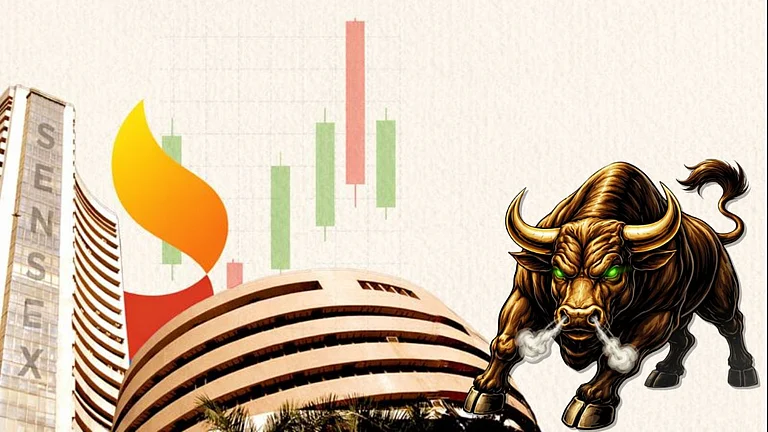
Sensex’s Best And Worst Days
Sensex's best single-day gain came on May 18, 2009, when it jumped 17.34 per cent after the UPA returned to power with a stronger-than-expected mandate. Its worst day came on March 23, 2020, during the Covid panic-selling.
Sensex’s Seasonality: When The Market Tends To Rise
Over the past four decades, the Sensex has shown a tendency to perform better in certain months.
April and July are historically strong months
Data from the past 10 years, 20 years, and since the Sensex’s inception show that April and July consistently deliver positive returns. For instance, from 2015 to 2025, April posted an average gain of 2.80 per cent while July recorded 3.00 per cent. From 2005 to 2025, April recorded an average gain of 3.40 per cent, and July saw 2.20 per cent gains. From inception to 2025, July and December stood out, with average returns of 2.90 per cent and 2.60 per cent, respectively.
January and February often underperform
Over the past 20 years, January and February have seen negative returns on average. Between 2005 and 2025, January saw average returns of -0.60 per cent and February -1.40 per cent. From 2015 to 2025, as well, January recorded a negative average return of -0.30 per cent and February -1.80 per cent. September, too, saw a 0.40 per cent average negative return during the period.
September is generally weak
September has tended to deliver lower returns over the past decade. From 2015 to 2025, the month averaged a modest 0.90 per cent gain, while longer-term data since 2005 shows September averaging just 0.70 per cent, making it one of the weaker months for the Sensex.
Tuesdays Usually Give the Best Returns, Mondays the Worst
Looking at Sensex data over the years, Tuesday has often been the strongest day of the week. Between 2015 and 2025, for example, Tuesday gave an average return of 0.13 per cent, followed by Wednesday at 0.07 per cent and Friday at 0.05 per cent.
Monday, on the other hand, has been the weakest day. Over the same decade, it barely moved, averaging 0.00 per cent, and looking further back from 1986 to 2025, Monday yielded a return of just 0.01 per cent on average.
At 40, What Sensex Represents Now
Sectorally, the Sensex has changed dramatically over the years. Financial services now account for 39 per cent of index weight, up from just over 22 per cent two decades ago. The IT sector’s weight has declined from 20 per cent to 13 per cent over the same period. Consumer discretionary has tripled its share, while commodities and traditional manufacturing have shrunk.