





Summary of this article
A study by the Goa Institute of Management (GIM) finds that childless women in India are often seen as ideal workers.
However, they face exclusion and microaggressions due to the deep-rooted beliefs equating womanhood with motherhood.
It highlights that daily interactions at the Indian workplaces question their identity and commitment despite their strong professional performance.
Childless women are often viewed as the perfect fit for an ideal worker in modern organisations, underscoring the perception of them as middle-class, professionally educated, and career-oriented individuals. But a recent study by the Goa Institute of Management (GIM) reveals that this ideal image is a double-edged sword that also hides the culture of workplace microaggressions that undermine their professional standing.
The research, published in the international journal Equity, Diversity, and Inclusion, finds that the underlying gender norms affect the daily lives of female professionals. It positions childlessness as a valid but frequently overlooked identity within the organisation discourse. The research finds that, as a long-standing societal equation, womanhood is directly linked to motherhood and how organisational cultures often work around such assumptions regarding a woman’s natural role.
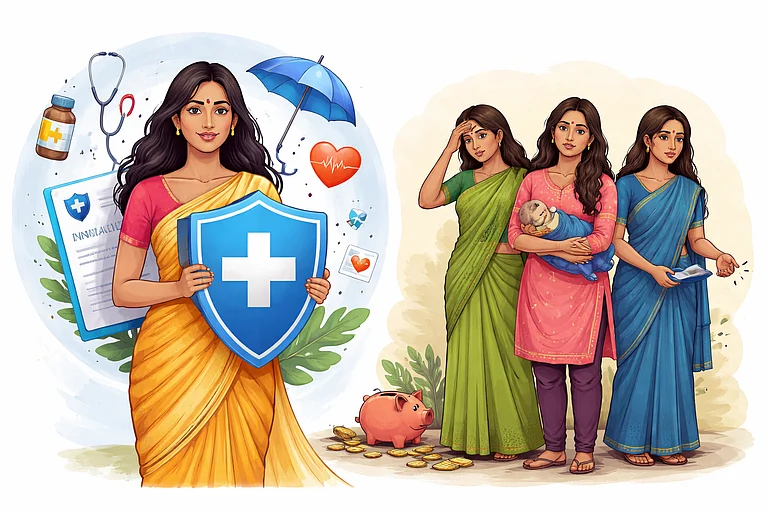


According to reports by PTI, Shelly Pandey, Assistant Professor at GIM, explained that in many organisational cultures, women who do not conform to the expectations of motherhood, whether by choice or circumstances, are marginalized. Noting that these biases remain largely invisible yet contribute to persistent tension, she told PTI, “The team applied the concept of microaggression to document and analyse the experiences of 45 middle-class, professionally engaged childless women from different cities in India.”
The research identifies that although these women are valued for their professional commitment, they often face exclusion both institutionally and interpersonally. These biases manifest in daily conversations and behaviours that question a woman’s legitimacy and identity if she is not a mother.

Research scholar Gyanda Girisha points out that there is often a moral undertone to these perceptions, where childlessness is viewed as socially deviant or incomplete, casting a shadow over a woman’s professional achievement.
In the context of India, where motherhood is considered a culturally sacred ideal, these beliefs are more pronounced. The study also brings attention to the role of other female employees to reinforce these traditional gender norms. This creates a workplace environment that acts as a subtle and obvious form of discrimination, where a woman’s reproductive choice is used to define her commitment to her career.

The research calls for a broader rethinking of how gender is understood in professional environments. It emphasises that reproductive choice is a personal decision and should not determine one’s legitimacy in the workplace. To create inclusive environments, the study recommends that organisations must recognise that every person, whether a mother, single, childfree, or childless, has a distinct identity that deserves recognition and inclusion.





