





Summary of this article
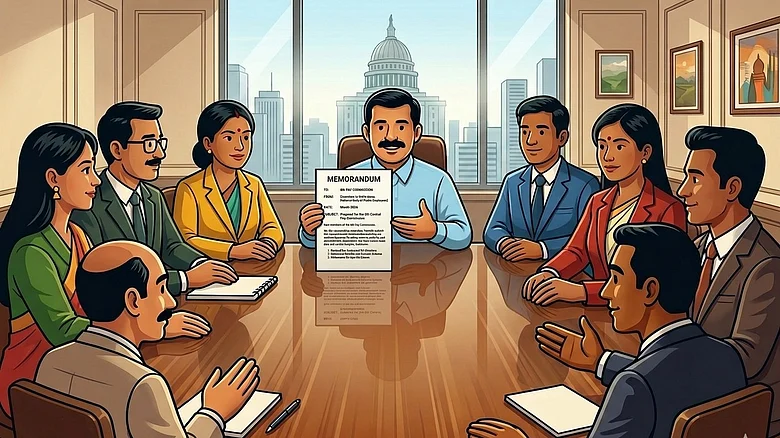
The Staff Side of the NC-JCM has submitted a 51-page memorandum to the 8th Central Pay Commission on April 14, 2026.
It proposes a Rs 69,000 minimum wage, and a 3.833 fitment factor.
Other demands include doubling annual increments to 6 per cent, merging pay levels, indexing HRA with DA, among others.
The National Council (Staff Side) of the Joint Consultative Machinery (JCM) submitted a comprehensive memorandum to the 8th Central Pay Commission (CPC) on April 14, 2026. Following the draft committee meeting on April 13, the conditions were finalised, and the Council submitted a 51-page memorandum.
The memorandum recommends shifting the focus from a mere survival-based pay structure to one rooted in health, productivity, and dignity.
It recommends a minimum wage of Rs 69,000 for a five-unit family and a fitment factor of 3.833 for pay revision, considering rising prices of essential components such as food, clothing, housing, fuel, electricity, water, skill development, and technology charges, as well as expenditures on marriages, festivals, recreational activities, etc.


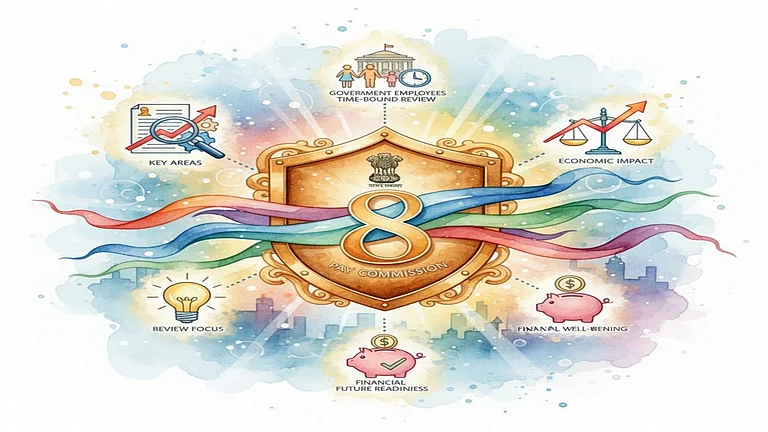
The Council argues that the payment should be viewed as an investment in human capital and economic growth rather than an expenditure.
Annual Increment To Double
On these lines, the memorandum suggests that the annual increment rate be doubled from 3 per cent to 6 per cent.
Merge The Levels
It also suggests merging several pay levels and creating a streamlined career progression. It proposed to merge Level 2 with 3, Level 4 with 5, Level 7 with 8, and Level 9 with 10, and existing employees in Level 5 to be merged with Level 6 as a one-time measure.
It further suggests the pay structure based on the merged new levels, by applying a 3.833 fitment factor.
• For the proposed Level 1 (existing Level 1), it recommends a minimum pay of Rs 69,000
• For the proposed Level 2 (after merging the existing 2 with 3), a minimum pay of Rs 83,200
• For the proposed Level 3 (after merging the existing 4 with 5), a minimum pay of Rs 1,12,000
• For the proposed Level 4 (existing level 6), a minimum pay of Rs 1,35,700
• For the proposed Level 5 (after merging the existing 7 with 8), a minimum pay of Rs 1,82,500
• For the proposed Level 6 (after merging the existing 9 with 10), a minimum pay of Rs 2,15,100
• For the higher pay scale Levels (existing Levels 11 to 17), it suggests retaining the same pay scales and revising using the 3.833 fitment factor, but renumbering the Levels in continuation of the proposed new Levels.
House Rent Allowance (HRA)
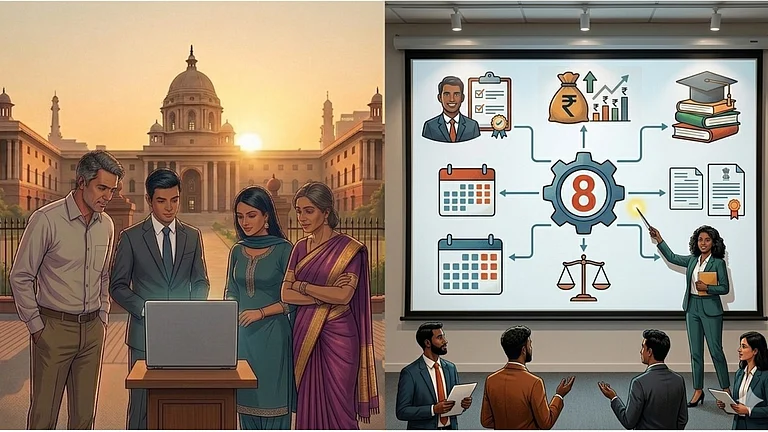
It further proposes a revision in the House Rent Allowance (HRA), and recommends a 40 per cent HRA for X class (50 lakh and above population) cities, and 35 per cent and 30 per cent for Y class (5-50 lakh population) and Z class (below 5 lakh population) cities, respectively.
It also recommends indexing HRA with the dearness allowance (DA), enabling an automatic increase with inflation. It specifically requested HRA payment for pensioners, saying that a significant part of their pension goes towards paying rent.
Other Allowances
The memorandum recommends an additional 10 per cent basic pay for employees who acquire a qualification above the prescribed qualification for their posts. Other recommendations include extending overtime pay to all employees, including those not covered under the Factories Act, and a specialised allowance for those working in high-risk environments, such as defence industries, healthcare, railways, etc.

Pay Disparity
It also suggested that the gap between minimum and maximum salary should not be more than a 1:12 ratio. This is required to avoid disparity and improve employees’ morale.
Shiva Gopal Mishra, secretary of NC-JCM (Staff Side), indicated that these recommendations are for common service matters only, and specific departments will submit their memorandum separately. It reiterated the request to the 8th Pay Commission to extend the submission deadline from April 30 to April 31, 2026.





