






Summary of this article
PAN rules revised, Aadhaar-only applications end, stricter documentation
Higher limits ease small transactions, yearly cash tracking introduced
High-value spending, property, insurance face closer monitoring
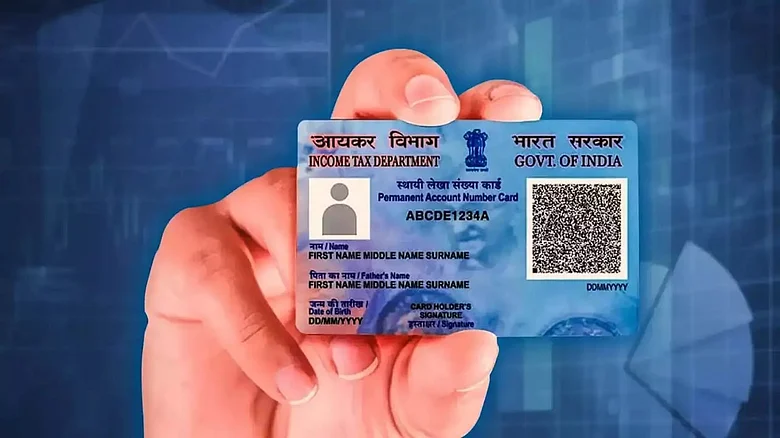
From April 1, 2026, a new set of Permanent Account Number (PAN) rules will be in place. These new rules will impact PAN application, cash transactions, property purchases, insurance policies, and high-value spending on events, hotel bills, and so on. These changes are part of the Income-tax Rule, 2026.

Changes Introduced
Under the new PAN rules, Aadhaar will no longer be enough to apply for a PAN card. Applicants must now submit an additional document as proof of date of birth. Acceptable documents to be presented include birth certificates, voter IDs, Class 10 certificates, passports, driving licenses, and so on.
Another important rule is that the name on the PAN card must be exactly the same as that on the Aadhaar card. Any difference in the name on any of the two documents will result in rejection. Therefore, it is advisable to rectify the name on the Aadhaar card first, if necessary.
New PAN Application Forms Introduced
The application system has also been updated with the introduction of new forms. Applicants must now use specific forms based on their category.
Form 93 will be applicable for individuals, Form 94 for companies, Form 95 for foreign individuals, and Form 96 for foreign entities. The old forms will not be accepted after April 1, 2026, and hence, new forms must be filled in for new applications and updates.
Cash Transactions To Be Tracked Annually
The rules and regulations for cash transactions have also been revised, and they are now applicable to annual transactions rather than daily transactions. In the new system, cash deposits or withdrawals exceeding Rs 10 lakh in a year will need PAN. This was previously applicable if a cash transaction exceeded Rs 50,000 in a day. Thus, PAN quoting has been reduced for daily transactions, and cash transactions are being tracked, keeping in mind annual transactions.
Vehicle Purchase Rules Relaxed For Smaller Buyers
The requirement to provide PAN details while buying vehicles has also been relaxed, and now PAN has to be presented only if the value exceeds Rs 5 lakh. Earlier, PAN was a necessity while buying vehicles, irrespective of the value.
Higher Limit For Hotel Bills And Events
Expenses on hotels, restaurants, and events has also seen a revision in its limit, and PAN has to be furnished if the amount exceeds Rs 1 lakh, compared to Rs 50,000 earlier. This provides more flexibility in case of smaller transactions while ensuring that large transactions are still being tracked.
Property Transaction Threshold Doubled
In the real estate sector, the threshold levels have been increased. The PAN requirement will now be applicable only if the value of the transaction is over Rs 20 lakh, as compared to the previous requirement of Rs 10 lakh. This will simplify the process in case of smaller transactions, while large transactions are still being tracked.
Insurance Policies To Be Linked From The Beginning
Insurance policies have also been made more secure under the new rules. PAN will now have to be furnished while buying an insurance policy, irrespective of the premium amount. The previous rule stated that PAN was required only if the premium amount was in excess of Rs 50,000. This will ensure that all insurance policies are now linked to PAN from the very beginning.
What These Changes Mean For Individuals
The new rules have clearly indicated a shift in the approach; smaller transactions have been simplified, while high-value expenses will be tracked. Individuals must ensure the accuracy of the documents, particularly Aadhaar, while linking the PAN.
Other Financial Changes Effective From April 1
Apart from these updates, several other financial updates are effective from today. SBI Card has made certain updates to the redemption options available for certain credit cards. Now, the statement credit redemption will be available only in multiples of 4,000 reward points.
FASTag pass fee has been raised from Rs 3,000 to Rs 3,075 for the financial year 2026-2027. Several banks are updating the ATM withdrawal options, including the fees and the amount. In addition, the digital payments will continue to adhere to the two-factor authentication norms.
While the existing rules are being replaced, the new updates include the incorporation of transitional provisions, ensuring the continuity of ongoing cases and proceedings.





