






Summary of this article
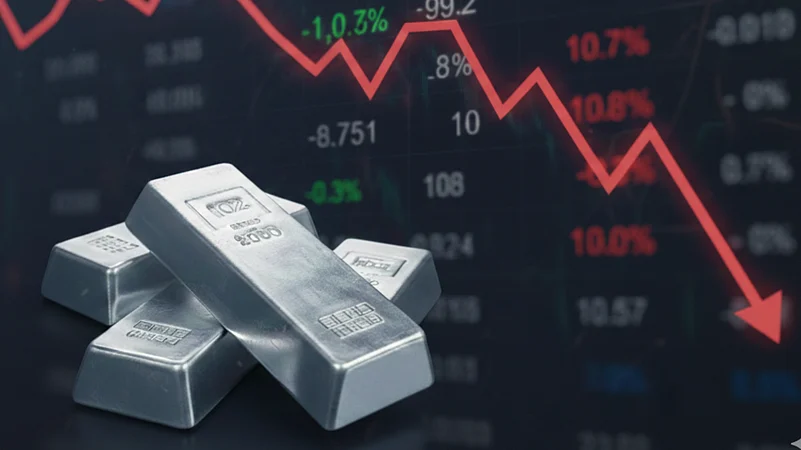
Silver futures fell 8.87 per cent to Rs 3,05,753 after hitting a record high of Rs 3,35,521 on January 21.
Prices declined as US President Trump ruled out military force in Greenland and cancelled proposed tariffs on the EU.
Analysts suggest avoiding immediate purchases, recommending a buy on dips strategy as prices stabilize despite the recent profit booking.
MCX Silver Price: Precious metals witnessed record highs in the first few weeks of the new calendar year, 2026. The surge in gold and silver prices came amid an uptick in safe-haven demand led by geopolitical shocks, trade war fears, and structural supply deficits. However, on January 22, gold and silver prices slipped from their record highs.
On January 22, Silver Futures with March 5, 2026 expiry slipped 8.87 per cent from its all-time high to Rs 3,05,753 per kilogram on the Multi-Commodity Exchange (MCX). Notably, between January 19 and 20, silver prices broke past the Rs 3,00,000 mark and ultimately surged to a record high of Rs 3,35,521 per kg on January 21. At the time of writing, Silver Futures traded at Rs 316541 per kg, down by 0.61 per cent. Physical silver prices (Silver 999) declined by 5.15 per cent to Rs 3,03,584 per kg according to the India Bullion and Jewellers Association (IBJA) website.
Gold Futures with February 5 expiry also slipped on the MCX, declining 6.11 per cent from their recent peak of Rs 158475 per 10 grams to Rs 1,48,777 per 10 grams on January 22. Physical gold prices also slipped 2.38 per cent to Rs 1,51,499 per 10 grams.
Why Are Silver Prices Declining
Silver prices have slipped from their recent peak amid de-escalation in global trade tensions and a mix of other factors. Here’s a look at some of the key drivers of the decline seen in silver prices on January 22:
Trump’s Tariff Takeback
Safe-haven demand declined following a major de-escalation post US President Donald Trump’s announcement regarding his decision not to impose tariffs on European Union nations. According to a report by CNBC, the US President has said that he and NATO Secretary General Mark Rutte have “formed the framework of a future deal with respect to Greenland.”
The development follows an intense diplomatic standoff between the U.S. and European Union nations following Trump’s aggressive bid to acquire Greenland. Following the escalation, the US had threatened to impose up to 25 per cent tariffs on several EU countries. Post Trump’s statement, the risk-off sentiment seen in the market eased, and safe-haven demand is likely to have dropped, leading to a fall in gold and silver prices.
Easing Tensions In Greenland
In his address at the World Economic Forum in Davos , US President Donald Trump ruled out the use of military force to acquire Greenland. This lowered the geopolitical tensions surrounding Trump’s use of violent force to “acquire” Greenland. The easing of the geopolitical threat is also likely to have decreased the demand for safe-haven assets.
Strengthening of the U.S. Dollar
Amid the easing of tensions, the U.S. dollar strengthened. The U.S. Dollar Index (DXY)—which measures the dollar against a basket of major currencies—has stabilized around 98.8, rebounding from the weekly lows of 98.1. The strengthening of the US Dollar lowers silver prices as the precious metal is traded in dollars, and buyers holding currencies other than the greenback have to spend more to buy it.
Profit Booking
Following the rapid rise in silver prices to all-time highs on January 21, it is likely that investors who held Silver Futures would have sold their holdings. Amid the decline in prices, traders rushed to exit their holdings, leading to further correction in prices. Additionally data from the MCX shows that there was a drop in the Open Interest, indicating that traders were not just selling their holdings partially but entirely closing out their older buy positions. Notably, the Open Interest fell from 10,500 Lots on January 21 at peak prices to 9,564 Lots on January 22.
What Should Investors Do
Aamir Makda, Commodity & Currency Analyst, Choice Broking told Outlook Money that the withdrawal of tariff threats and Trump’s ruling out of military use for acquiring Greenland punctured the geopolitical bubble which drove silver’s rally.
“Silver’s rapid descent—dropping nearly 8% from its record peak—underscores its role as a high-velocity gauge of global risk. The sudden 'Davos De-escalation', marked by the withdrawal of tariff threats against European allies and a new NATO framework for the Arctic, has punctured the geopolitical bubble that drove the white metal’s rally,” Makda said.
However, Makda added that while profit booking and a decline in safe-haven demand have caused silver prices to fall, increasing industrial demand for the precious metal and its supply-squeeze are expected to persist. Thus, he urged investors not to consider buying at the current levels and wait for the price to stabilise, and consider a ‘buy on dips’ approach.
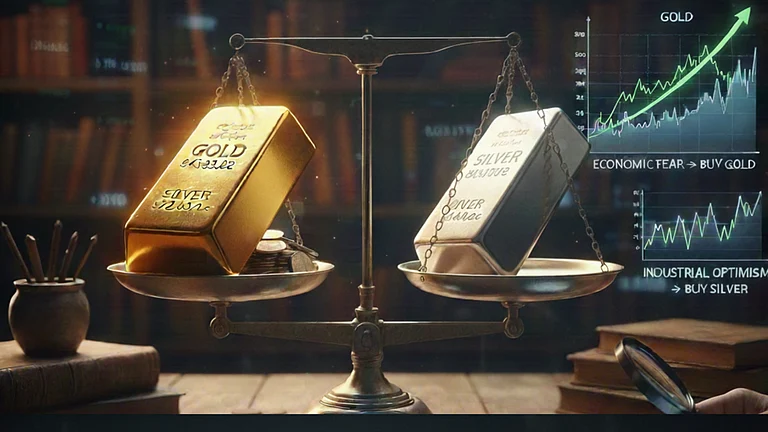
“While industrial demand for AI and green tech remains a long-term floor, the immediate evaporation of the 'trade war premium' has triggered a massive wave of profit-taking as investors rotate back into a surging equity market. In our view, this is not the right time to buy Silver at this moment, as this fall may continue. If prices stabilise over support levels, then traders may consider it as a “Buy-on-dips,” Makda said.
Kaynat Chainwala, AVP - Commodity Research, Kotak Securities told Outlook Money that investors can consider accumulating on dips as the structural demand for the precious metals is expected to remain robust.
“Staggered accumulation on dips therefore appears more prudent than chasing momentum at elevated levels. Market participants may consider initiating positions with further declines, as silver continues to be underpinned by robust industrial and investment demand,” Chainwala said.





