






Summary of this article
Some credit report inquiries are considered routine and do not affect your score. Others are associated with a new application for credit and can hurt your score.
A soft credit enquiry, or soft pull, is a check of your credit report that is not connected to a formal application for a new loan or credit card. It does not affect your credit score.
Hard enquiries are different. These are usually only performed when you apply for a loan or credit card. The lender will check your credit report as part of their lending decision.
When you apply for a loan or credit card, the lender wants to know one basic thing: how likely are you to repay the money on time? To determine that, banks and other lenders review your credit history and credit score.
This is usually done through a credit report inquiry. But did you know that not all credit inquiries are treated the same? Some inquiries are considered routine and do not affect your credit score. Others are associated with a new application for credit and can hurt your score.
These are broadly known as soft and hard credit enquiries. Knowing the difference is useful, especially if you are planning to take a home loan, personal loan or credit card. Making too many formal applications in a short period, for instance, can work against you.

Soft Credit Enquiry
A soft credit enquiry, or soft pull, is a check of your credit report that is not connected to a formal application for a new loan or credit card. It does not affect your credit score.
The simplest example is when you check your own credit report. There is no reason to avoid checking your score because you are worried that it will bring it down. In fact, checking your report from time to time is a good way of keeping track of your credit history and spotting mistakes or transactions that you don't recognise.
A soft enquiry can also happen when a lender makes a preliminary assessment of your creditworthiness. For instance, a bank may tell you that you are eligible for a pre-approved loan or credit card based on the information available to it.
The important point is that a soft enquiry is not treated as a fresh application for credit and, therefore, does not hurt your credit score.
Hard Credit Enquiry
Hard enquiries are different. These are usually only performed when you apply for a loan or credit card. The lender will check your credit report as part of their lending decision.
So, if you apply for a personal loan, home loan, car loan or education loan, the lender may make a hard enquiry. The same can happen when you apply for a new credit card or certain other forms of additional credit.
A single hard enquiry isn't normally something to stress over. Making a bunch of credit applications in a short period of time can impact your credit score though. If you have several applications, lenders may believe you are applying for credit from multiple sources.
Hard enquiries will eventually fall off your credit file. They do not affect your credit score for more than a few weeks. If you are rate shopping for the same type of loan, like home loans or car loans, multiple inquiries in a short time can be treated differently by credit-scoring models. The exact treatment can vary.
How Can You Avoid Unnecessary Hard Enquiries?
You don't have to stop shopping around for a loan just because you are worried about a hard enquiry. The key is to do your homework before submitting applications.
Don't apply with every lender you find. Shop interest rates, processing fees, eligibility requirements and more first. Narrow down your search, then apply with lenders who better suit your needs.
Do an eligibility check first. Many lenders provide eligibility/ pre-approval checks that do not leave a hard enquiry on your report. These can tell you if you'll likely be approved before you apply.
Avoid taking on several new loans or credit cards at the same time. If you are planning to take a home loan, for example, it may not be the best time to apply for several other credit products unless you genuinely need them.

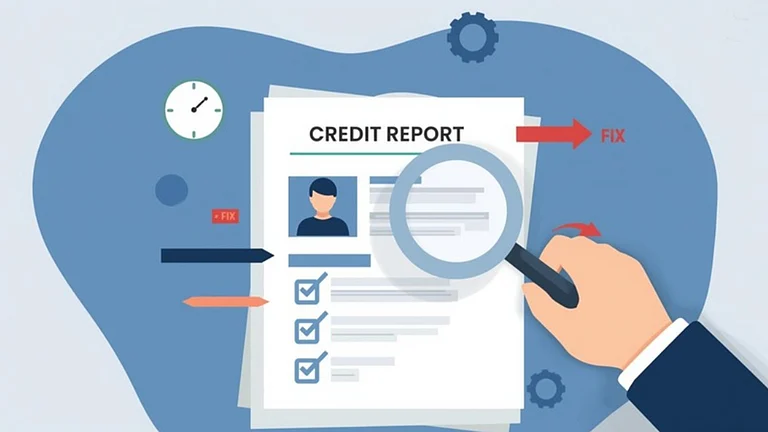


Keep checking your credit report. Apart from knowing where your credit score stands, this can help you spot hard enquiries that you don't remember authorising. If you find an unfamiliar enquiry, contact the lender and the relevant credit bureau and get it checked.
What Should Borrowers Remember?
A credit enquiry is not necessarily a bad thing. The important distinction is whether it is a soft or hard enquiry.
Checking your own credit report does not lower your score. A formal application for a loan or credit card, however, can result in a hard enquiry and repeated applications in a short period may have an adverse effect.
So, before applying for credit, it makes sense to check your credit profile, understand your eligibility and compare your options first. A few minutes of preparation can help you avoid applications you may not need - and keep your credit record in better shape.





