






Summary of this article
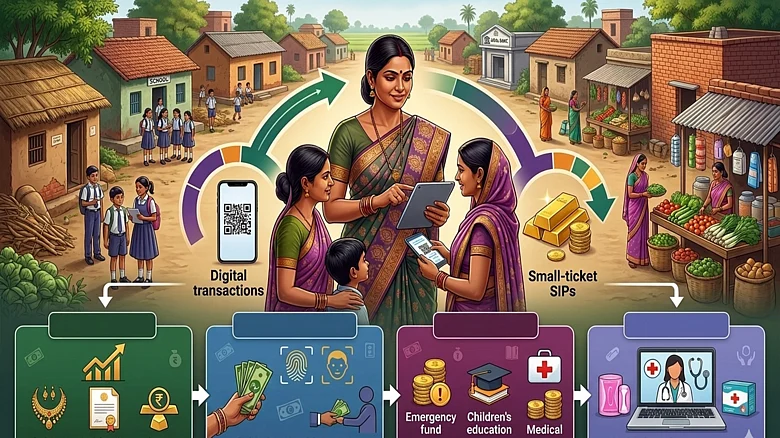
38 per cent of women in rural and semi-urban areas use UPI for weekly essentials, shows PayNearby survey.
71 per cent of women who operate bank accounts independently are in the 18-40 age group.
Women are open to borrowing money primarily for children's education, followed by medical needs, and small business or agricultural activities.
Women are becoming financially aware and comfortable in using the unified payment interface (UPI), according to the latest findings of the Women Financial Index 2026 survey conducted by PayNearby, a digital financial service network. Per the survey report, women in rural areas and semi-urban areas use UPI at least once a week, primarily to pay for utility bills, buy groceries, and recharge their mobile phones.
The survey includes responses from 10,000 women agents or women micro-entrepreneurs, who serve as digital didis in their communities to spread awareness around banking, health, insurance, sanitation, credit, etc., and improve access to these services in the semi-urban and rural regions. The survey covered responses from women agents serving in more than 20,000 PIN codes across multiple states covering North, South, East, West and Central India.
Anand Kumar Bajaj, Founder, MD and CEO, PayNearby, says that guided transactions help women gain confidence and financial independence. Women represent the GDP reserve of our nation, holding the potential to drive sustained social and economic progress at the last mile. As familiarity with financial tools increases, trusted assisted models will continue to serve as the bridge, enabling women to move confidently from guided transactions to independent financial participation,” he says.




Investment Awareness Through Assisted Guidance
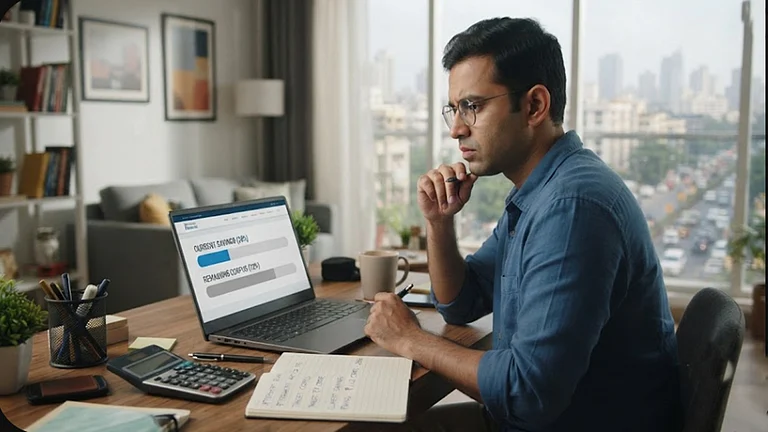
The findings highlight improved awareness of investment among women through assisted guidance. Around 44 per cent of the women expressed interest in investing in gold-based savings products via small-ticket systematic investment plans (SIPs), when informed and supported at the local centres. It highlights two findings: they are willing to learn about investments, and gold holds value as a safe and secure instrument for them. Besides, women in non-urban areas prefer investing in products that offer easy withdrawals, such as fixed deposits (FDs), recurring deposits (RDs), and so on. Around 98 women are aware of FDs and RDs, but only 10 per cent know about mutual funds, highlights the survey.
According to the report, 71 per cent of women independently operate their accounts, mostly in the 18-40 age group. The survey highlights that the assistance provided in doing transactions has impacted beneficiary women’s behaviour, as they are growing from day-to-day banking to long-term saving and planning.
Cash Remains Essential
Cash withdrawal is still an essential service. Women prefer using cash for ready access to money whenever they need it for household expenditure. The withdrawal, typically, ranges between Rs 1,000 and Rs 2,500. However, the survey shows a preference for biometric authentication for cash withdrawal. Around 54 per cent of women prefer using face authentication for cash withdrawal due to familiarity with the local service provider and trust in them.
Emergency Fund
Women save for emergencies and keep some small amount aside consistently for exigencies. Children's education, followed by medical emergencies and buying household items, is the primary goal for saving money. However, only 32 per cent save this money with the formal banking system.

Borrowing Behaviour
On the credit behaviour front, women in semi-urban and rural areas prefer the formal option to borrow money. Nearly 73 per cent are open to borrowing money for a purpose such as medical expenses, children's education, small business activities, home repair, and agricultural needs. For short-term liquidity, they prefer taking a gold loan.
Insurance Is High On Awareness But Low On Enrollment
Health and life insurance, and accidental coverage are most preferred. Although adoption is growing, it remains lower than awareness.
Separately, health and hygiene-related awareness have increased. Around 37 per cent of women customers access local service points for telehealth consultations, sanitary pads, and other wellness products.





