





Summary of this article
Apart from enhancing regional connectivity, the Delhi–Dehradun Economic Corridor is also expected to significantly boost real estate valuations across North India.
Upgrades to major connectivity projects result in shortened travel times, which reinvigorates the demand for residential and commercial real estate along the corridor.
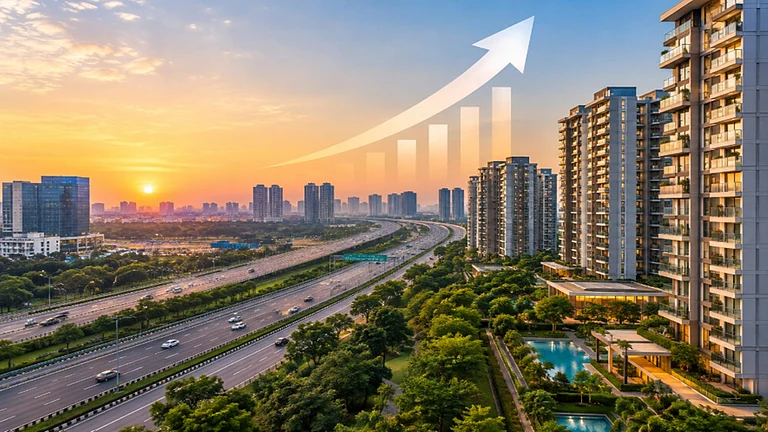
Micro markets in NCR and western UP will get traction from end-users as well as investors. Prices are likely to appreciate by 15 to 25 per cent in major segments along this corridor.
The much-awaited six-lane Delhi–Dehradun Expressway, built at a cost of Rs 12,000 crore, was inaugurated by Prime Minister Narendra Modi on April 14 and is expected to transform connectivity between Delhi and the Uttarakhand capital, while also driving a significant rise in property prices along the corridor.
According to real estate experts, the 213-km Delhi-Saharanpur-Dehradun Expressway is set to transform regional connectivity and stimulate real estate activity along the corridor, particularly industrial and warehousing demand in key micro markets of Delhi-NCR. The expressway connects prominent industrial and warehousing markets of Delhi-NCR such as Ghaziabad, Noida, Greater Noida and Meerut to other key industrial hubs and cities such as Muzaffarnagar, Saharanpur and Dehradun.
“With improvements in connectivity driven by the expressway, we anticipate 1-2 million sq ft of Grade A supply infusion in these Delhi-NCR micro markets over the course of next few years. On a similar note, the expressway will lead to demand traction and annual leasing can potentially touch 1-1.5 million sq ft. Additionally, connectivity enhancement is likely to support hospitality and second homes market in and around Haridwar, Rishikesh and Dehradun,” said Vimal Nadar, National Director & Head, Research at Colliers India.
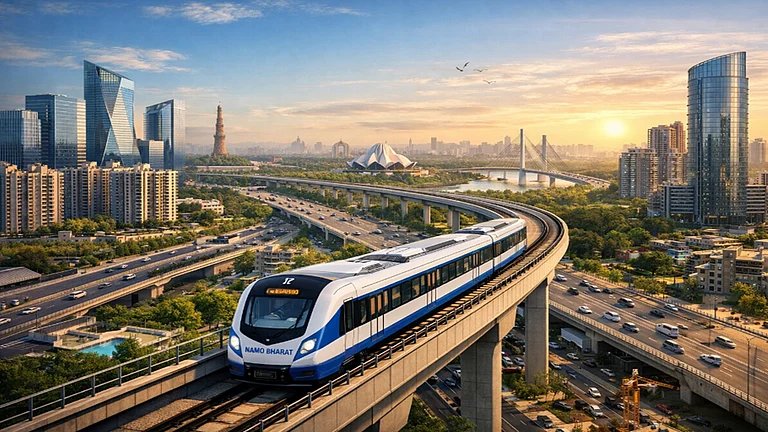
Welcoming the development, developers said the expressway will significantly enhance regional connectivity. Reducing travel time to nearly 2.5 hours is a game changer, making destinations like Mussoorie, Haridwar and Rishikesh far more accessible from Delhi-NCR.
“This improved connectivity will not only boost tourism but also drive real estate growth, as more buyers look at these locations not only for investment or second homes but also as primary residences, given the beautiful surroundings and relatively low AQI,” said Rohit Kishore, CEO, Hero Realty.
Haridwar, in particular, stands to benefit greatly, with better road access attracting a wider mix of visitors, including weekend travellers and prospective homebuyers, in addition to pilgrims. “This increased footfall will support local businesses, strengthen infrastructure and create rising demand for quality housing. While Haridwar will always remain a key spiritual destination, enhanced connectivity will also position it as an emerging residential and investment hub,” Kishore added.
Impact On Property Prices
Apart from enhancing regional connectivity, the Delhi–Dehradun Economic Corridor is also expected to significantly boost real estate valuations across North India.
Santhosh Kumar, Vice Chairman, ANAROCK Group, said, “Upgrades to major connectivity projects result in shortened travel times, which reinvigorates the demand for residential and commercial real estate along the corridor. The influence zone of this particular corridor encompasses Muzaffarnagar, Saharanpur, and the outskirts of Dehradun. We are already seeing early-stage land acquisition and plot-based investment interest in these relatively small markets, which so far were at best modest blips on the real estate radar. Over the next three to five years, this corridor could change the geography of North India's real estate in a big way.”
The Delhi-Dehradun Expressway will be a game changer in the real estate sector.
“Journey time will be cut down by almost half. There will be huge demand for second-home projects, plotted developments and villa precincts in Dehradun. Micro markets in NCR and western UP will get traction from end-users as well as investors. Prices are likely to appreciate by 15 to 25 per cent in major segments along this corridor. This corridor will effectively expand the NCR influence zone deeper into Uttarakhand,” said Anupam Rastogi, Co-founder & CBO, Square Yards.
The Delhi–Dehradun Expressway is now at a stage where one can see pricing starting to respond in a more defined way.
Karan Malik, Regional Director, Realistic Realtors, said, “The 15–25 per cent appreciation, that’s being spoken about over the next couple of years, isn’t unrealistic, but what’s more relevant is how that growth is shaping up. It’s not just one pocket or one category driving it. There’s simultaneous movement across plotted developments, builder floors, and even premium formats like villas and second homes. When demand starts to show up like this across segments, it usually tells you the market has found its footing. Therefore, as connectivity improves, the corridor will pave the way for rigorous economic activity.”
Investment Opportunities
According to developers, the Delhi-Dehradun Expressway remains an emerging market with strong long-term potential, which makes it attractive for investment.
Sanchit Jain, Director, Sarvottam India, said, “For investors with a medium- to long-term view, this is a well-timed entry window. As connectivity strengthens and infrastructure continues to take shape, property values along the corridor are expected to see a strong upward movement. What makes this particularly encouraging is the scope for growth as the corridor evolves. Those who take a considered, long-term position here are likely to see meaningful value creation as the market matures.”



Santosh Agarwal, Executive Director & Chief Financial Officer, Alpha Corp Development Limited, said, “Completion of the Delhi–Dehradun Expressway and subsequent reduction of travel time to just 2.5 hours will completely change the way real estate landscape functions in this region. Greater connectivity is expected to enhance tourism activity as well as investment potential in residential and second homes across this route. Infrastructure availability in any area leads to greater demand for plotted projects and comprehensive townships in the upcoming micro markets. This gives builders an opportunity to leverage the changing needs and buying criteria of customers who are now looking for projects that are well connected to urban centers as well as nature."





